Tag: Blue Collar Hiring

  • Solving the 9 Key Challenges in Frontline Hiring: From Sourcing to Joining

    Solving the 9 Key Challenges in Frontline Hiring: From Sourcing to Joining

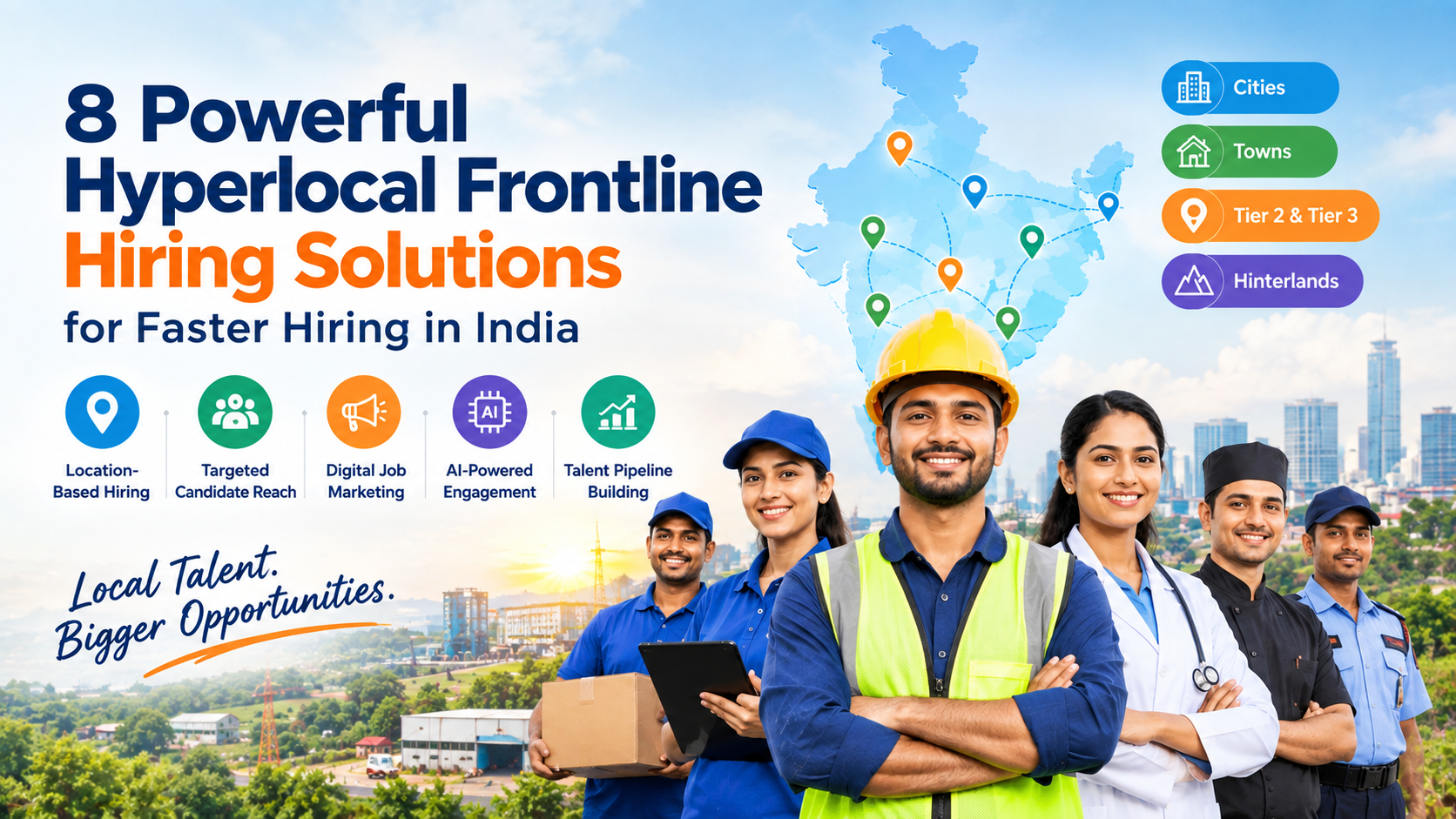
    Hiring frontline employees is not always difficult because there are too few candidates. Sometimes, the real challenge is finding the right people, reaching them at the right time and helping them complete the hiring process.

    A company may receive hundreds of applications but still struggle to fill 50 vacancies. Candidates may apply but not answer calls. Some may attend interviews but decline the offer. Others may accept the offer and never show up on their joining date.

    For HR teams, this can become a repeating cycle. Positions remain vacant, existing employees face additional pressure, and recruiters spend their time restarting the same hiring process.

    The problem is not always a lack of candidates. It can also be a hiring process that loses candidates along the way.

    So, how can employers improve frontline recruitment, especially when hiring in bulk? Let’s look at the complete journey, from sourcing to joining.
    Hiring frontline workforce

    Start With the Right Candidate Sourcing Strategy

    The first step in successful hiring is reaching the right talent pool.

    Many companies depend on a limited number of recruitment channels. They may use referrals, consultants, walk-ins or a single job portal. These channels can work well, but relying on only one or two sources may limit the number and variety of candidates they reach.

    For frontline roles, employers should consider a combination of sourcing channels:

    • Digital job platforms: Reach candidates across multiple locations.
    • Employee referrals: Connect with people through existing employees.
    • ITI and vocational institutes: Find candidates with relevant practical training.
    • Colleges and training centres: Build a pipeline of freshers and entry-level talent.
    • Local recruitment networks: Reach candidates closer to the workplace.
    • Recruitment partners: Support urgent or high-volume requirements.

    The right mix depends on the role, location, volume and urgency of hiring.

    For example, a warehouse hiring 100 associates may benefit from local sourcing, digital recruitment and training-centre partnerships working together.

    The objective should not simply be to increase applications. It should be to reach more relevant candidates who are genuinely interested in the opportunity.

    Make Job Descriptions Clear and Practical

    A job description is often the first interaction a candidate has with an employer. If important information is missing, the candidate may decide not to apply or may discover the mismatch later in the process.

    For frontline jobs, employers should clearly communicate:

    • Job role and responsibilities
    • Salary or salary range
    • Work location
    • Shift timings
    • Weekly offs
    • Required qualifications and experience
    • Physical or practical requirements, where relevant
    • Benefits and incentives
    • Joining timeline
    • Any genuine job-related conditions

    Imagine a candidate applying for a delivery role without knowing the working hours, incentive structure or location requirements. Even if the candidate is suitable, these unanswered questions can create hesitation.

    Clear information helps candidates make informed decisions before investing time in interviews and documentation.

    Better job clarity can reduce mismatches before they become hiring problems.

    Screen for Skills and Job Fit, Not Just Experience

    For many frontline and entry-level roles, a long resume is not necessarily the best indicator of performance.

    Employers often need candidates who can follow instructions, communicate with customers, use basic digital tools, work reliably and learn quickly.

    A more practical screening process can consider:

    • Relevant skills and training
    • Previous work experience, where required
    • Communication and customer-handling ability
    • Availability and joining timeline
    • Location and commute feasibility
    • Willingness to work the required shifts
    • Basic role-specific assessments

    For fresher positions, the emphasis can be on learning ability, relevant training and potential rather than years of experience.

    At the same time, employers should define genuine minimum requirements for each role. Screening for potential does not mean ignoring safety, technical skills or essential qualifications.

    The aim is to identify candidates who are suitable for the actual job instead of rejecting people based on unnecessary requirements.

    Shorten the Hiring Process Wherever Possible

    Speed matters in frontline recruitment.

    A candidate applying for an entry-level job may be considering several opportunities at the same time. If one employer responds quickly while another takes days to schedule an interview, the first employer may have an advantage.

    Long application forms, repeated interviews, delayed approvals and unclear next steps can cause candidates to lose interest.

    Employers can improve the process by:

    • Keeping applications simple
    • Asking only essential screening questions
    • Scheduling interviews promptly
    • Combining interview stages where practical
    • Setting clear timelines for decisions
    • Giving hiring managers appropriate decision-making authority
    • Completing documentation without unnecessary delays

    The goal is not to skip important checks. It is to remove avoidable waiting time.

    Recent frontline hiring research from iCIMS identifies lengthy applications, candidate communication and drop-offs during interviews and onboarding as important challenges. The findings reinforce the need to make recruitment easier for both employers and jobseekers.

    Keep Candidates Informed Throughout the Process

    One of the most overlooked parts of recruitment is communication.

    Candidates often want to know three basic things:

    1. Has my application been considered?
    2. What happens next?
    3. When can I expect an update?

    When employers do not communicate clearly, candidates may assume the opportunity is no longer available. They may accept another offer or stop responding to calls.

    A simple communication system can make a meaningful difference.

    For example:

    • Send an acknowledgement after receiving an application.
    • Confirm the interview date, time and location.
    • Explain which documents the candidate needs to bring.
    • Share the result as soon as a decision is made.
    • Clearly explain the offer and joining process.
    • Provide a contact person for questions.

    For candidates who are not familiar with formal recruitment procedures, clear and respectful communication can be particularly valuable.

    A candidate’s experience during recruitment also creates an impression of the employer. A smooth process builds confidence; repeated unanswered questions can create doubt.

    Reduce Offer-to-Joining Drop-Offs

    Getting a candidate to accept an offer is an important milestone, but it is not the end of recruitment.

    The candidate still needs to arrive on the joining date and complete the required formalities.

    Drop-offs can happen for several reasons:

    • The candidate receives a better offer.
    • The salary or job conditions were not clearly understood.
    • The commute is more difficult than expected.
    • The joining date is delayed.
    • Family or personal circumstances change.
    • The candidate is unsure about the employer or the role.
    • Communication stops after the offer is issued.

    Employers can reduce avoidable drop-offs by maintaining contact between offer acceptance and joining.

    A practical approach includes confirming the candidate’s understanding of the offer, sharing joining instructions early, answering questions and sending reminders before the joining date.

    For large hiring drives, recruiters can also maintain a clear record of confirmed joiners and eligible backup candidates, following fair and transparent hiring practices.

    Importantly, backup planning should complement good candidate engagement, not replace it.

    An accepted offer is a milestone. A successful joining is the outcome the hiring team needs to track.

    Use Technology to Manage High-Volume Hiring

    When hiring requirements increase, manual coordination becomes harder.

    Recruiters may be handling hundreds of applications, multiple interview schedules, documentation requests and joining confirmations at the same time.

    Digital recruitment tools can help organise this activity.

    Depending on the organisation’s needs, employers can use technology to:

    • Track candidates at each hiring stage
    • Filter applications by role and location
    • Schedule interviews
    • Send reminders and updates
    • Maintain candidate records
    • Monitor pending documentation
    • Track joining confirmations
    • Identify where candidates are dropping out

    Technology can improve visibility, but it should not make the hiring experience impersonal. Candidates still need clear answers, timely support and a way to reach someone when they have questions.

    The best approach combines efficient systems with human communication.

    Measure the Complete Hiring Funnel

    If a company only measures the number of applications received, it may miss the actual reason vacancies remain open.

    Instead, recruiters should track the complete hiring journey.

    Recruitment metricWhat it helps measure
    Applications receivedReach of sourcing channels
    Qualified candidatesRelevance of applicants
    Interview attendance rateCandidate engagement and scheduling effectiveness
    Offer acceptance rateAlignment between the offer and candidate expectations
    Offer-to-joining ratioHow many accepted offers convert into actual joiners
    Time-to-hireSpeed of the recruitment process
    Cost per joiningRecruitment cost for each employee who joins
    Early attritionWhether new employees stay after joining

    These metrics help identify the stage where the process needs improvement.

    For example, if applications are high but interview attendance is low, the company may need to review communication, scheduling or candidate interest.

    If offer acceptance is strong but joining numbers are weak, recruiters should examine the gap between the offer and joining date, job clarity and candidate engagement.

    The important thing is to measure outcomes, not just activity.

    Build a Talent Pipeline Before Vacancies Become Urgent

    Recruitment becomes more difficult when every requirement is treated as an emergency.

    Instead of starting from scratch whenever a new vacancy opens, companies can build relationships with colleges, training centres, digital platforms and regional talent networks.

    This is especially useful for organisations with recurring requirements in logistics, retail, hospitality, manufacturing, customer support and other frontline functions.

    A continuous talent pipeline can help employers identify potential candidates earlier, communicate upcoming opportunities and prepare for seasonal or location-based hiring needs.

    The process becomes more sustainable when sourcing, screening, training and joining are treated as connected activities rather than separate tasks.

    Nurse. Hiring at frontline job

    Final Thought: Hiring Success Is More Than Filling Vacancies

    Frontline hiring is a journey. Every stage matters, from reaching the right candidates to helping them complete their first day at work.

    A strong recruitment strategy combines wider sourcing, clear job information, practical screening, faster decisions, consistent communication and a structured joining process.

    Employers should also remember that candidates are making decisions throughout the process. They are evaluating the salary, location, working conditions, employer communication and the opportunity to grow.

    When these factors are handled well, recruitment becomes more than a race to fill open positions. It becomes a repeatable way to build a dependable workforce.

    For companies hiring at scale, the next improvement may not come from collecting more applications. It may come from fixing the stage where suitable candidates are being lost.

    Source smart. Screen fairly. Communicate clearly. Help candidates join.

    That is how frontline hiring moves from a recurring challenge to a more effective recruitment process.

  • Why Hiring in Tier 2 & Tier 3 Cities Needs a Different Strategy

    Why Hiring in Tier 2 & Tier 3 Cities Needs a Different Strategy


    Why Tier 2 and Tier 3 Hiring Is Different

    For years, India’s recruitment ecosystem has been heavily concentrated around major metropolitan markets.

    Delhi NCR.

    Mumbai.

    Bengaluru.

    Hyderabad.

    Chennai.

    Pune.

    But India’s workforce doesn’t exist only in these cities.

    A significant and increasingly important talent market exists across:

    Tier 2 cities.

    Tier 3 cities.

    Industrial towns.

    District headquarters.

    Smaller cities.

    Hinterlands.

    For employers hiring frontline and operational workforces, these markets can represent a major opportunity.

    But there is one important catch:

    You cannot always use a metro hiring strategy in a non-metro market and expect the same results.

    The candidate behaviour can be different.

    The talent supply can be different.

    The communication channels can be different.

    The importance of location can be different.

    And the way employers need to build trust can be different.

    This is why companies expanding beyond India’s major cities need a different Tier 2 hiring strategy.


    India’s Talent Market Is Moving Beyond the Metros

    India’s economic growth is increasingly distributed across different regions.

    Manufacturing facilities are expanding into new industrial clusters.

    Retail brands are entering smaller cities.

    Telecom networks require field teams across districts.

    Logistics networks are expanding deeper into the country.

    Healthcare services are reaching new markets.

    Financial services are expanding their field workforce.

    GCC and technology ecosystems are also exploring locations beyond traditional metros.

    Every expansion creates a workforce requirement.

    And that creates an important question:

    How do you find and reach the right talent where your business is expanding?

    The answer cannot always be:

    “Post the job nationally.”

    For many frontline roles, recruitment needs to become much more local and market-specific.


    Why Traditional Hiring Strategies Struggle Outside Major Cities

    A company may have an excellent recruitment process.

    It may have a strong employer brand.

    It may use leading job platforms.

    It may have an experienced talent acquisition team.

    Yet hiring can still become difficult when entering a new location.

    Why?

    Because the challenge isn’t always a shortage of candidates.

    It can be a candidate reach problem.

    The right candidates may:

    • Not know about the company
    • Not see the vacancy
    • Prefer local employers
    • Be unaware of opportunities outside their immediate area
    • Have concerns about relocation
    • Have limited access to certain recruitment channels
    • Need more information before considering the opportunity

    For frontline positions, these factors can become even more important.


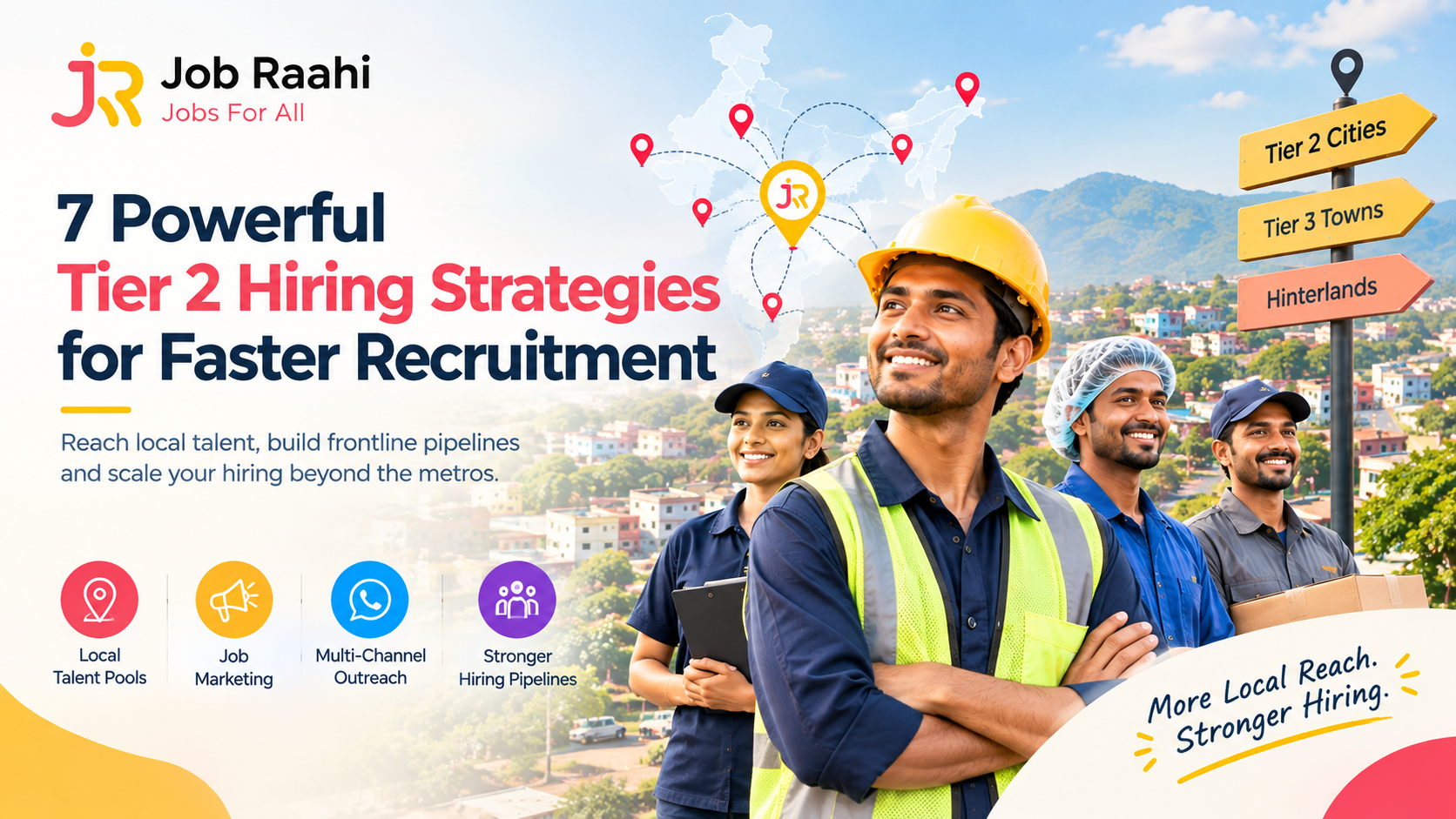
    7 Powerful Tier 2 Hiring Strategies

    1. Build Local Talent Pools

    The first step is to stop looking at Tier 2 cities simply as another location in a national recruitment campaign.

    Treat them as individual talent markets.

    For example:

    Instead of:

    “We need 500 technicians in North India.”

    break the requirement down into:

    Meerut — 50

    Lucknow — 75

    Dehradun — 40

    Jaipur — 80

    Rudrapur — 35

    Other markets — 220

    Now the recruitment team can start understanding each market separately.

    Who are the candidates?

    What skills are available?

    How far are they willing to travel?

    What salary expectations exist?

    Which roles are easiest to fill?

    Where are the hiring gaps?

    This is the foundation of a local talent pool.


    2. Think Beyond the City

    One of the biggest mistakes employers can make is defining their hiring market only by city boundaries.

    A candidate doesn’t necessarily need to live inside the city where the job is located.

    They may live:

    • In a nearby town
    • In a neighbouring district
    • Along a major transport route
    • In a surrounding industrial cluster
    • In a nearby semi-urban area

    This is particularly relevant for frontline jobs.

    Instead of thinking:

    City = Talent Market

    think:

    Workplace + Commute + Surrounding Communities = Talent Market

    This creates a more realistic hiring radius.


    3. Take Jobs to Candidates

    In metro markets, candidates may actively search for jobs across multiple platforms.

    In smaller markets, employers may need to be more proactive about creating awareness.

    This means recruitment can move from:

    “Post and wait.”

    to:

    “Reach and engage.”

    Employers can use:

    • Job platforms
    • WhatsApp
    • SMS
    • RCS
    • Email
    • Social media
    • Digital campaigns
    • Candidate databases
    • Recruiter outreach

    The objective is simple:

    Don’t wait for every candidate to discover the job. Take the opportunity to the candidate.


    4. Build Location-Specific Hiring Campaigns

    A job campaign for Delhi doesn’t necessarily need to look like a job campaign for a smaller industrial town.

    The recruitment message should answer the questions candidates actually care about.

    For example:

    Hiring in a Tier 2 market

    Machine Operators Required

    📍 Location: Rudrapur
    💰 Salary: ₹18,000–₹24,000
    🏭 Manufacturing Role
    🚌 Transport Available
    📅 Immediate / Short-Notice Joining

    This immediately provides context.

    A candidate can quickly determine:

    Is this job near me?

    Is the salary relevant?

    Can I commute?

    Can I join?

    Clear communication can reduce unnecessary applications while improving relevance.


    5. Create Always-On Talent Pipelines

    One of the biggest mistakes employers make is starting recruitment only when the requirement becomes urgent.

    Suppose a company regularly hires:

    • Technicians
    • Operators
    • Field executives
    • Sales staff
    • Customer service associates

    Why rebuild the candidate pool every time?

    Instead, employers can maintain always-on talent pipelines for important recurring roles.

    For example:

    Technician Talent Pool

    Location: Uttarakhand
    Qualification: ITI / Diploma
    Experience: 0–3 years
    Availability: Open to opportunities

    When a requirement appears, the company already has a relevant starting pool.

    This can be particularly useful for employers with recurring or high-volume hiring requirements.


    6. Make the Job Opportunity Clear

    Candidates in smaller markets are not necessarily less interested in opportunities.

    But the opportunity needs to be easy to understand.

    A strong job communication should clearly explain:

    Role

    Location

    Salary

    Working hours

    Qualification

    Experience

    Benefits

    Transport

    Joining timeline

    Interview process

    Contact / application process

    The more uncertainty a candidate has, the harder it may be to convert interest into an application or interview.


    7. Measure Every Hiring Market Separately

    One national hiring dashboard can hide important differences.

    Consider this:

    LocationApplicationsInterviewsSelectionsJoinings
    City A1,0002209062
    City B8001908571
    City C6001608065
    City D1,4001204025

    If you only look at applications, City D looks like the strongest market.

    But look at joinings.

    City C may actually be performing much better.

    This is why employers should track:

    Reach → Applications → Qualified Candidates → Interviews → Selections → Offers → Joinings

    by location.

    That creates genuine regional hiring intelligence.


    The Role of Technology in Regional Hiring

    Technology can help employers scale regional recruitment without treating every location as a completely manual exercise.

    A modern regional hiring strategy can combine:

    Candidate Databases

    Identify relevant talent pools.

    Location-Based Targeting

    Reach candidates around specific hiring markets.

    Digital Job Marketing

    Promote vacancies beyond passive job listings.

    Multi-Channel Communication

    Use WhatsApp, RCS, SMS and email to reach candidate segments.

    AI-Powered Calling

    Support large-scale candidate engagement.

    Recruitment Analytics

    Compare hiring performance across different markets.

    Technology doesn’t replace local recruitment knowledge.

    It helps employers scale it.


    How Job Raahi Helps Employers Hire Beyond the Metros

    Job Raahi is built around a simple employer problem:

    How do you reach frontline talent where traditional recruitment doesn’t always work efficiently?

    The platform focuses on:

    • Frontline hiring
    • Entry-level hiring
    • Blue-collar hiring
    • Grey-collar hiring
    • Industrial hiring
    • Contractual hiring
    • Bulk workforce hiring

    For employers expanding into Tier 2, Tier 3 and hinterland markets, Job Raahi can support a more localized recruitment approach.

    Hyperlocal Candidate Reach

    Reach candidates around specific hiring locations.

    Candidate Database

    Build and access relevant candidate pools.

    Job Marketing

    Don’t simply publish the vacancy.

    Promote it to relevant candidate segments.

    WhatsApp, RCS, SMS & Email

    Use multiple channels to increase candidate reach.

    Digital Campaigns

    Promote job opportunities around relevant hiring markets.

    AI-Powered Calling

    Support candidate engagement at scale.

    Continuous Pipeline Building

    Develop candidate pools that can support future requirements.


    Industries That Can Benefit From Tier 2 Hiring

    Manufacturing

    Tier 2 and Tier 3 cities are important hiring markets for:

    • Machine operators
    • Production workers
    • Technicians
    • Quality inspectors
    • Maintenance staff

    Telecom

    Regional hiring can support:

    • Field technicians
    • Installation teams
    • Sales employees
    • Service teams

    Retail

    Growing retail footprints create demand for:

    • Store associates
    • Sales executives
    • Customer service staff
    • Supervisors

    Logistics

    Expanding distribution networks require:

    • Warehouse workers
    • Sorters
    • Delivery executives
    • Operations staff

    Infrastructure

    Projects across smaller cities create demand for:

    • Technicians
    • Electricians
    • Site workers
    • Field teams

    BFSI

    Financial services expansion can create demand for:

    • Field officers
    • Sales executives
    • Customer-facing employees

    Healthcare

    Regional healthcare expansion can require:

    • Support staff
    • Field employees
    • Operations staff

    The industries may differ.

    The recruitment challenge is often similar:

    Find relevant candidates in the right location and move them through the hiring funnel efficiently.


    Tier 2 Hiring Is Not Tier 1 Hiring at a Smaller Scale

    This is perhaps the most important point.

    A Tier 2 or Tier 3 market shouldn’t simply be treated as:

    “A smaller version of a metro market.”

    The recruitment strategy should consider:

    Local talent availability

    Commuting patterns

    Candidate awareness

    Local employers

    Salary expectations

    Regional competition

    Communication preferences

    Skill availability

    Hiring radius

    Once employers start looking at these factors, regional recruitment becomes much more strategic.


    The Future of Hiring in India’s Hinterlands

    India’s next wave of workforce growth won’t come exclusively from the largest cities.

    As businesses expand their operations, distribution networks, manufacturing capacity and services across the country, access to talent outside major metros will become increasingly important.

    The employers that build an advantage may be those that start developing talent access before they urgently need it.

    That means:

    Map the market.

    Build local pools.

    Market the jobs.

    Engage candidates.

    Measure conversion.

    Keep the pipeline active.

    This turns regional recruitment from a one-time sourcing exercise into a repeatable hiring capability.


    Frequently Asked Questions

    What is a Tier 2 hiring strategy?

    A Tier 2 hiring strategy is a recruitment approach designed specifically for hiring talent in India’s growing non-metro cities, taking into account local talent availability, geography, candidate behaviour and regional workforce conditions.

    Why is Tier 2 hiring different from metro hiring?

    Candidate availability, commuting patterns, employer competition, salary expectations and awareness of opportunities can differ significantly between markets. Employers may therefore need a more localized recruitment strategy.

    What is Tier 3 hiring?

    Tier 3 hiring refers broadly to recruitment in smaller cities and towns beyond major metropolitan and larger Tier 2 markets. These locations can be particularly relevant for frontline and distributed workforce hiring.

    How can companies hire frontline workers in Tier 2 cities?

    Companies can combine local talent pools, hyperlocal candidate reach, digital job marketing, candidate databases and multi-channel outreach to reach relevant candidates.

    Can Job Raahi help with Tier 2 and Tier 3 hiring?

    Job Raahi is designed to help employers reach frontline, blue-collar, grey-collar, industrial and high-volume talent across diverse Indian hiring markets, including smaller cities and hinterlands.


    Build Your Tier 2 Hiring Strategy With Job Raahi

    India’s talent market is much bigger than its metros.

    The opportunity for employers is not simply to expand the geography of recruitment.

    It is to understand each hiring market differently.

    A successful Tier 2 hiring strategy can combine:

    Local talent pools

    Hyperlocal candidate reach

    Digital job marketing

    Multi-channel outreach

    Candidate engagement

    Continuous talent pipelines

    The future of regional hiring isn’t about waiting for candidates to come to the job.

    It’s about taking the right opportunities to the right talent markets.

    Job Raahi — We Don’t Just List Your Jobs. We Market Them.

    External Resources

  • Blue Collar Job Search

    Blue Collar Job Search

    Blue Collar Jobs

    Blue Collar Jobs are the backbone of any economy, providing essential services and products to the masses. Furthermore, the demand for skilled blue-collar workers is on the rise, making it an exciting time for job seekers in this sector. Additionally, with the advent of online job search platforms, finding Blue Collar Jobs has become easier than ever.

    Benefits of Online Job Search

    Moreover, online job search platforms have made it possible for job seekers to explore various Blue Collar Jobs from the comfort of their own homes. Consequently, this has increased the chances of finding the right job, as job seekers can now browse through numerous job openings and apply to the ones that suit their skills and interests. For instance, the Job Raahi Blog provides valuable insights and tips on how to create a effective resume and cover letter.

    Creating a Profile and Applying for Blue Collar Jobs

    Additionally, creating a profile on online job search platforms is a straightforward process, requiring basic information such as name, contact details, and work experience. Therefore, job seekers can easily create a profile and start applying for Blue Collar Jobs that match their skills and qualifications. However, it is essential to ensure that the profile is complete and up-to-date, as this will increase the chances of getting noticed by potential employers.

    Blue Collar Jobs

    Tips for Creating a Effective Profile

    Furthermore, here are some tips for creating a effective profile:
    * Use a clear and concise headline that highlights your skills and experience
    * Use keywords related to your job search to increase visibility
    * Include a professional profile picture and cover photo
    * Make sure your contact information is accurate and up-to-date

    Blue Collar Job Openings and Career Opportunities

    Moreover, Blue Collar Jobs offer a wide range of career opportunities, from factory workers and warehouse workers to drivers, electricians, fitters, welders, and machine operators. Consequently, job seekers can explore various job openings and find the one that suits their skills and interests. For example, the Job Raahi platform provides a wide range of Blue Collar Jobs in various industries, including manufacturing, logistics, and construction.

    Types of Blue Collar Jobs

    Additionally, here are some types of Blue Collar Jobs:
    * Factory workers
    * Warehouse workers
    * Drivers
    * Electricians
    * Fitters
    * Welders
    * Machine operators

    Blue Collar Recruitment and Hiring Process

    Blue Collar Jobs recruitment and hiring process typically involves a series of steps, including screening, interviewing, and training. Furthermore, the hiring process may vary depending on the company and the type of job. However, with the help of online job search platforms, job seekers can now easily find and apply for Blue Collar Jobs, and also get tips and advice on how to prepare for the hiring process. For instance, the download Job Raahi app provides a range of resources and tools to help job seekers prepare for the hiring process.

    Preparing for the Hiring Process

    Consequently, here are some tips for preparing for the hiring process:
    * Research the company and the job requirements
    * Practice your interview skills and prepare answers to common interview questions
    * Make sure your resume and cover letter are up-to-date and tailored to the job
    * Be prepared to ask questions during the interview

    Job Title Industry Location Salary
    Factory Worker Manufacturing Mumbai 15000
    Warehouse Worker Logistics Delhi 12000
    Driver Transportation Bangalore 18000
    Electrician Construction Chennai 20000

    Conclusion

    In conclusion, finding Blue Collar Jobs has become easier than ever, thanks to online job search platforms. Moreover, with the right skills and qualifications, job seekers can explore various career opportunities and find their dream job. Therefore, we encourage all job seekers to download Job Raahi app and start their job search journey today.

    Sources and References

    For more information on Blue Collar Jobs and job search platforms, please visit the following websites:
    * National Career Service
    * Ministry of Skill Development

  • Blue Collar Freshers Hiring Process

    Blue Collar Freshers Hiring Process

    Blue Collar Hiring

    Blue Collar Hiring is a crucial aspect of the job market, as it provides numerous opportunities for freshers and experienced workers alike. Furthermore, the blue collar sector is constantly evolving, with new technologies and innovations being introduced regularly. Additionally, the demand for skilled blue collar workers is on the rise, making it an exciting time for those looking to enter this field.

    Understanding the Blue Collar Hiring Process

    The Blue Collar Hiring process typically involves several steps, including application, screening, and interview. Moreover, many companies also conduct skills tests and assessments to evaluate a candidate’s abilities. Consequently, it is essential for job seekers to be well-prepared and knowledgeable about the hiring process. For instance, visiting the Job Raahi Blog can provide valuable insights and tips on how to succeed in the blue collar job market.

    Blue Collar Hiring

    Blue Collar Hiring Challenges

    One of the significant challenges faced by blue collar job seekers is the lack of information about job opportunities. However, with the help of online job portals like Job Raahi, it is now easier to find and apply for blue collar jobs. Furthermore, these platforms also provide resources and guidance to help job seekers prepare for the hiring process.

    Benefits of Blue Collar Hiring

    Blue Collar Hiring offers numerous benefits, including job security, competitive salaries, and opportunities for career advancement. Additionally, many blue collar jobs also provide benefits like health insurance, retirement plans, and paid time off. Therefore, it is an attractive option for those looking for a stable and rewarding career. Some of the benefits of blue collar hiring include:
    * Job security
    * Competitive salaries
    * Opportunities for career advancement
    * Health insurance
    * Retirement plans

    Blue Collar Industry Overview

    The blue collar industry is diverse and encompasses various sectors, including manufacturing, construction, and transportation. Moreover, the industry is constantly evolving, with new technologies and innovations being introduced regularly. Consequently, it is essential for blue collar workers to stay up-to-date with the latest trends and developments. For example, the use of automation and robotics is becoming increasingly common in the manufacturing sector.

    Preparing for Blue Collar Jobs

    Preparing for blue collar jobs requires a combination of education, training, and skills development. Furthermore, many blue collar jobs also require specialized certifications and licenses. Additionally, having a strong foundation in math, science, and technology can be beneficial for those looking to pursue a career in the blue collar sector. Some of the key skills required for blue collar jobs include:
    * Technical skills
    * Problem-solving skills
    * Communication skills
    * Teamwork skills
    * Adaptability

    Blue Collar Freshers Jobs

    Blue Collar Freshers jobs are available in various sectors, including manufacturing, construction, and transportation. Moreover, many companies also offer training and apprenticeship programs for freshers. Consequently, it is an excellent opportunity for those looking to enter the blue collar sector. For instance, visiting the download Job Raahi app can provide access to a wide range of blue collar job opportunities.

    Blue Collar Hiring Trends

    Blue Collar Hiring trends are constantly evolving, with a focus on skills development, training, and education. Furthermore, the use of technology and digital platforms is becoming increasingly common in the blue collar sector. Additionally, there is a growing demand for skilled blue collar workers, particularly in the manufacturing and construction sectors. Some of the key trends in blue collar hiring include:
    * Increased use of technology and digital platforms
    * Focus on skills development and training
    * Growing demand for skilled blue collar workers
    * Emphasis on safety and health protocols
    * Importance of soft skills like communication and teamwork

    Blue Collar Sector Job Opportunities Required Skills
    Manufacturing Machine operator, quality control inspector Technical skills, problem-solving skills
    Construction Electrician, plumber, carpenter Technical skills, physical stamina
    Transportation Driver, logistics coordinator Communication skills, navigation skills
    Warehousing Warehouse manager, inventory control specialist Organizational skills, attention to detail

    Blue Collar Job Opportunities

    Blue Collar Job opportunities are available in various sectors, including manufacturing, construction, and transportation. Moreover, many companies also offer job training and apprenticeship programs for blue collar workers. Additionally, visiting websites like National Career Service and Ministry of Skill Development can provide valuable information and resources on blue collar job opportunities.

    Conclusion

    In conclusion, Blue Collar Hiring is a vital aspect of the job market, providing numerous opportunities for freshers and experienced workers alike. Furthermore, the blue collar sector is constantly evolving, with new technologies and innovations being introduced regularly. Therefore, it is essential for job seekers to stay up-to-date with the latest trends and developments. To get started, download the Job Raahi app and explore the various blue collar job opportunities available.

    Sources and References

    * National Career Service
    * Ministry of Skill Development

  • Blue Collar Job Trends

    Blue Collar Job Trends

    Blue Collar Jobs

    Blue Collar Jobs are in high demand, and the market is witnessing a significant surge in the number of job openings. Furthermore, the Blue Collar Jobs sector is expected to grow exponentially in the coming years, creating numerous opportunities for job seekers. Consequently, it is essential for individuals to stay updated on the latest market trends and acquire the necessary skills to excel in their careers.

    Introduction to Blue Collar Jobs

    Blue Collar Jobs encompass a wide range of occupations, including factory workers, warehouse workers, drivers, electricians, fitters, welders, and machine operators. Additionally, these jobs require specialized skills and training, which can be acquired through vocational courses or on-the-job experience. Moreover, Blue Collar Jobs offer a sense of job satisfaction and stability, making them an attractive option for many job seekers.

    Blue Collar Jobs

    Blue Collar Jobs Market Trends

    The Blue Collar Jobs market is witnessing a significant shift, with an increasing demand for skilled workers. For instance, the National Career Service has reported a surge in the number of job openings in the Blue Collar sector. Furthermore, the Ministry of Skill Development has launched various initiatives to promote vocational training and skill development.
    Some of the key trends in the Blue Collar Jobs market include:
    * Increased demand for skilled workers
    * Growing importance of vocational training and skill development
    * Rising salaries and benefits for Blue Collar workers
    * Expanding job opportunities in emerging industries

    Blue Collar Jobs and Industry

    The Blue Collar Jobs sector encompasses a wide range of industries, including manufacturing, construction, and logistics. Moreover, these industries are experiencing rapid growth, creating new job opportunities for Blue Collar workers. Consequently, it is essential for job seekers to stay updated on the latest industry trends and acquire the necessary skills to excel in their careers.

    Benefits of Blue Collar Jobs

    Blue Collar Jobs offer numerous benefits, including job stability, sense of satisfaction, and opportunities for career advancement. Additionally, Blue Collar workers are in high demand, making it easier to find employment. Moreover, Blue Collar Jobs provide a sense of community and camaraderie, which can be lacking in other types of jobs.
    Some of the benefits of Blue Collar Jobs include:
    * Job stability and security
    * Sense of satisfaction and fulfillment
    * Opportunities for career advancement
    * Competitive salaries and benefits

    Blue Collar Jobs and Recruitment

    The recruitment process for Blue Collar Jobs typically involves a combination of online and offline methods. For instance, job seekers can search for job openings on the Job Raahi website or through the download Job Raahi app. Furthermore, employers often use social media and job fairs to recruit Blue Collar workers.

    Blue Collar Jobs and Salary

    Blue Collar Jobs offer competitive salaries and benefits, making them an attractive option for many job seekers. Moreover, the salaries for Blue Collar workers are increasing, with some jobs offering salaries upwards of Rs. 50,000 per month. Consequently, it is essential for job seekers to research the market rates and negotiate their salaries accordingly.
    The following table provides an overview of the average salaries for different Blue Collar Jobs:

    Job Title Average Salary
    Factory Worker Rs. 25,000 – Rs. 35,000 per month
    Warehouse Worker Rs. 20,000 – Rs. 30,000 per month
    Driver Rs. 25,000 – Rs. 40,000 per month
    Electrician Rs. 30,000 – Rs. 50,000 per month

    Blue Collar Jobs and Training

    Blue Collar Jobs require specialized skills and training, which can be acquired through vocational courses or on-the-job experience. Moreover, the Job Raahi Blog provides expert advice and tips on how to acquire the necessary skills and training for Blue Collar Jobs. Furthermore, job seekers can also enroll in vocational courses offered by the Ministry of Skill Development.

    Blue Collar Jobs and Skills

    Blue Collar Jobs require a range of skills, including technical, communication, and problem-solving skills. Additionally, Blue Collar workers need to be physically fit and able to work in a fast-paced environment. Moreover, the ability to work in a team and adapt to new situations is essential for success in Blue Collar Jobs.
    Some of the key skills required for Blue Collar Jobs include:
    * Technical skills and knowledge
    * Communication and teamwork skills
    * Problem-solving and adaptability skills
    * Physical fitness and stamina

    Conclusion

    Blue Collar Jobs are in high demand, and the market is witnessing a significant surge in the number of job openings. Consequently, it is essential for job seekers to stay updated on the latest market trends and acquire the necessary skills to excel in their careers. Therefore, we recommend that job seekers download Job Raahi app to stay updated on the latest job openings and market trends.

    Sources and References

    * National Career Service
    * Ministry of Skill Development