Tag: Career Development

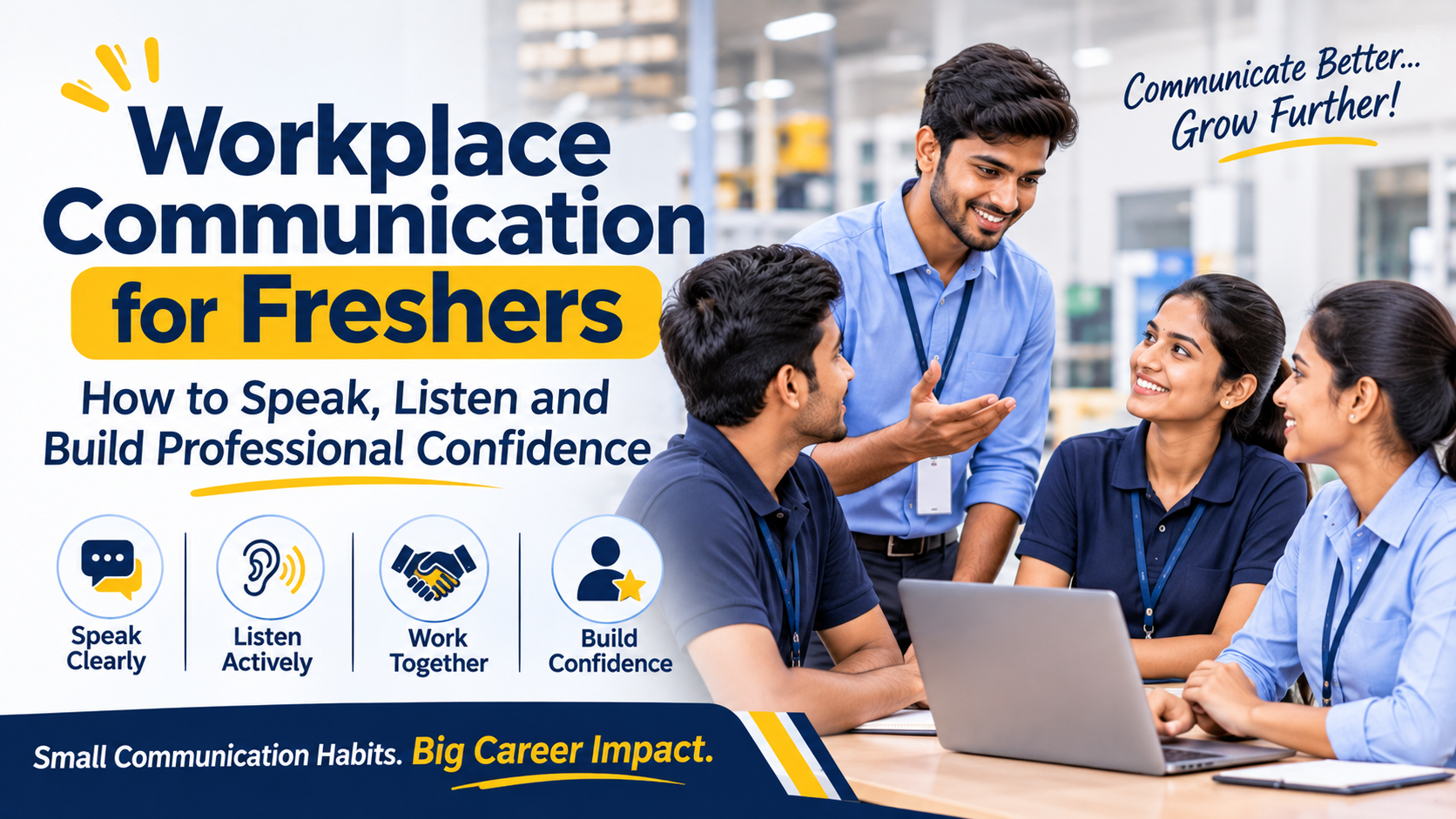
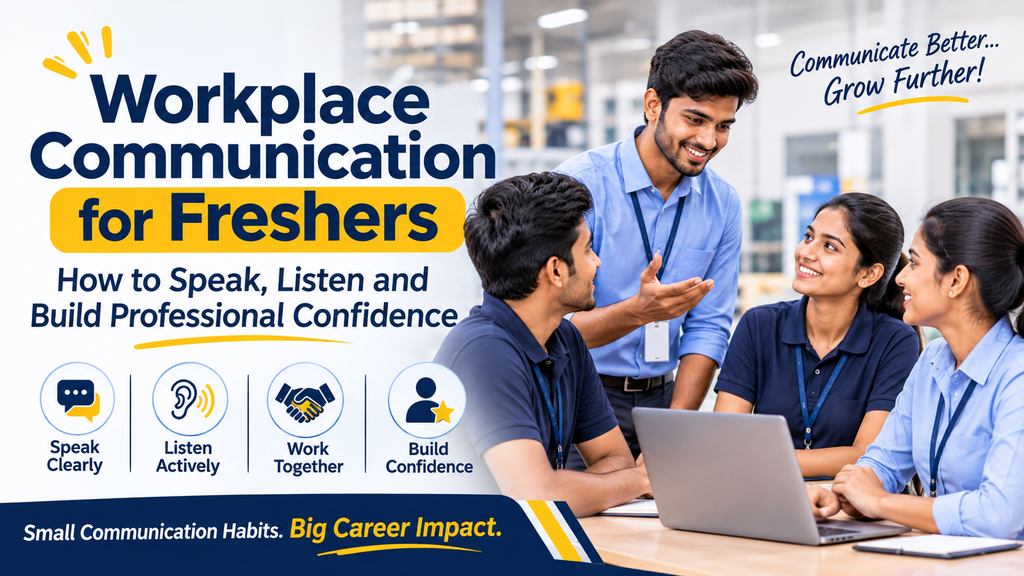
  • Workplace Communication for Freshers: How to Speak, Listen and Build Professional Confidence

    Workplace Communication for Freshers: How to Speak, Listen and Build Professional Confidence

    Starting your first job brings many new experiences. You meet unfamiliar people, learn new responsibilities and adjust to a professional environment.

    While technical knowledge and practical skills help you perform your tasks, communication plays an equally important role in how you work with others.

    Whether you are joining a warehouse, factory, retail store, delivery operation, hospitality business or office, you will need to communicate with supervisors, colleagues and customers.

    Good communication does not mean speaking fluent English or using complicated words. It means expressing information clearly, listening carefully, asking questions when necessary and responding respectfully.

    For freshers, developing these habits early can make the transition from education to employment much easier.

    Why Workplace Communication Matters

    Every workplace depends on people working together. Even when employees have individual responsibilities, their tasks are often connected.

    Consider a warehouse where one employee receives goods, another checks inventory and another prepares orders for dispatch. If information is not communicated properly, mistakes and delays can occur.

    Similarly, a retail employee needs to understand customer requirements, while a production worker must follow instructions and report operational problems.

    Effective communication helps employees:

    • Understand their responsibilities.
    • Avoid confusion and unnecessary mistakes.
    • Coordinate with team members.
    • Report problems on time.
    • Build professional relationships.
    • Develop confidence in the workplace.

    It is therefore an important skill for employees at every experience level.

    Understand the Different Types of Workplace Communication

    Workplace communication happens in different ways. Freshers should understand when and how to use each one.

    Verbal communication: Speaking directly with supervisors, colleagues or customers to exchange information.

    Written communication: Sharing information through emails, messages, notices or work-related documents.

    Non-verbal communication: Using body language, facial expressions and eye contact to support what you communicate.

    Active listening: Paying attention to instructions, understanding information and responding appropriately.

    For example, a supervisor may explain a task verbally, share the schedule through a message and expect employees to confirm that they understand their responsibilities.

    Being comfortable with these different forms of communication can help you work more effectively.

    How to Communicate with Your Supervisor

    For a fresher, communicating with a supervisor can sometimes feel intimidating. You may hesitate to ask questions because you do not want to appear inexperienced.

    However, asking for clarification is better than making assumptions and completing a task incorrectly.

    Here are some useful habits:

    • Listen carefully when instructions are given.
    • Ask questions if any part of the task is unclear.
    • Confirm important deadlines and responsibilities.
    • Inform your supervisor if you face a problem.
    • Share updates when requested.
    • Accept feedback positively.

    For example, instead of saying, “I don’t understand this work,” you can ask, “Could you please explain the process once more so I can complete it correctly?”

    Similarly, if you are unable to finish a task on time, communicate the reason early instead of waiting until the deadline has passed.
    Communication at workplace & it's importance

    The Importance of Listening

    Communication is not only about speaking. Listening is equally important.

    Many workplace mistakes happen because employees do not fully understand instructions or miss important details.

    Good listening involves:

    • Paying attention without interrupting.
    • Avoiding distractions during instructions.
    • Asking questions when something is unclear.
    • Repeating important information to confirm understanding.
    • Remembering key details such as quantities, deadlines and safety instructions.

    For example, if a warehouse supervisor assigns you a particular set of orders, confirm the order numbers, quantities and expected completion time before starting.

    Listening carefully can save time and reduce avoidable errors.

    Communicating with Colleagues and Team Members

    Most jobs involve some level of teamwork. Your ability to communicate respectfully with colleagues can influence how smoothly daily work gets completed.

    A few simple practices can help:

    Be respectful: Treat colleagues with courtesy, regardless of their role or experience.

    Share relevant information: Inform team members about important updates that affect their work.

    Offer support: Help colleagues when appropriate and within your responsibilities.

    Avoid unnecessary arguments: Discuss disagreements calmly and focus on resolving the issue.

    Appreciate teamwork: Recognise the contribution of others.

    Remember, a good team is built not only through individual performance but also through cooperation and mutual respect.

    Professional Communication on Calls and Messages

    Digital communication has become a regular part of many workplaces. Employees may receive shift updates, task instructions and work-related information through phone calls or messaging applications.

    Freshers should follow a few basic guidelines:

    • Respond to work-related messages within a reasonable time.
    • Keep messages short and clear.
    • Use respectful language.
    • Avoid sending incomplete or confusing information.
    • Confirm important instructions when necessary.
    • Do not share confidential workplace information with unauthorised people.

    For example, if your supervisor asks whether you can report for a scheduled shift, respond clearly instead of sending an unclear or unrelated message.

    Professional communication does not require formal language in every situation. It requires clarity, respect and responsibility.

    Common Communication Mistakes to Avoid

    Even small communication mistakes can create unnecessary confusion.

    Here are some habits freshers should avoid:

    Pretending to understand: Never say you understand an instruction if you are actually confused.

    Not reporting problems: Inform the concerned person when something goes wrong rather than hiding the issue.

    Interrupting others: Allow people to finish explaining before responding.

    Using disrespectful language: Maintain professional behaviour even during disagreements.

    Ignoring messages or calls: Important work-related information should not be overlooked.

    Sharing incorrect information: If you are unsure about something, verify it before communicating it to others.

    The goal is not to communicate perfectly every time. It is to develop the habit of communicating responsibly.

    How Freshers Can Improve Their Communication Skills

    Communication is a skill that improves with regular practice. You do not need expensive courses or advanced language knowledge to begin.

    Try these simple exercises:

    1. Practice introducing yourself: Prepare a short introduction that includes your name, education, skills and career interests.
    2. Read instructions carefully: Develop the habit of understanding information before responding.
    3. Practise asking questions: Learn to seek clarification politely and confidently.
    4. Improve your vocabulary: Learn common workplace words related to your industry and job responsibilities.
    5. Practice active listening: Pay attention when someone is explaining a task.
    6. Learn basic digital communication: Practise writing clear and professional messages.
    7. Ask for feedback: Request suggestions from trainers, supervisors or experienced colleagues.

    Most importantly, do not let language barriers stop you from communicating. Clear and respectful communication matters more than using complicated vocabulary.

    Conclusion: Communication Is a Skill You Build Every Day

    Your first job is an opportunity to learn more than just technical tasks. It teaches you how to work with people, manage responsibilities and become part of a professional environment.

    Good communication helps you understand instructions, build relationships, solve problems and become a dependable team member.

    Whether you work in a factory, warehouse, retail store, delivery operation or office, the ability to communicate clearly can support your professional development.

    As you explore your first career opportunity, remember that confidence does not come from knowing everything. It comes from being willing to listen, learn, ask questions and improve.

    Speak clearly. Listen carefully. Learn continuously. Build your career confidently.

    Job Raahi aims to connect candidates with employment opportunities across frontline and mass hiring roles. As you explore suitable openings, continue developing the practical and professional skills that help you prepare for the workplace.


  • Driving Career Growth

    Driving Career Growth

    Driving Career

    Driving career growth is essential for individuals who want to succeed as professional drivers, furthermore, it requires a combination of skills, knowledge, and experience. Consequently, many ITI students, diploma holders, and freshers are looking for ways to advance their careers in this field. Additionally, blue collar job seekers, factory workers, warehouse workers, drivers, electricians, fitters, welders, and machine operators can also benefit from driving career growth.

    Understanding Driving Career Growth

    Moreover, driving career growth involves learning new skills, gaining experience, and staying up-to-date with industry trends, for instance, many professional drivers are now using technology to improve their skills. Therefore, it is essential to have a clear understanding of what driving career growth entails. However, with the right mindset and resources, anyone can achieve their career goals and become a successful professional driver.

    Driving Career Opportunities

    Additionally, there are many driving career opportunities available, including jobs in logistics, transportation, and delivery services, consequently, these jobs can provide a sense of fulfillment and stability. Furthermore, many companies are now hiring professional drivers, and with the right skills and experience, individuals can secure well-paying jobs.

    Driving Career

    Types of Driving Jobs

    Moreover, there are various types of driving jobs available, including:
    * Truck driving
    * Taxi driving
    * Delivery driving
    * Bus driving
    * Chauffeur driving

    Career Development for Professional Drivers

    Driving career growth requires continuous learning and development, consequently, professional drivers must stay up-to-date with industry trends and best practices. Furthermore, many organizations, such as the National Career Service and the Ministry of Skill Development, offer training and development programs for professional drivers. However, with the right resources and support, anyone can achieve their career goals and become a successful professional driver, for instance, by visiting the Job Raahi Blog for expert tips and advice.

    Career Advancement Tips

    Additionally, here are some career advancement tips for professional drivers:
    * Develop strong communication skills
    * Stay physically and mentally fit
    * Learn new skills and technologies
    * Network with other professionals
    * Set clear career goals

    Driving Career Level Salary Range Experience Required
    Entry-level driver 20,000 – 30,000 0-2 years
    Experienced driver 30,000 – 50,000 2-5 years
    Senior driver 50,000 – 80,000 5-10 years
    Lead driver 80,000 – 1,00,000 10+ years

    Driving Career Tips and Advice

    Driving career growth requires dedication and hard work, consequently, professional drivers must be willing to learn and adapt to new situations. Furthermore, many experts recommend that professional drivers stay organized, manage their time effectively, and prioritize their safety and well-being, for instance, by using the download Job Raahi app to find job opportunities and stay connected with other professionals. However, with the right mindset and resources, anyone can achieve their career goals and become a successful professional driver, additionally, by visiting the Job Raahi website for more information.

    Driving Career Guidance

    Moreover, here are some driving career guidance tips:
    * Research different types of driving jobs
    * Network with other professionals
    * Stay up-to-date with industry trends
    * Develop a strong resume and cover letter
    * Prepare for interviews and assessments

    Driving Career Path and Guidance

    Driving career growth involves setting clear goals and developing a plan to achieve them, consequently, professional drivers must be proactive and take initiative to advance their careers. Furthermore, many experts recommend that professional drivers seek guidance from experienced professionals and stay open to new opportunities and challenges, for instance, by attending workshops and seminars, or by joining professional associations.

    Conclusion

    Driving career growth is essential for professional drivers who want to succeed in their careers, consequently, it requires a combination of skills, knowledge, and experience. Therefore, we recommend that you download Job Raahi app to find job opportunities and stay connected with other professionals, and visit the Job Raahi website for more information.

    Sources and References

    * National Career Service
    * Ministry of Skill Development

  • Finding Better Job Opportunities with Job Raahi

    Finding Better Job Opportunities with Job Raahi

    Job Opportunities

    Job opportunities are becoming increasingly scarce and competitive, making it challenging for individuals to find the right fit. With the rise of the digital age, job seekers are now turning to online platforms to search for better job opportunities. In India, there is a vast pool of blue-collar and grey-collar workers who are struggling to find employment that matches their skills and interests. This is where Job Raahi comes in, a leading job portal that caters to the needs of these workers, providing them with access to a wide range of job opportunities.

    Understanding the Job Market

    The job market in India is rapidly evolving, with new industries and sectors emerging every day. This has led to an increase in employment opportunities, but it has also made it more challenging for job seekers to navigate the market. According to the National Skill Development Corporation (NSDC), the Indian job market is expected to grow significantly in the coming years, with a focus on skilled workers. Job Raahi recognizes this trend and provides job seekers with the necessary tools and resources to enhance their skills and increase their chances of finding better job opportunities.

    Career Development and Job Search

    Career development is a crucial aspect of finding better job opportunities. Job seekers need to have a clear understanding of their strengths, weaknesses, and interests to make informed decisions about their career paths. Job Raahi offers a range of resources and services to help job seekers develop their careers, including resume building, interview preparation, and job search strategies. By leveraging these resources, job seekers can improve their chances of finding employment that matches their skills and interests. For more information on career development and job search strategies, visit the Job Raahi blog.

    Job Opportunities and Employment

    Job opportunities are not limited to white-collar jobs; there are numerous grey collar jobs and blue collar jobs available in the market. These jobs often require specific skills and training, and job seekers need to have the right qualifications to be considered for these positions. Job Raahi specializes in providing job seekers with access to these types of job opportunities, including jobs in the manufacturing, construction, and service sectors. By registering on the Job Raahi platform, job seekers can browse through a wide range of job listings and apply for positions that match their skills and interests.

    Job Placement and Career Growth

    Job placement is a critical aspect of finding better job opportunities. Job seekers need to have a clear understanding of the job market and the skills required by employers to increase their chances of getting hired. Job Raahi works closely with employers to understand their requirements and provides job seekers with the necessary training and resources to enhance their skills. By doing so, Job Raahi helps job seekers achieve career growth and find employment that matches their long-term goals. According to the International Labour Organization (ILO), job placement and career growth are critical components of a successful job search strategy.

    Conclusion

    Finding better job opportunities is a challenging task, but with the right resources and support, job seekers can increase their chances of success. Job Raahi is a leading job portal that provides blue-collar and grey-collar workers with access to a wide range of job opportunities, career development resources, and job search strategies. By registering on the Job Raahi platform, job seekers can take the first step towards finding better job opportunities and achieving their long-term career goals. To learn more about Job Raahi and how it can help you find better job opportunities, visit https://blog.jobraahi.com/ and start your job search journey today. You can also visit our job search tips section to get valuable insights and advice on how to improve your job search strategy.

    Sources and References