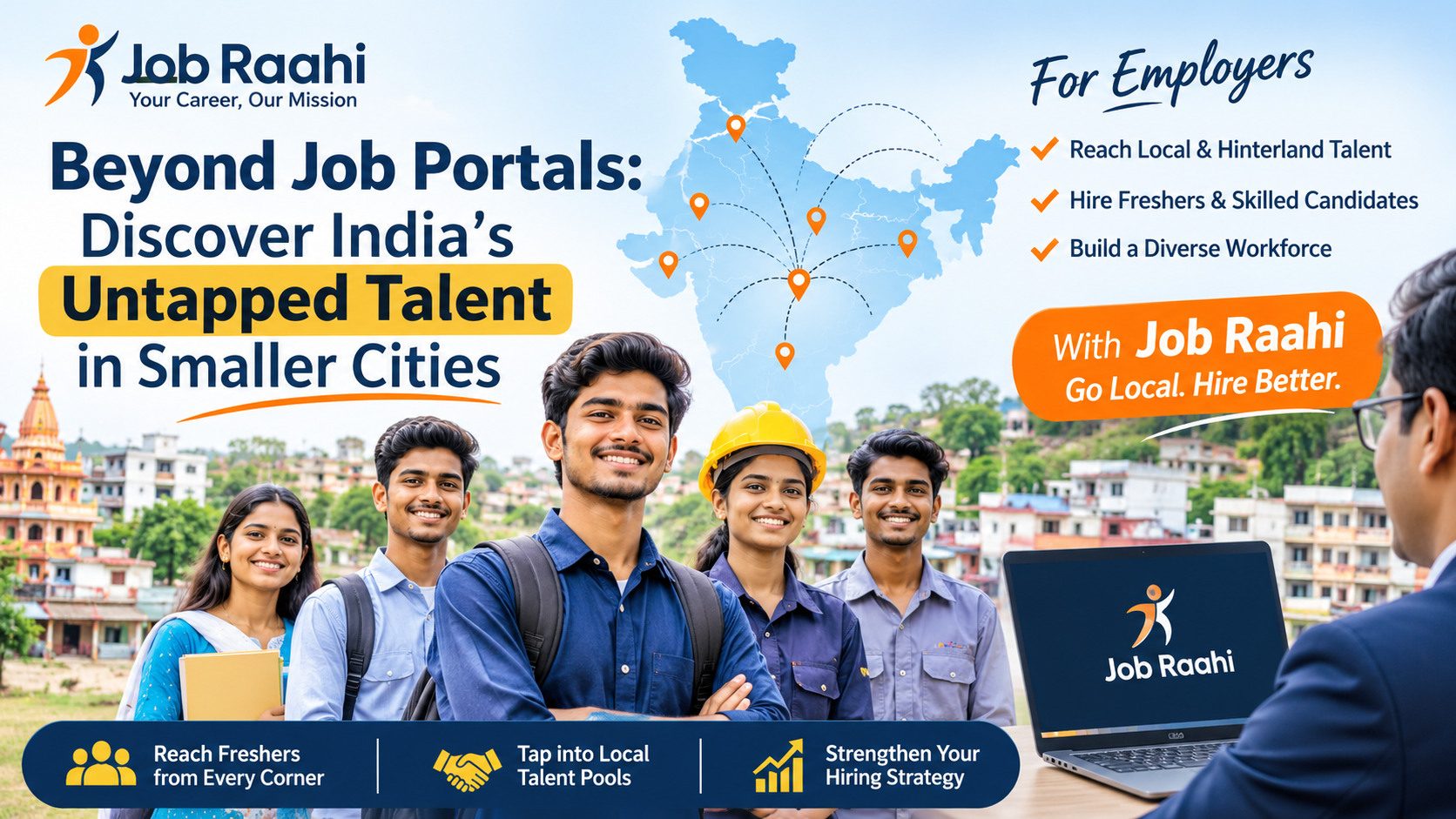
For many employers in India, recruitment has traditionally focused on major employment hubs such as Delhi NCR, Mumbai, Bengaluru, Pune and Hyderabad. These cities offer access to large candidate markets, established professional networks and multiple recruitment channels.
However, this approach can leave a significant part of India’s workforce unexplored.
Across smaller cities, towns and hinterland regions, many candidates are actively looking for employment opportunities. They may have completed their 10th or 12th standard, earned an ITI or diploma qualification, graduated recently or developed practical skills through vocational training. Yet, connecting them with suitable employers is not always easy.
For companies hiring in large numbers, particularly for frontline, operational and entry-level roles, expanding beyond major cities can open up new sourcing possibilities.
The question is no longer just where employers can find candidates. It is how they can reach the right candidates wherever they are.
Why Employers Need to Look Beyond Major Cities
Hiring from established employment hubs may seem convenient, but depending entirely on a few locations can limit the available talent pool.
For businesses with multiple warehouses, retail outlets, production facilities, delivery operations or customer support centres, recruitment requirements often extend beyond metropolitan areas.
Consider a company opening a warehouse in a developing industrial area. Hiring exclusively from a distant metropolitan city may create challenges related to commuting, relocation and candidate availability.
Reaching people from nearby towns and surrounding districts could provide access to candidates who are already familiar with the local area and interested in employment closer to home.
Expanding recruitment geographically can help employers:
- Explore a wider pool of potential candidates.
- Connect with people who may not actively use mainstream job platforms.
- Discover freshers and candidates with limited work experience.
- Reach candidates closer to operational locations.
- Reduce overdependence on a limited number of sourcing markets.
The objective is not to stop hiring from major cities. It is to make recruitment more geographically diverse.
The Untapped Potential of Smaller Cities and Hinterlands
India’s smaller cities and hinterland regions have a diverse workforce with different educational backgrounds, practical skills and career interests.
Many candidates from these regions have completed vocational courses, ITI programmes, polytechnic diplomas or general graduation. Others have developed practical knowledge through informal work, family businesses or local training initiatives.
However, access to employment information and direct connections with employers can vary significantly across locations.
This creates an opportunity for companies to expand their recruitment approach.
For example:
- A manufacturing company can explore ITI and diploma candidates from nearby districts.
- A logistics business can connect with freshers interested in warehouse and inventory operations.
- A retail organisation can reach candidates looking for sales and store-level opportunities.
- A customer support company can explore graduates from smaller educational institutions.
The important point is that a candidate’s location should not automatically become a limitation. Employers should evaluate qualifications, relevant skills, willingness to learn and suitability for the role.
Why Traditional Recruitment Channels May Not Be Enough
Traditional recruitment channels continue to play an important role. Job portals, recruitment agencies, employee referrals and campus placements can help companies attract candidates.
However, relying on only a few channels may restrict the reach of a hiring campaign.
Some candidates may not know which platforms to use. Others may not have professional networks or experience creating resumes and applying for jobs online.
Similarly, employers may find it difficult to establish connections with candidates in locations where they have limited recruitment presence.
This is particularly relevant for frontline and mass hiring, where companies may need to fill multiple similar positions across different locations.
A more effective approach is to combine existing recruitment channels with additional local and digital sourcing methods.
Practical Ways to Reach Candidates in Smaller Cities
Employers do not need to depend on a single recruitment method. A combination of local engagement and digital outreach can help improve candidate reach.
A. Connect with ITIs, Polytechnics and Colleges
Educational institutions are useful starting points for reaching freshers and candidates with technical or vocational qualifications.
Campus visits, placement discussions, seminars and job-awareness sessions can help employers introduce opportunities directly to students.
B. Build Local Community Networks
Local employment networks can help employers reach people who may not regularly search for jobs online.
Companies can explore connections with community organisations, local employment groups, training centres and other relevant networks.
Clear communication about job roles, eligibility, location and application processes is important to build trust.
C. Use Regional Digital Outreach
Digital recruitment campaigns can help employers communicate openings to candidates in specific cities, districts or regions.
Using relevant regional languages and simple job descriptions can make vacancies easier to understand.
Employers should clearly mention the work location, salary range where possible, shift requirements, eligibility and application process.
D. Explore Local Hiring Partners
For companies with recurring requirements, local recruitment partners and institutions can support candidate awareness and sourcing.
The key is to work with reliable partners who understand the local candidate market and can communicate genuine job opportunities.
E. Use Digital Job Platforms
Digital platforms can help employers extend their reach beyond their immediate geographical network.
By posting relevant vacancies on platforms that connect with frontline and entry-level job seekers, companies can explore candidates from different cities and regions without depending entirely on physical recruitment drives.
The Role of Digital Job Platforms in Expanding Local Hiring
Digital recruitment has made it easier for employers to communicate vacancies across geographical boundaries.
For frontline and entry-level recruitment, this can be particularly useful.
Consider a logistics company looking for warehouse associates in multiple locations. Instead of relying only on walk-in drives or local referrals, it can use digital job platforms as an additional channel to communicate openings and attract interested candidates.
Similarly, a retail business can explore candidates from nearby towns for store-level roles, while a manufacturing unit can reach ITI and diploma freshers for suitable operational positions.
Digital platforms do not replace local recruitment efforts. They complement them by making job information more accessible and creating another connection between employers and candidates.
How Job Raahi Helps Employers Reach Hinterland Talent
This is where platforms focused on frontline and mass hiring can play an important role.
Its focus on candidates beyond the traditional white-collar job market creates an additional channel for employers looking to expand their sourcing reach.
Here is how Job Raahi supports this approach:
Reaching Candidates Beyond Major Employment Hubs
Job Raahi focuses on connecting employers with candidates from different parts of India, including hinterland and less-explored talent markets.
This gives companies another avenue to communicate their vacancies beyond the candidate networks they may already be using.
For employers hiring for operational and frontline positions, reaching candidates from different regions can help broaden their sourcing efforts.
Access to Freshers and Candidates with Limited Experience
Not every frontline vacancy requires several years of professional experience.
Many employers are open to candidates who are entering the workforce, have recently completed their education or have limited work experience.
Job Raahi provides an additional platform for employers to reach such candidates, including freshers and individuals with around six months to a couple of years of experience, depending on the vacancy requirements.
Connecting Employers with Job-Ready and Developing Talent
Job Raahi’s wider ecosystem includes skill centres across India, where candidates can be trained and developed in line with industry needs.
This creates a connection between skill development and employment opportunities, helping candidates explore relevant openings based on their backgrounds and preparation.
Supporting Frontline and Mass Hiring Requirements
Job Raahi focuses on opportunities across areas such as:
- Logistics and warehousing
- Retail and sales
- Delivery operations
- Hospitality
- BPO and customer support
- Field operations
- Other frontline and operational roles
For employers, Job Raahi can work as an additional sourcing channel alongside their existing job portals, recruitment partners, referrals and campus networks.
The idea is simple: companies should not have to limit their search to candidates who are already visible in the most familiar hiring markets.
By extending their reach through platforms like Job Raahi, employers can explore a wider pool of candidates and communicate opportunities to people who may otherwise have limited access to such openings.
Why Smaller-City Hiring Can Benefit Freshers
Expanding recruitment into smaller cities is not only beneficial for employers. It can also create meaningful opportunities for young people entering the workforce.
Freshers often face a common challenge: they need professional experience to get a job, but they need a job to gain that experience.
When employers consider candidates from smaller cities for suitable entry-level roles, they create more opportunities for people to begin their careers.
Some potential benefits include:
Access to More Opportunities: Candidates can discover vacancies from employers they may not have known about earlier.
Opportunities Closer to Home: Local or nearby openings may allow candidates to start working without immediately relocating to a major city.
A Starting Point for Career Growth: Entry-level roles can help freshers develop practical knowledge, workplace discipline and industry exposure.
Greater Visibility for Vocational Qualifications: ITI, diploma and other vocational candidates can explore roles where their education and practical skills are relevant.
Digital platforms like Job Raahi can support this process by making frontline and entry-level job opportunities more accessible to candidates across different locations.
Building a More Inclusive and Wider Hiring Strategy
A few practical steps can help:
- Map hiring locations: Identify where your business needs employees and which nearby towns or districts could be relevant sourcing markets.
- Understand candidate requirements: Define the education, experience, skills and other eligibility criteria for each role.
- Use multiple sourcing channels: Combine job portals, local institutions, referrals, regional outreach and digital platforms.
- Make job information accessible: Use clear language and provide complete information about the position.
- Measure sourcing performance: Track applications, interview attendance, selection rates, joining rates and retention by location and source.
- Improve based on results: Identify which regions and channels are bringing suitable candidates and refine your approach.
A wider hiring strategy should also maintain consistent screening standards. Reaching more candidates is valuable only when employers can identify people who are genuinely suitable for the role.
Conclusion: The Next Talent Opportunity May Be Beyond Your Usual Hiring Market
India’s talent market extends far beyond its major metropolitan cities. Smaller cities, towns and hinterland regions have candidates who are looking for opportunities to learn, earn and build their careers.
For employers, exploring these markets can create additional sourcing opportunities, particularly for frontline, operational and entry-level positions.
The way forward is not to abandon traditional recruitment channels but to strengthen them with local engagement, educational partnerships and digital job platforms.
The next suitable candidate for your organisation may not be in the city where you usually recruit. They may be in a smaller town, a nearby district or a hinterland region that your current hiring strategy has not yet reached.
It is time to look beyond familiar talent markets and make recruitment more accessible, diverse and geographically inclusive.