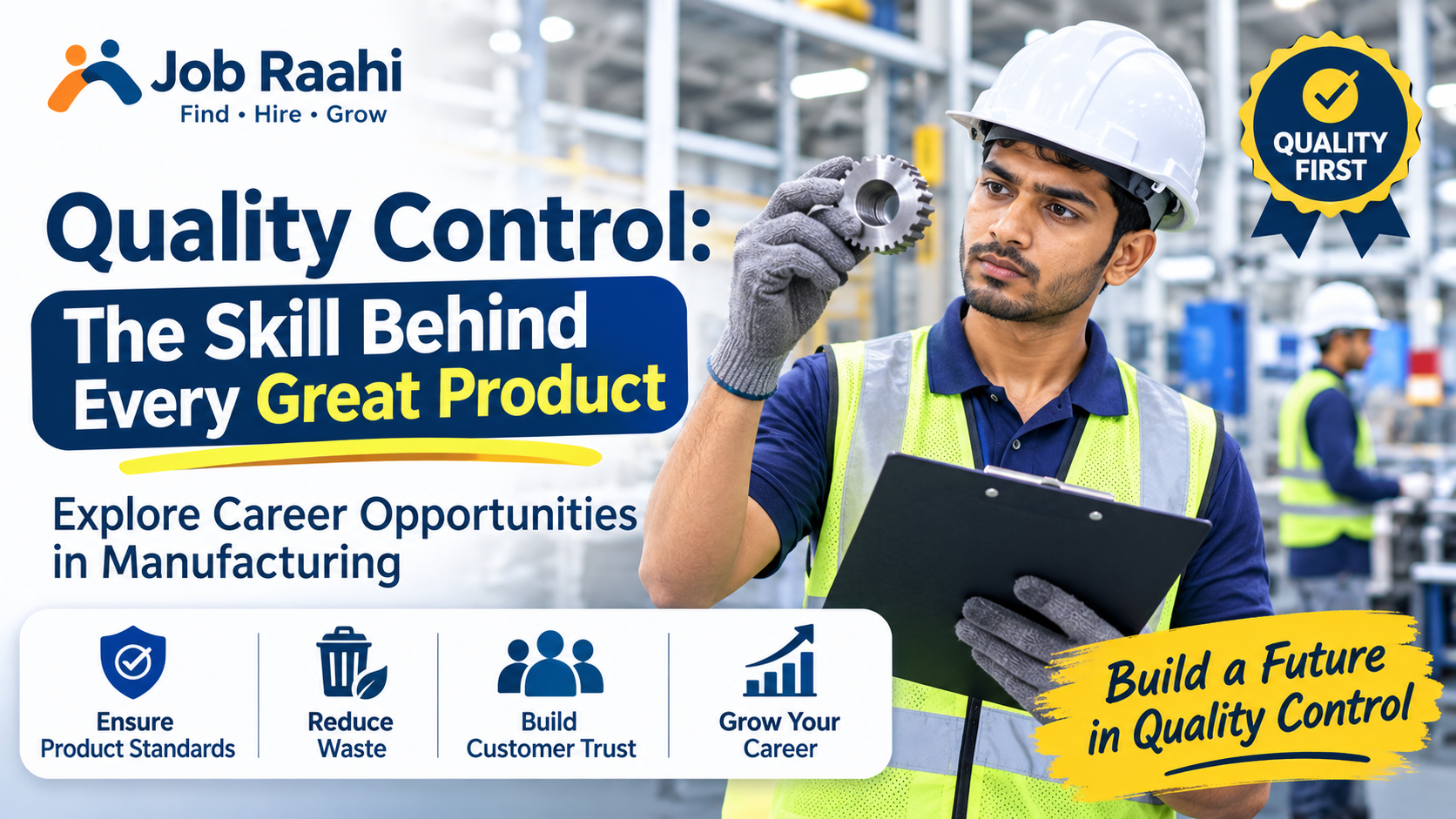
Tag: ITI Career Opportunities

  • Why Quality Control Is One of the Most Important Functions in Manufacturing

    Why Quality Control Is One of the Most Important Functions in Manufacturing

    When we purchase a mobile phone, a vehicle, packaged food or even a simple household product, we expect it to work properly and meet certain standards. But have you ever wondered how manufacturers ensure that every product meets those expectations?

    One important answer is quality control.

    From checking raw materials to inspecting finished products, quality control plays a major role in manufacturing. It helps businesses identify defects, reduce waste and maintain consistency. It also creates employment opportunities for people who are interested in technical and detail-oriented work.

    For freshers, ITI students and diploma holders, quality control can be a practical entry point into the manufacturing industry.

    What Is Quality Control in Manufacturing?

    Quality control refers to the process of checking products, materials and production activities to ensure that they meet defined quality standards.

    It involves inspecting products at different stages of manufacturing, identifying defects and reporting problems so that corrective action can be taken.

    For example, in an automobile manufacturing unit, quality checks may include examining vehicle components, checking measurements and identifying visible defects before a product moves to the next production stage.

    Similarly, in food processing, quality checks may involve packaging inspections, weight verification, hygiene checks and monitoring product consistency.

    The objective is simple: make sure the product meets the required specifications before it reaches the customer.

    Why Is Quality Control So Important?

    Quality control is not limited to finding defective products. It directly influences business performance and customer satisfaction.

    Maintains product standards: Regular inspections help manufacturers maintain consistency across different production batches.

    Reduces material wastage: Identifying defects early can prevent additional resources from being spent on products that do not meet specifications.

    Improves customer satisfaction: Customers are more likely to trust products that consistently meet expected quality standards.

    Supports workplace safety: In industries where product defects can create safety risks, quality checks help identify potential problems.

    Strengthens business reputation: Consistent quality helps manufacturers build long-term relationships with customers and business partners.
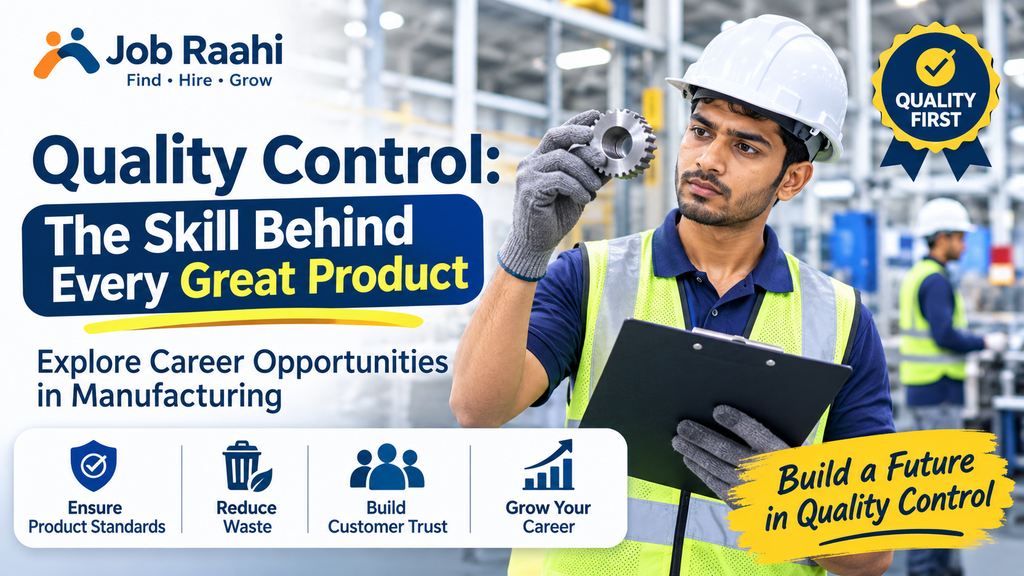
    Quality control and checks as a Quality Inspector

    What Does a Quality Control Employee Do?

    The responsibilities depend on the industry and the employee’s experience level. However, common activities include:

    • Inspecting raw materials and finished products.
    • Checking product dimensions, weight, appearance and specifications.
    • Identifying defects or irregularities.
    • Using basic measuring instruments and inspection tools.
    • Maintaining inspection records and checklists.
    • Reporting quality issues to supervisors.
    • Following safety and quality procedures.
    • Supporting corrective actions when defects are identified.

    In some workplaces, employees may also use digital systems to record inspection results and track production quality.

    Career Opportunities in Quality Control

    Manufacturing businesses require quality checks across several industries. This creates opportunities for candidates with different educational and technical backgrounds.

    Some common roles include:

    Quality Checker: Examines products for visible defects and checks whether they meet basic requirements.

    Quality Inspector: Conducts inspections using defined procedures and measuring tools.

    Production Quality Assistant: Supports quality checks during different stages of the production process.

    Packaging Quality Checker: Checks packaging, labelling, sealing and product presentation.

    Quality Control Technician: Performs technical inspections and supports testing activities, depending on the qualification and training required.

    These roles may be available in automobile, electronics, textiles, food processing, pharmaceutical, engineering and other manufacturing units.

    Skills Required for Quality Control Jobs

    Quality control requires attention to detail and the ability to follow instructions carefully. Candidates do not always need advanced technical knowledge for entry-level roles, but they should be willing to learn.

    Important skills include:

    • Attention to detail: Noticing small differences, defects and irregularities.
    • Basic technical understanding: Understanding measurements, product specifications and inspection procedures.
    • Observation skills: Identifying visible issues during product checks.
    • Basic mathematics: Working with measurements, quantities and simple calculations.
    • Communication: Reporting problems clearly to supervisors and team members.
    • Discipline: Following inspection procedures and maintaining accurate records.
    • Safety awareness: Using tools and equipment responsibly.

    Candidates with ITI or diploma qualifications in relevant trades may find certain technical quality control roles particularly suitable, depending on employer requirements.

    Can Freshers Build a Career in Quality Control?

    Yes. Many manufacturing units have entry-level roles where freshers can learn inspection procedures under supervision.

    However, the eligibility criteria vary. Some employers may accept candidates with a 10th or 12th qualification for basic checking roles, while technical inspector and technician positions may require an ITI, diploma or relevant experience.

    Freshers can begin by understanding basic manufacturing processes, learning measurement techniques and becoming familiar with common quality terms.

    The first job can provide practical exposure to production standards, inspection methods and workplace discipline. With experience and additional training, employees may explore more specialised quality-related responsibilities.

    How to Prepare for a Quality Control Job

    Candidates interested in this field can take a few practical steps:

    1. Understand the manufacturing process: Learn how products are made and where quality checks take place.
    2. Practise basic measurements: Become familiar with measuring tools such as rulers, vernier calipers and micrometers where relevant.
    3. Learn common quality terms: Understand concepts such as defect, tolerance, inspection, rejection and rework.
    4. Develop observation skills: Practise identifying differences in product appearance, dimensions and finishing.
    5. Follow safety procedures: Understand the importance of protective equipment and workplace instructions.
    6. Prepare for interviews: Be ready to explain why accuracy, consistency and attention to detail matter in manufacturing.

    Candidates should always check the qualification, training and experience requirements mentioned in a job description before applying.

    How Job Platforms Can Help Candidates Find Opportunities

    Finding a suitable first job can be challenging, especially when candidates are unfamiliar with different manufacturing roles.

    Digital job platforms make it easier to discover openings, understand job requirements and explore opportunities across industries and locations.

    For employers, these platforms can provide an additional channel to reach candidates looking for frontline and entry-level opportunities.

    Job Raahi focuses on connecting employers with candidates for frontline and mass hiring requirements. Candidates can explore relevant openings based on their qualifications, skills and experience, while employers can use the platform as an additional sourcing channel.

    Conclusion

    Quality control is an essential part of modern manufacturing. It helps businesses maintain product standards, reduce defects and deliver consistent results.

    At the same time, it offers career opportunities for candidates who are observant, disciplined and interested in learning practical technical skills.

    For freshers, ITI students and diploma holders, quality control can be a meaningful way to enter the manufacturing workforce and develop industry experience.

    A good product is not just manufactured; it is checked, tested and improved at every stage. And quality control professionals help make that possible.


  • From Classroom to Career: A Practical Guide for ITI, Polytechnic and Diploma Freshers

    From Classroom to Career: A Practical Guide for ITI, Polytechnic and Diploma Freshers

    Completing an ITI, Polytechnic or Diploma course is an important achievement. You have spent time learning technical concepts, understanding tools and equipment, attending practical sessions and preparing yourself for the professional world.

    But after receiving your certificate, one question often comes to mind:

    “What should I do next to get my first job?”

    For many freshers, the transition from education to employment can feel confusing. You may have technical knowledge but limited industry exposure. You may know your trade but feel unsure about interviews, workplace expectations or where to find suitable openings.

    The good news is that your career does not have to begin with years of experience. Your technical education, willingness to learn and practical abilities can help you take the first step.

    Let’s understand how.

    Screenshot 2026 10 30 103150

    Your Course Is Complete. What’s the Next Step?

    The first step is to understand what you have learned and where those skills can be used.

    An ITI, Polytechnic or Diploma qualification can open doors to different types of opportunities depending on your specialisation, practical skills and the employer’s requirements.

    For example:

    • ITI Electrician: Electrical maintenance, installation assistance and technician roles.
    • ITI Fitter: Fitter, production assistant and machine maintenance roles.
    • ITI Welder: Welding, fabrication and workshop-related opportunities.
    • Diploma in Mechanical Engineering: Production, quality inspection and maintenance roles.
    • Diploma in Civil Engineering: Site supervision assistance, surveying and quality-related roles.
    • Diploma in Electronics: Electronics assembly, testing and technician roles.
    • Diploma in Computer Science or IT: Technical support, hardware assistance and entry-level IT support roles.

    These are examples, not guaranteed job placements. Actual eligibility and responsibilities depend on the vacancy.

    Before applying, identify your trade, the skills you have practised and the kind of workplace where you would like to begin.

    What Career Opportunities Can You Explore?

    Many students assume that their only option is to find a job with a designation that exactly matches their course. While finding a relevant technical role is a good goal, it is worth exploring other entry-level opportunities too.

    Here are a few career paths to consider:

    Technical and trade-related jobs

    These roles allow you to apply your course knowledge in practical settings. Examples include technicians, machine operators, electricians, fitters, maintenance assistants and quality-checking assistants.

    Production and manufacturing

    Manufacturing units need people who can support production activities, operate equipment, follow safety procedures and maintain quality standards.

    Warehouse and logistics

    Warehouses and logistics companies offer roles such as warehouse associates, inventory assistants, dispatch assistants and operations associates. These can help freshers understand supply chains, inventory handling and day-to-day operations.

    Field and service roles

    Installation support, equipment servicing, customer support and field operations can offer practical exposure to people who enjoy hands-on work and interacting with customers.

    Customer support and operations

    Students with basic computer knowledge, communication skills and an interest in problem-solving can also explore customer support, back-office and operations opportunities.

    Your first job does not have to define your entire career. It can be a starting point from which you learn, gain experience and move towards your long-term goals.

    ITI students getting industrial Experience

    Don’t Ignore Apprenticeships: Your First Step into Industry

    One of the most useful routes for eligible freshers is apprenticeship training.

    An apprenticeship allows candidates to gain practical experience in an actual workplace while learning under an employer’s training arrangement. It can help bridge the gap between what you studied and what an industry expects.

    ITI pass-outs and eligible Diploma holders can explore apprenticeship opportunities through the relevant government portals.

    For example:

    • National Apprenticeship Promotion Scheme (NAPS): A route for eligible ITI pass-outs and other categories of apprentices.
    • National Apprenticeship Training Scheme (NATS): Offers apprenticeship opportunities for eligible Diploma and Graduate candidates.

    Remember that eligibility, available trades, duration and selection requirements vary. An apprenticeship is a training opportunity and does not automatically guarantee a permanent job.

    However, the practical exposure, workplace discipline and professional experience you gain can strengthen your profile when applying for future roles.

    Skills That Can Make You More Employable

    Your technical qualification matters, but employers also look at how well you can apply your knowledge and work with others.

    Here are five skills worth developing:

    1. Practical knowledge

    Understand the tools, equipment, processes and safety practices related to your trade. Be prepared to explain what you have actually worked on during practical sessions.

    2. Basic computer skills

    Learn to use email, spreadsheets, online forms and basic digital tools. These skills are useful across technical, warehouse and administrative roles.

    3. Communication

    You do not need perfect English for every job. What matters is being able to understand instructions, ask questions and communicate clearly in the language required for the role.

    4. Problem-solving

    Workplaces often involve small challenges that require patience and logical thinking. Learn to understand a problem before jumping to a solution.

    5. Workplace discipline

    Punctuality, teamwork, safety awareness and responsibility are important in almost every industry. These habits can help employers see you as someone they can rely on.

    How to Prepare for Your First Job

    You do not need an elaborate resume or years of experience to start applying. You need a clear profile that communicates your education, skills and willingness to learn.

    Here are some practical steps:

    • Prepare a simple resume: Include your course, trade or specialisation, institute, year of completion and relevant skills.
    • Mention practical projects: Add workshop assignments, final-year projects, lab work or hands-on training.
    • Keep your documents ready: Organise your resume, educational certificates, identity documents and other required records.
    • Practise common interview questions: Be ready to explain what you studied, what you can do and why you want the role.
    • Understand the job before applying: Read the responsibilities, location, working hours, salary details and eligibility criteria.
    • Stay open to learning: Your first workplace may introduce tools and processes that you did not encounter during your course.

    A fresher who can explain their knowledge honestly and demonstrate a willingness to learn can make a positive impression.

    Five Mistakes Freshers Should Avoid

    Starting a career can be challenging, especially when you are applying for your first job. Avoid these common mistakes:

    1. Applying without reading the job description: Make sure the role matches your qualifications and expectations.
    2. Ignoring practical experience: Even college projects and workshop activities can demonstrate your abilities.
    3. Waiting only for the perfect job: Explore relevant entry-level opportunities while continuing to work towards your preferred role.
    4. Sharing incorrect information: Keep your resume and application details accurate.
    5. Paying money for a promised job: Be cautious of anyone demanding payment in exchange for guaranteed selection. Verify the employer and recruitment process before sharing sensitive documents or making payments.

    A genuine opportunity should have clear details about the employer, role, selection process and employment conditions.

    A Simple Action Plan to Start Your Career

    If you are unsure where to begin, follow this seven-day plan:

    • Day 1: Identify your trade, specialisation and preferred job roles.
    • Day 2: Prepare your resume and organise your certificates.
    • Day 3: Practise explaining your course, projects and practical skills.
    • Day 4: Register on relevant job and apprenticeship portals.
    • Day 5: Search for suitable technical, operations and entry-level vacancies.
    • Day 6: Apply to relevant openings and prepare for interviews.
    • Day 7: Review your applications, follow up where appropriate and identify skills you can improve.

    You do not need to complete everything perfectly in one week. The purpose is to build a consistent job-search routine.

    Find Your Next Opportunity with Job Raahi

    Your ITI, Polytechnic or Diploma course has given you a foundation. Now it is time to take that knowledge into the workplace.

    Whether you are looking for your first technical role, an entry-level operations opportunity or a job where you can learn through practical experience, keep exploring suitable openings.

    Job Raahi helps candidates discover job opportunities across sectors such as logistics, retail, sales, customer support, warehouse operations and other frontline roles.

    You can create your profile, explore relevant vacancies and apply for opportunities that match your interests and qualifications.

    Your first job may be the beginning of something much bigger. Stay curious, keep learning and take that first step towards your career.

    Explore opportunities and get started with Job Raahi.

  • ITI Fresher Interview Questions

    ITI Fresher Interview Questions

    ITI Fresher Interview

    An ITI Fresher Interview is a crucial step for students who have completed their Industrial Training Institute courses, as it determines their entry into the job market. Furthermore, preparing for such interviews can be challenging, especially for those who are new to the process. Consequently, it is essential to understand the most common questions asked in ITI fresher interviews to increase one’s chances of getting hired. Additionally, researching the company and practicing responses to typical interview questions can help ITI students feel more confident during the interview process.

    Introduction to ITI Fresher Interview Questions

    For instance, many ITI students struggle to find the right resources to prepare for their interviews. However, with the help of online platforms such as Job Raahi Blog, they can access a wide range of interview questions and tips. Moreover, ITI fresher interview questions can vary depending on the company and the position, but there are some common questions that are often asked.

    Common ITI Fresher Interview Questions

    An ITI Fresher Interview typically includes a combination of technical and behavioral questions, such as those related to the student’s coursework, projects, and skills. Therefore, it is essential to review the course material and be prepared to answer questions about it. Some common ITI fresher interview questions include:

    • What inspired you to pursue an ITI course?
    • Can you describe your final year project?
    • How do you stay updated with the latest developments in your field?
    • Why do you want to work for our company?
    • Where do you see yourself in five years?

    ITI Fresher Interview

    ITI Fresher Interview Preparation Tips

    To prepare for an ITI Fresher Interview, students should research the company and the position they are applying for. Additionally, they should practice answering common interview questions and prepare any materials they may need, such as a resume and references. Furthermore, it is essential to dress professionally and be punctual for the interview. For example, Job Raahi provides a range of resources and tips to help ITI students prepare for their interviews.

    Researching the Company

    Researching the company is a crucial step in preparing for an ITI Fresher Interview. Consequently, students should learn about the company’s products, services, and mission. Moreover, they should review the company’s website and social media pages to get a sense of their values and culture.

    Practicing Interview Questions

    Practicing interview questions is another essential step in preparing for an ITI Fresher Interview. Therefore, students should review common interview questions and practice answering them. Additionally, they should consider using online resources, such as download Job Raahi app, to access a wide range of interview questions and tips.

    ITI Fresher Salary and Job Openings

    An ITI Fresher Interview can lead to a range of job opportunities, depending on the student’s skills and qualifications. Furthermore, the salary for ITI fresher jobs can vary depending on the company and the position. However, with the help of online platforms such as National Career Service, students can access a wide range of job openings and salary information.

    Company Position Salary
    Tata Motors Technician 15000-20000
    Maruti Suzuki Automotive Engineer 20000-25000
    LG Electronics Electrical Engineer 25000-30000
    Samsung Mechanical Engineer 20000-25000

    Job Openings

    There are a range of job openings available for ITI fresher students, depending on their skills and qualifications. Moreover, online platforms such as Ministry of Skill Development provide a wide range of job openings and training programs for ITI students.

    ITI Training Institutes and Career Opportunities

    ITI training institutes play a crucial role in providing students with the skills and qualifications they need to succeed in their careers. Furthermore, these institutes offer a range of career opportunities, depending on the student’s interests and skills. Some of the most common career opportunities for ITI students include:

    • Technician
    • Automotive Engineer
    • Electrical Engineer
    • Mechanical Engineer
    • Quality Control Inspector

    An ITI Fresher Interview is an essential step in securing these career opportunities, and students should be well-prepared to answer common interview questions and showcase their skills and qualifications.

    Conclusion

    In conclusion, an ITI Fresher Interview is a crucial step for students who have completed their Industrial Training Institute courses. Moreover, preparing for such interviews can be challenging, but with the help of online resources and tips, students can increase their chances of getting hired. Therefore, we recommend that ITI students download the Job Raahi app to access a wide range of interview questions and tips, and to stay updated with the latest job openings and career opportunities.

    Sources and References

    Some of the sources used in this article include: