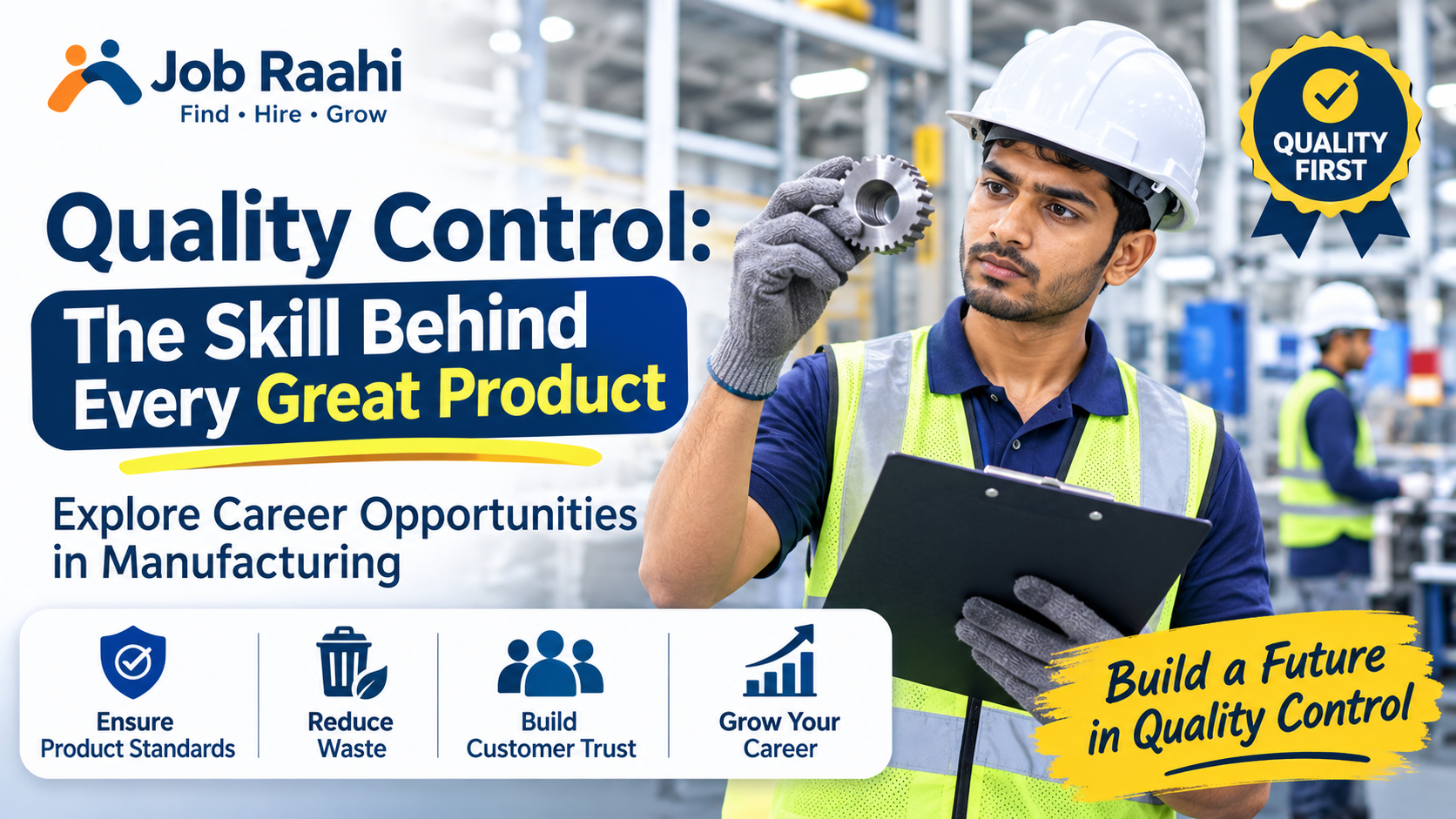
When we purchase a mobile phone, a vehicle, packaged food or even a simple household product, we expect it to work properly and meet certain standards. But have you ever wondered how manufacturers ensure that every product meets those expectations?
One important answer is quality control.
From checking raw materials to inspecting finished products, quality control plays a major role in manufacturing. It helps businesses identify defects, reduce waste and maintain consistency. It also creates employment opportunities for people who are interested in technical and detail-oriented work.
For freshers, ITI students and diploma holders, quality control can be a practical entry point into the manufacturing industry.
What Is Quality Control in Manufacturing?
Quality control refers to the process of checking products, materials and production activities to ensure that they meet defined quality standards.
It involves inspecting products at different stages of manufacturing, identifying defects and reporting problems so that corrective action can be taken.
For example, in an automobile manufacturing unit, quality checks may include examining vehicle components, checking measurements and identifying visible defects before a product moves to the next production stage.
Similarly, in food processing, quality checks may involve packaging inspections, weight verification, hygiene checks and monitoring product consistency.
The objective is simple: make sure the product meets the required specifications before it reaches the customer.
Why Is Quality Control So Important?
Maintains product standards: Regular inspections help manufacturers maintain consistency across different production batches.
Reduces material wastage: Identifying defects early can prevent additional resources from being spent on products that do not meet specifications.
Improves customer satisfaction: Customers are more likely to trust products that consistently meet expected quality standards.
Supports workplace safety: In industries where product defects can create safety risks, quality checks help identify potential problems.
Strengthens business reputation: Consistent quality helps manufacturers build long-term relationships with customers and business partners.
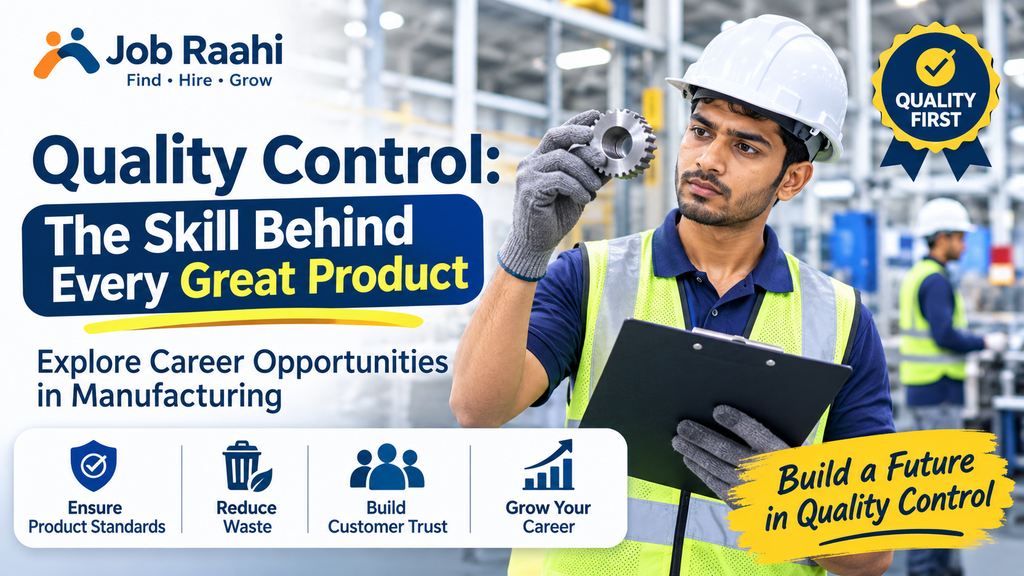
What Does a Quality Control Employee Do?
The responsibilities depend on the industry and the employee’s experience level. However, common activities include:
- Inspecting raw materials and finished products.
- Checking product dimensions, weight, appearance and specifications.
- Identifying defects or irregularities.
- Using basic measuring instruments and inspection tools.
- Maintaining inspection records and checklists.
- Reporting quality issues to supervisors.
- Following safety and quality procedures.
- Supporting corrective actions when defects are identified.
In some workplaces, employees may also use digital systems to record inspection results and track production quality.
Career Opportunities in Quality Control
Some common roles include:
Quality Checker: Examines products for visible defects and checks whether they meet basic requirements.
Quality Inspector: Conducts inspections using defined procedures and measuring tools.
Production Quality Assistant: Supports quality checks during different stages of the production process.
Packaging Quality Checker: Checks packaging, labelling, sealing and product presentation.
Quality Control Technician: Performs technical inspections and supports testing activities, depending on the qualification and training required.
These roles may be available in automobile, electronics, textiles, food processing, pharmaceutical, engineering and other manufacturing units.
Skills Required for Quality Control Jobs
Quality control requires attention to detail and the ability to follow instructions carefully. Candidates do not always need advanced technical knowledge for entry-level roles, but they should be willing to learn.
Important skills include:
- Attention to detail: Noticing small differences, defects and irregularities.
- Basic technical understanding: Understanding measurements, product specifications and inspection procedures.
- Observation skills: Identifying visible issues during product checks.
- Basic mathematics: Working with measurements, quantities and simple calculations.
- Communication: Reporting problems clearly to supervisors and team members.
- Discipline: Following inspection procedures and maintaining accurate records.
- Safety awareness: Using tools and equipment responsibly.
Candidates with ITI or diploma qualifications in relevant trades may find certain technical quality control roles particularly suitable, depending on employer requirements.
Can Freshers Build a Career in Quality Control?
Yes. Many manufacturing units have entry-level roles where freshers can learn inspection procedures under supervision.
However, the eligibility criteria vary. Some employers may accept candidates with a 10th or 12th qualification for basic checking roles, while technical inspector and technician positions may require an ITI, diploma or relevant experience.
Freshers can begin by understanding basic manufacturing processes, learning measurement techniques and becoming familiar with common quality terms.
The first job can provide practical exposure to production standards, inspection methods and workplace discipline. With experience and additional training, employees may explore more specialised quality-related responsibilities.
How to Prepare for a Quality Control Job
Candidates interested in this field can take a few practical steps:
- Understand the manufacturing process: Learn how products are made and where quality checks take place.
- Practise basic measurements: Become familiar with measuring tools such as rulers, vernier calipers and micrometers where relevant.
- Learn common quality terms: Understand concepts such as defect, tolerance, inspection, rejection and rework.
- Develop observation skills: Practise identifying differences in product appearance, dimensions and finishing.
- Follow safety procedures: Understand the importance of protective equipment and workplace instructions.
- Prepare for interviews: Be ready to explain why accuracy, consistency and attention to detail matter in manufacturing.
Candidates should always check the qualification, training and experience requirements mentioned in a job description before applying.
How Job Platforms Can Help Candidates Find Opportunities
Finding a suitable first job can be challenging, especially when candidates are unfamiliar with different manufacturing roles.
Digital job platforms make it easier to discover openings, understand job requirements and explore opportunities across industries and locations.
For employers, these platforms can provide an additional channel to reach candidates looking for frontline and entry-level opportunities.
Job Raahi focuses on connecting employers with candidates for frontline and mass hiring requirements. Candidates can explore relevant openings based on their qualifications, skills and experience, while employers can use the platform as an additional sourcing channel.
Conclusion
Quality control is an essential part of modern manufacturing. It helps businesses maintain product standards, reduce defects and deliver consistent results.
At the same time, it offers career opportunities for candidates who are observant, disciplined and interested in learning practical technical skills.
A good product is not just manufactured; it is checked, tested and improved at every stage. And quality control professionals help make that possible.