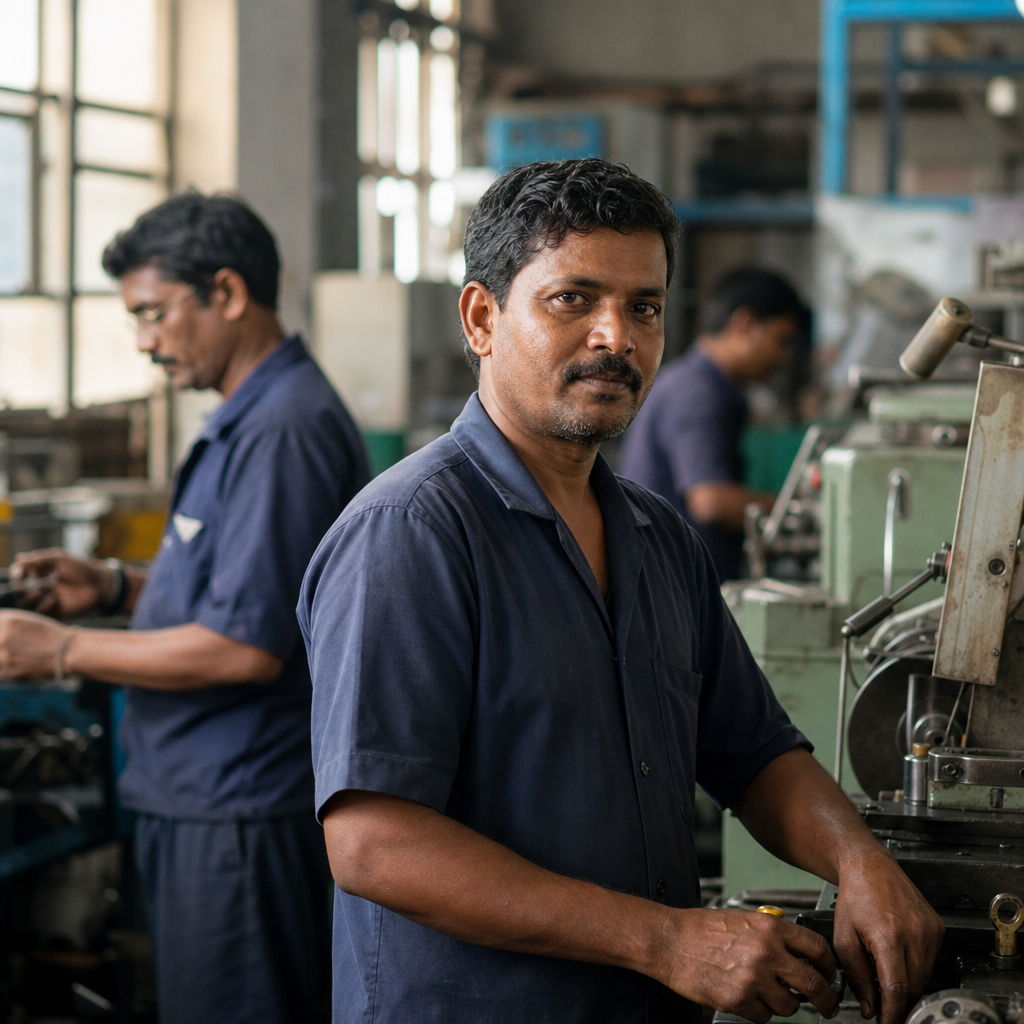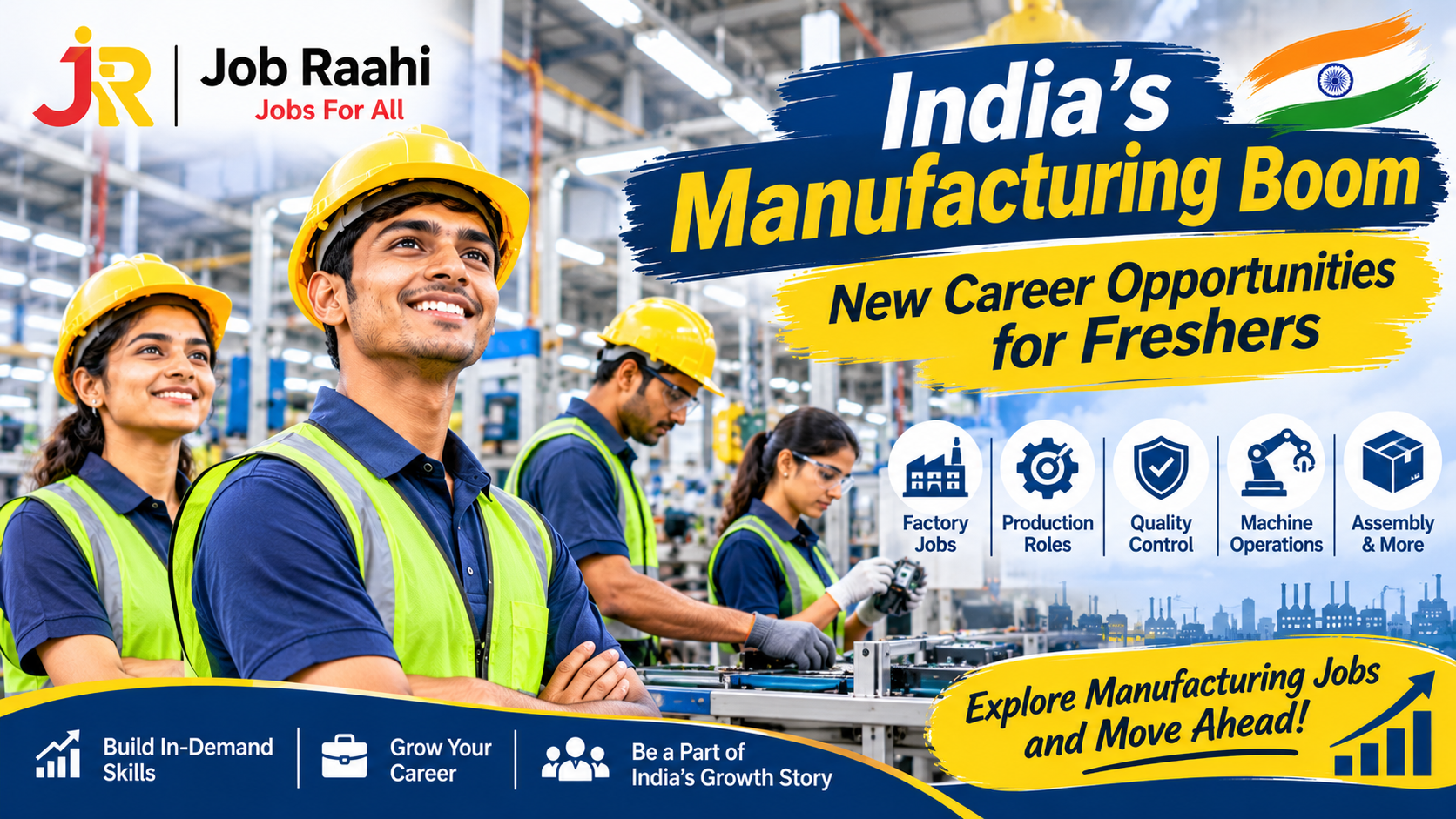
When people think about manufacturing, they often imagine large factories, heavy machinery and experienced engineers working on production systems. But behind every manufactured product is a much larger workforce performing different tasks, from assembling components and operating machines to checking product quality, packaging goods and managing production activities.
India’s manufacturing industry is evolving. Businesses across automobiles, electronics, pharmaceuticals, textiles, food processing, chemicals and other industries are investing in production capabilities and improving their manufacturing processes.
This growth is creating opportunities not only for engineers and experienced professionals but also for people entering the workforce for the first time.
For freshers, ITI students, diploma holders and candidates looking for practical employment, manufacturing can offer a pathway to learn industry-specific skills, gain experience and build a long-term career.
So, what kinds of jobs are available, and how can candidates prepare themselves?
Let’s explore.
1. India’s Manufacturing Sector: Why It Matters
Manufacturing plays an important role in India’s economic development. It supports industrial production, creates demand for raw materials, strengthens supply chains and generates employment across different skill levels.
The government’s Annual Survey of Industries (ASI) 2024–25 provides a useful picture of this progress.
According to the Ministry of Statistics and Programme Implementation (MoSPI):
- India had approximately 2.67 lakh registered manufacturing establishments during 2024–25.
- The estimated number of persons engaged in registered manufacturing increased to approximately 2.10 crore, compared with 1.96 crore in the previous survey year.
- Manufacturing employment recorded growth of 7.19% over the previous year.
- The sector added more than 14 lakh persons engaged during the year.
The five leading states in manufacturing employment were Tamil Nadu, Maharashtra, Gujarat, Uttar Pradesh and Haryana.
These figures indicate that manufacturing is an important source of employment in India. However, they cover registered manufacturing establishments and should not be interpreted as the number of vacancies currently available.
For job seekers, the bigger takeaway is that manufacturing offers employment across a wide range of industries, locations and job responsibilities.
2. How Manufacturing Growth Creates Job Opportunities
When a manufacturing business expands its production capacity, it needs more than machines and infrastructure. It also needs people to operate, monitor and support its daily activities.
For example, when an automobile manufacturer increases production, its workforce requirements may include:
- Production line associates
- Assembly technicians
- Machine operators
- Quality inspection assistants
- Material handling workers
- Packaging associates
- Maintenance assistants
- Warehouse and dispatch staff
Similarly, an electronics manufacturing unit may require employees for component assembly, testing, inspection, packaging and inventory handling.
This creates opportunities at different entry levels.
Candidates do not necessarily need an engineering degree for every manufacturing position. Some roles are suitable for candidates with Class 10 or 12 qualifications, while technical positions may require ITI, Polytechnic, Diploma or specialised training.
The important thing is to understand the job requirements and identify the skills needed for the specific role.
3. Entry-Level Manufacturing Jobs You Should Know About
Manufacturing offers several job roles that freshers can explore, depending on their qualifications and the employer’s requirements.
A. Production Associate
Production associates support everyday manufacturing activities and help ensure that products are made according to established processes.
Typical responsibilities:
- Supporting daily production activities.
- Handling materials and components.
- Following instructions from supervisors.
- Maintaining cleanliness and workplace safety.
- Meeting assigned production targets.
This role can be a starting point for candidates interested in factory operations.
B. Assembly Line Worker
Assembly line employees work on putting together different components to create finished products or subassemblies.
For example, automobile and electronics manufacturing units require employees to assemble parts, fit components and complete defined production tasks.
Typical responsibilities:
- Assembling components according to instructions.
- Using basic tools and equipment.
- Following standard operating procedures.
- Checking whether components are fitted correctly.
Attention to detail, coordination and consistency are important for this role.
C. Machine Operator
Machine operators work with manufacturing equipment used for cutting, shaping, processing or producing different products.
Typical responsibilities:
- Operating assigned machinery after appropriate training.
- Monitoring machine performance.
- Following safety procedures.
- Reporting unusual sounds, faults or operational problems.
- Maintaining basic production records.
Some machine operator positions require technical qualifications or prior experience, while others offer supervised training for suitable entry-level candidates.
D. Quality Control Assistant
Quality control employees help ensure that products meet the required standards before moving to the next stage.
Typical responsibilities:
- Checking products for visible defects.
- Measuring or inspecting components.
- Identifying quality issues.
- Recording inspection results.
- Reporting problems to supervisors.
Basic measurement skills, observation and attention to detail can be valuable.
E. Packaging Associate
Packaging associates prepare finished products for storage, transportation or distribution.
Typical responsibilities:
- Packing finished products.
- Checking labels and product details.
- Following packaging instructions.
- Maintaining packaging quality.
- Preparing goods for dispatch.
This role is common across food processing, pharmaceuticals, consumer goods, electronics and other manufacturing industries.
F. Material Handling Assistant
Material handling employees support the movement of raw materials, components and finished products within a manufacturing facility.
Typical responsibilities:
- Moving materials between designated areas.
- Supporting loading and unloading.
- Organising materials.
- Maintaining records where required.
- Following material-handling safety procedures.
4. Which Industries Can Freshers Explore?
India’s manufacturing ecosystem includes several industries, each with different employment requirements.
1. Automobile Manufacturing
Automobile companies and their suppliers require workers for assembly, production, inspection, material handling and maintenance.
Potential roles include assembly associate, production assistant, quality checker and machine operator.
2. Electronics Manufacturing
The electronics industry involves assembling, testing and inspecting electronic components and devices.
Potential roles include electronics assembly associate, testing assistant, production operator and packaging associate.
ITI and Diploma candidates with electrical or electronics knowledge may find relevant technical pathways.
3. Food Processing
Food processing units require employees to support production, sorting, packaging, quality checks and storage.
Potential roles include production helper, packaging associate, quality assistant and machine operator.
4. Textile and Garment Manufacturing
Textile and garment factories involve fabric processing, stitching, finishing, inspection and packaging.
Potential roles include sewing machine operator, production assistant, finishing associate and quality checker.
5. Pharmaceutical Manufacturing
Pharmaceutical manufacturing involves regulated production and quality processes.
Depending on eligibility and training, entry-level opportunities may include packaging assistant, production support and quality documentation support.
Some roles require specific educational qualifications and compliance training.
6. Metal and Engineering Manufacturing
Metal and engineering units manufacture industrial components, tools, machinery and equipment.
Potential roles include fitter, fabrication assistant, machine operator, maintenance trainee and inspection assistant.
5. Skills Required to Start a Manufacturing Career
A manufacturing job requires more than the ability to complete physical tasks. Employees must understand workplace procedures, follow instructions and work safely.
Here are some useful skills candidates should develop.
A. Basic Technical Knowledge
Understanding tools, equipment, measurements and basic machine operations can be useful for production and assembly roles.
Candidates from ITI trades such as fitter, electrician, machinist, welder and electronics may have relevant foundational knowledge.
B. Safety Awareness
Factories may involve machinery, electrical equipment, moving materials and other workplace hazards.
Candidates should understand the importance of protective equipment, safety instructions and reporting unsafe conditions.
Job-specific safety training must be provided before employees operate machinery or handle hazardous materials.
C. Attention to Detail
Small mistakes in assembly, measurement or packaging can affect product quality.
Employees should develop the habit of checking their work and following instructions carefully.
D. Teamwork and Communication
Manufacturing operations depend on coordination between production, quality, maintenance, inventory and dispatch teams.
Basic communication and teamwork help employees understand tasks and report problems.
E. Basic Digital Skills
Many factories use digital systems to record production, monitor equipment and maintain inventory.
Basic computer knowledge, digital reporting and familiarity with workplace applications can help candidates adapt to modern production environments.
F. Discipline and Time Management
Production activities often follow shift schedules and defined timelines.
Punctuality, attendance, consistency and the ability to complete assigned tasks are important workplace habits.
6. How Technology Is Changing Factory Jobs
Modern manufacturing is increasingly adopting digital systems, automation and advanced machinery.
Some examples include:
Industrial Automation: Automated machines and robotic systems are being used for repetitive and precision-based production activities.
Digital Monitoring: Production teams use software and digital dashboards to monitor output, equipment performance and operational efficiency.
Quality Inspection Technology: Digital measuring tools and inspection systems help identify product defects and maintain quality standards.
Computer-Controlled Machines: CNC machines and other computer-controlled equipment require trained operators who understand machine settings and operating procedures.
Inventory and Production Software: Digital systems help companies monitor raw materials, work-in-progress and finished products.
Does this mean technology will eliminate factory jobs?
Not necessarily. Technology changes the nature of work, but manufacturing facilities still need people to operate equipment, monitor processes, inspect products, maintain machines and resolve operational issues.
For candidates, learning how to work alongside technology can create an advantage.
7. Can ITI and Diploma Freshers Find Opportunities?
Yes. Manufacturing is one of the sectors where vocational and technical education can be directly relevant to workplace requirements.
Different qualifications can lead to different career pathways.
| Educational Background | Possible Manufacturing Roles |
|---|---|
| Class 10 / Class 12 | Production helper, packaging associate, material handling assistant |
| ITI Fitter | Assembly assistant, fitter trainee, maintenance assistant |
| ITI Electrician | Electrical maintenance trainee, electrical assistant |
| ITI Welder | Welding trainee, fabrication assistant |
| ITI Machinist | Machine operator trainee, machining assistant |
| Diploma in Mechanical | Production technician, quality assistant, maintenance trainee |
| Diploma in Electrical / Electronics | Electrical technician, testing assistant, production technician |
These are indicative pathways, not guaranteed job eligibility. Actual requirements depend on the employer, machinery, industry and responsibilities.
Candidates should also consider apprenticeship opportunities, where eligible, to gain structured practical exposure and workplace experience.
8. How to Prepare for Your First Manufacturing Job
If you are a fresher interested in manufacturing, you can take the following steps to prepare.
Step 1: Identify Your Area of Interest
Explore different industries and roles. Decide whether you are more interested in production, assembly, machine operations, quality inspection or maintenance.
Step 2: Understand Job Requirements
Read job descriptions carefully. Check the required education, technical knowledge, work location, shift timings and other conditions.
Step 3: Improve Practical Skills
Revise the basics of your ITI trade or diploma subject. Learn about relevant tools, equipment, measurements and safety procedures.
Step 4: Build a Simple Resume
Mention your educational qualifications, technical trade, practical training, projects, certifications and relevant skills.
Even if you do not have professional experience, your practical learning can demonstrate your readiness for an entry-level position.
Step 5: Explore Apprenticeships and Entry-Level Vacancies
Apprenticeships and trainee positions can help candidates gain workplace exposure. Explore recognised opportunities and verify the terms, eligibility and training arrangements before applying.
Step 6: Prepare for Interviews
Be ready to explain what you learned during your course, which tools or machines you have worked with and why you are interested in manufacturing.
Employers may also assess your willingness to learn, safety awareness, discipline and ability to follow instructions.
9. Career Growth in the Manufacturing Industry
An entry-level manufacturing job can become the foundation for a longer career.
With practical experience, technical training and consistent performance, employees may gradually take on more responsibilities.
A possible career pathway could look like:
Production Helper → Production Associate → Senior Operator → Team Leader → Production Supervisor
Other career pathways include:
- Packaging Associate → Packaging Machine Operator → Packaging Supervisor
- Quality Assistant → Quality Inspector → Quality Supervisor
- Maintenance Trainee → Maintenance Technician → Maintenance Supervisor
- Assembly Associate → Skilled Assembly Technician → Line Leader
Career growth depends on the employee’s performance, technical development, available vacancies and company policies.
The important point is that an entry-level role can help candidates build industry experience and identify the area in which they want to specialise.
10. Conclusion: India’s Manufacturing Growth Can Open New Career Pathways
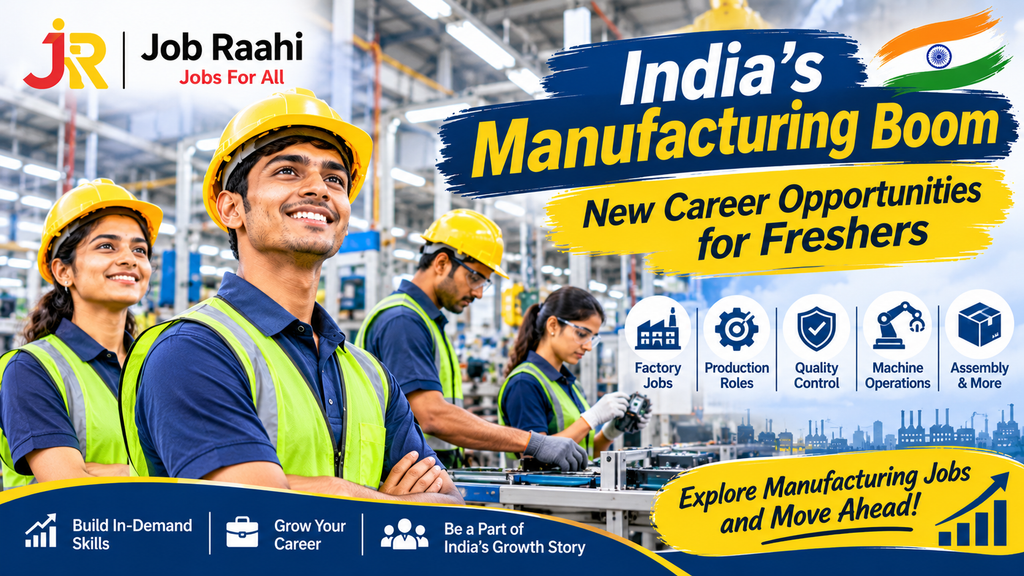
India’s manufacturing industry is creating opportunities across production, assembly, quality control, machine operations, packaging and maintenance.
For freshers, this means there are career options beyond traditional office-based employment. Candidates with practical knowledge, technical training, discipline and a willingness to learn can explore opportunities in different manufacturing industries.
For ITI and Diploma students, manufacturing can provide a chance to apply classroom knowledge in real workplace environments. For candidates without specialised technical qualifications, suitable entry-level roles can offer an opportunity to gain experience and develop new skills.
The manufacturing industry needs more than advanced technology and investment. It also needs people who can operate, maintain, manage and improve everyday production processes.
Your first manufacturing job could be the beginning of a skilled career. Start with the right opportunity, develop your abilities and keep moving forward.
At Job Raahi, we believe that employment opportunities should be accessible to candidates from different educational and professional backgrounds. By connecting employers with motivated freshers and frontline talent, we aim to make more career pathways visible and accessible.
Learn a skill. Find an opportunity. Build your future.