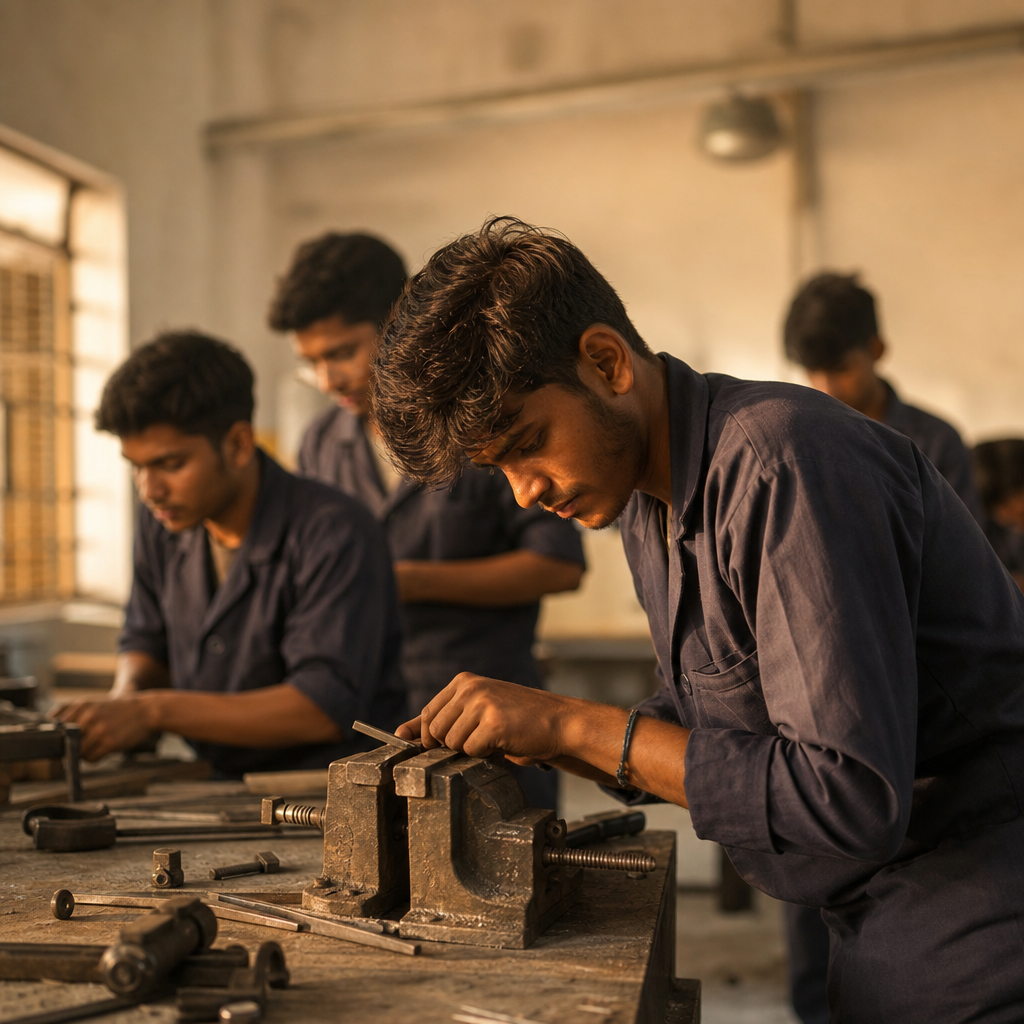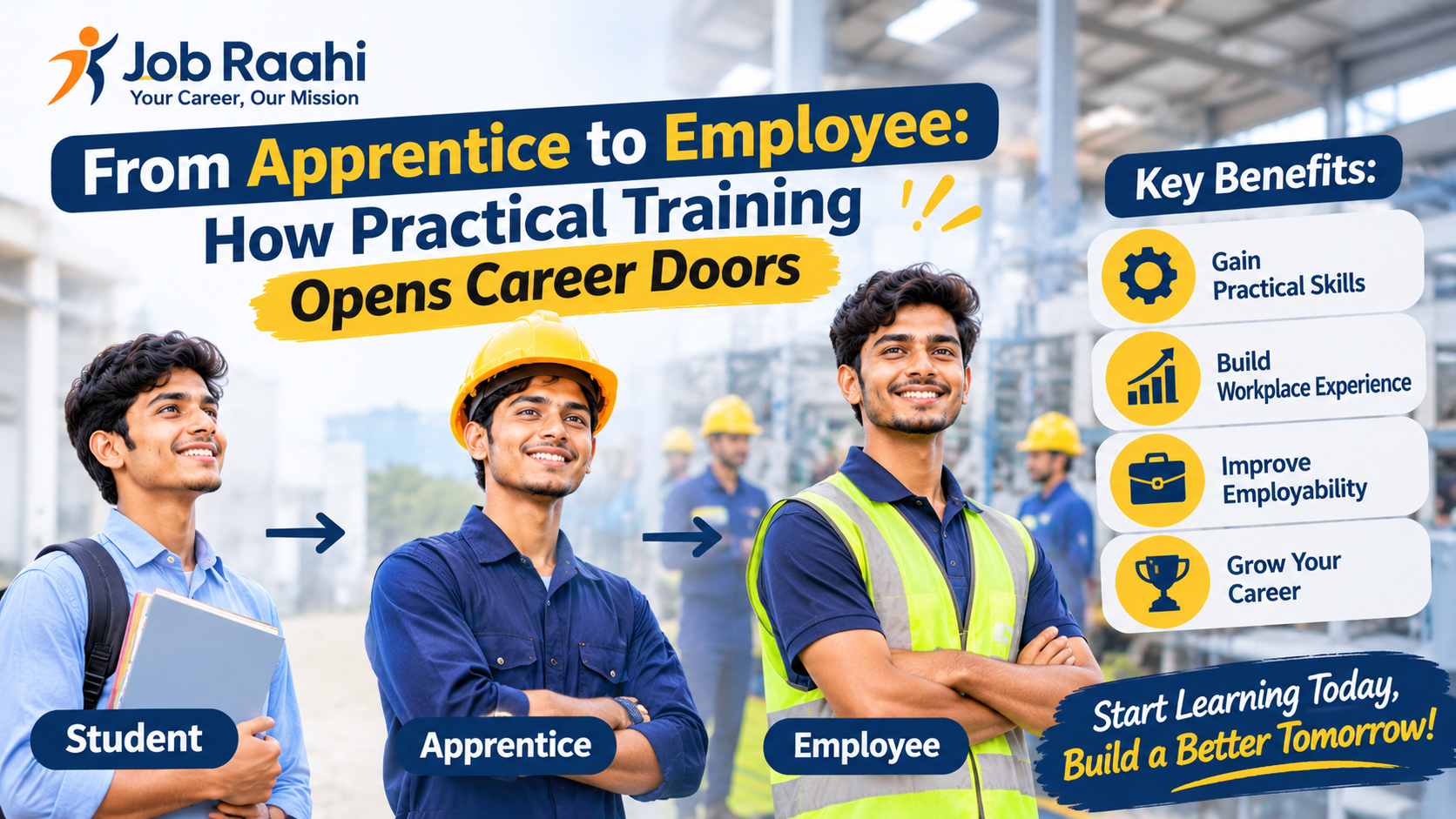
Completing an ITI course, diploma, graduation or vocational programme is an important milestone for any student. It represents years of learning, effort and preparation for a professional career.
But once education is complete, a new challenge begins: entering the workplace.
Many freshers understand the concepts they have studied but have limited experience applying them in real working environments. They may know how a process works theoretically but have never performed it independently. They may understand technical concepts but need practical exposure to workplace equipment, tools and procedures.
This is where apprenticeships and practical training become valuable.
They provide an opportunity to learn while experiencing the actual responsibilities of a job. For freshers, this can be an important step towards becoming more confident, developing relevant skills and preparing for future employment.
Why Practical Experience Matters for Freshers
The transition from education to employment is not always easy.
Educational institutions provide foundational knowledge, but workplaces have their own processes, expectations and working environments.
For example, an ITI student may understand the basics of electrical systems but still need hands-on experience with industrial equipment. A logistics student may know the fundamentals of supply chain operations but need practical exposure to inventory handling, scanning and dispatch processes.
Similarly, a graduate joining a customer support team may understand communication principles but need experience handling actual customer interactions.
Practical experience helps candidates understand:
- How daily workplace operations function.
- How to use tools, equipment and technology relevant to their roles.
- How to follow instructions and standard operating procedures.
- How to coordinate with supervisors and colleagues.
- How to manage time and assigned responsibilities.
- How workplace safety and quality standards are maintained.
These experiences help freshers connect what they have learned with what employers expect.
What Is an Apprenticeship?
An apprenticeship is a structured form of practical training in which individuals learn a trade, occupation or specific job-related skills through a combination of workplace exposure and relevant instruction.
Unlike purely classroom-based learning, apprenticeships allow participants to understand how work is performed in an actual professional environment.
Apprenticeships are available across different industries and occupational areas, depending on employer requirements and applicable programmes.
They can be particularly useful for:
- ITI students and graduates.
- Polytechnic and diploma holders.
- Technical course students.
- Fresh graduates.
- Candidates looking to develop industry-specific skills.
An apprenticeship is not automatically the same as a permanent job. Its duration, training structure, stipend, responsibilities and employment possibilities depend on the specific programme and applicable terms.
However, the experience can help candidates prepare for future employment.
How Apprenticeships Bridge the Education-to-Employment Gap
One of the biggest advantages of practical training is that it introduces candidates to real workplace responsibilities.
Here are some ways apprenticeships can support this transition.
Applying Theoretical Knowledge
Students get an opportunity to understand how academic concepts are used in actual work situations.
For example, someone who has studied mechanical engineering may gain exposure to equipment maintenance, production processes or quality checks.
Understanding Workplace Expectations
An apprenticeship introduces candidates to reporting structures, working schedules, workplace discipline and professional communication.
These experiences can make the transition into full-time employment easier.
Developing Industry-Relevant Skills
Candidates can learn tools, equipment, technologies and processes that are specific to their chosen field.
This helps them understand the practical requirements of different job roles.
Building Professional Confidence
Working alongside experienced employees gives freshers an opportunity to ask questions, observe processes and gradually take on responsibilities.
As they become familiar with their tasks, their confidence can improve.
Understanding Career Interests
Practical exposure can also help candidates understand which roles and industries match their interests and abilities.
This can help them make better career decisions.
Industries Offering Practical Learning Opportunities
Apprenticeship and workplace training opportunities exist across several industries. The available roles depend on the employer, qualification requirements and training programme.
| Industry | Examples of Practical Learning Areas |
|---|---|
| Manufacturing | Production processes, machine operations, quality checks |
| Automotive | Vehicle assembly, maintenance, inspection |
| Logistics and Warehousing | Inventory handling, picking, packing, dispatch |
| Retail | Store operations, billing, customer service |
| Electrical and Electronics | Equipment maintenance, installation, testing |
| Hospitality | Guest services, food operations, housekeeping |
| IT and Business Services | Technical support, data handling, customer support |
For freshers, these opportunities can provide exposure to different professional environments and help them identify suitable career paths.
Skills Freshers Can Develop Through Apprenticeships
Practical training is not limited to learning how to perform a particular task. It also helps candidates develop professional skills that are useful throughout their careers.
Technical Skills: Candidates learn to use relevant tools, machinery, software and equipment according to their roles.
Communication: They practise interacting with supervisors, colleagues and customers in professional situations.
Time Management: They understand how to organise tasks and complete responsibilities within assigned schedules.
Teamwork: They learn to coordinate with others and contribute towards shared objectives.
Problem-Solving: They develop the ability to identify issues, understand instructions and seek appropriate solutions.
Workplace Safety: They become familiar with safety procedures, protective equipment and responsible working practices.
Adaptability: They learn to adjust to new tasks, technologies and working environments.
These capabilities can make a candidate better prepared for the expectations of an employer.
From Apprentice to Full-Time Employee: Understanding the Journey
For many candidates, an apprenticeship can become an important stepping stone towards a professional career.
The journey generally involves several stages:
Stage 1: Learning the Basics
The candidate understands the role, workplace environment, safety requirements and basic procedures.
Stage 2: Gaining Practical Exposure
The candidate observes experienced employees and begins performing assigned tasks under appropriate supervision.
Stage 3: Developing Competence
With practice, the candidate becomes more familiar with the processes and improves the quality and consistency of their work.
Stage 4: Demonstrating Workplace Readiness
The candidate develops confidence, understands responsibilities and demonstrates the ability to work within established procedures.
Stage 5: Exploring Employment Opportunities
After completing the training, the candidate can explore relevant vacancies based on their skills, experience and eligibility.
Some employers may consider apprentices for further employment, depending on business requirements and performance. However, permanent employment is not guaranteed simply because an apprenticeship has been completed.
The experience itself can still strengthen a candidate’s preparation for future opportunities.
How Freshers Can Find the Right Apprenticeship
Choosing the right training opportunity is important. Freshers should not select an apprenticeship only because it is available.
They should consider whether it supports their long-term career interests.
Here are some things to check:
- Match Your Educational Background: Look for programmes related to your ITI trade, diploma, degree or vocational qualification.
- Understand the Job Responsibilities: Check what you will actually learn and perform during the training period.
- Verify the Employer: Research the organisation and confirm that the opportunity is genuine.
- Check the Training Structure: Understand the duration, working conditions, supervision and learning objectives.
- Review the Stipend and Terms: Read the applicable conditions carefully before accepting.
- Understand Future Opportunities: Ask whether the employer has any potential pathway to further employment, without assuming that a job is guaranteed.
Candidates can explore official resources such as Apprenticeship India and the National Career Service to learn about available opportunities and employment-related information.
The Role of Employers in Developing Young Talent
Employers also benefit from creating opportunities for practical learning.
Apprenticeship programmes allow organisations to introduce young candidates to their processes while helping them develop relevant skills.
For businesses across manufacturing, logistics, retail and other operational sectors, developing entry-level talent can contribute to building a more prepared workforce.
Employers can make these programmes more effective by:
- Defining clear learning objectives.
- Assigning experienced employees or trainers for guidance.
- Providing appropriate equipment and safety training.
- Giving candidates meaningful practical exposure.
- Offering regular feedback on performance.
- Communicating possible career pathways honestly.
A good training environment should help candidates learn, not simply assign them routine work without guidance.
How Job Raahi Supports the Journey Towards Employment
Practical training is an important step, but candidates also need access to suitable employment opportunities after developing their skills.
This is where digital job platforms can help connect trained candidates with employers.
Job Raahi is a digital job platform focused on frontline, entry-level and mass hiring opportunities.
It aims to connect companies with candidates across different educational and experience backgrounds, including freshers and individuals with limited professional experience.
Job Raahi’s wider ecosystem also includes skill centres across India, where candidates can be trained and developed in line with industry requirements.
For employers, this provides an additional channel to reach candidates who are beginning their careers or developing practical skills.
For freshers, it creates another opportunity to move from learning and preparation towards actual employment.
The connection between training and employment is important: candidates need the right skills, but they also need visibility of opportunities where those skills can be applied.
Conclusion: Practical Learning Can Be the Beginning of a Strong Career
A qualification provides a foundation, but practical experience helps candidates understand how to use their knowledge in a professional environment.
For freshers, apprenticeships can provide valuable exposure to workplace responsibilities, industry processes and professional expectations.
They also give employers an opportunity to engage with emerging talent and help develop candidates according to relevant industry requirements.
The journey from apprentice to employee may not look the same for everyone. Some candidates may continue in the same industry, while others may use their experience to explore different roles.
What matters is the learning gained along the way.
Platforms like Job Raahi can support the next step by helping candidates discover relevant employment opportunities and helping employers connect with emerging frontline talent.
Your first professional opportunity does not always have to be a permanent job. Sometimes, the right practical learning experience can become the foundation of your entire career.