Tag: Tier 2 Cities

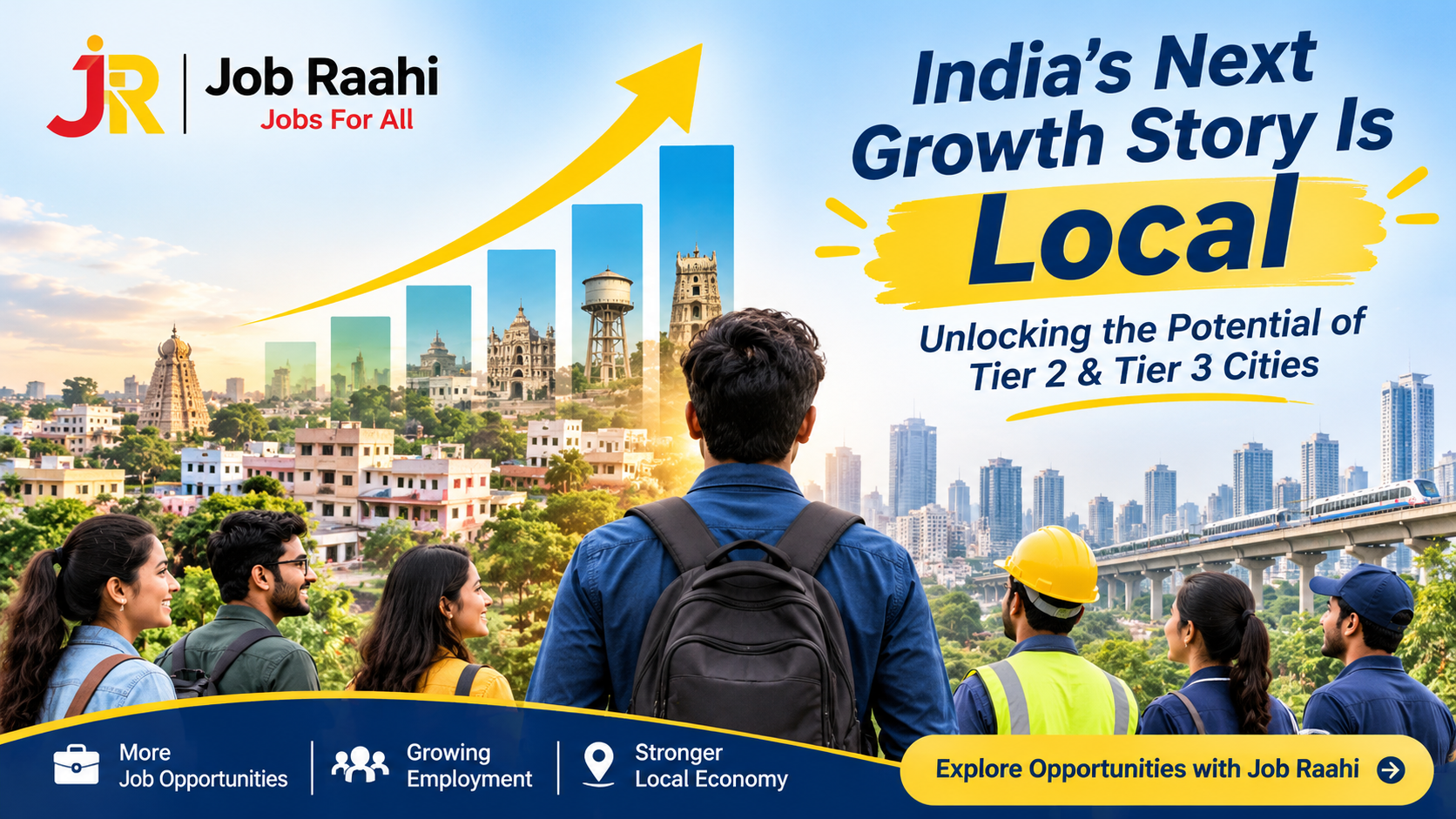
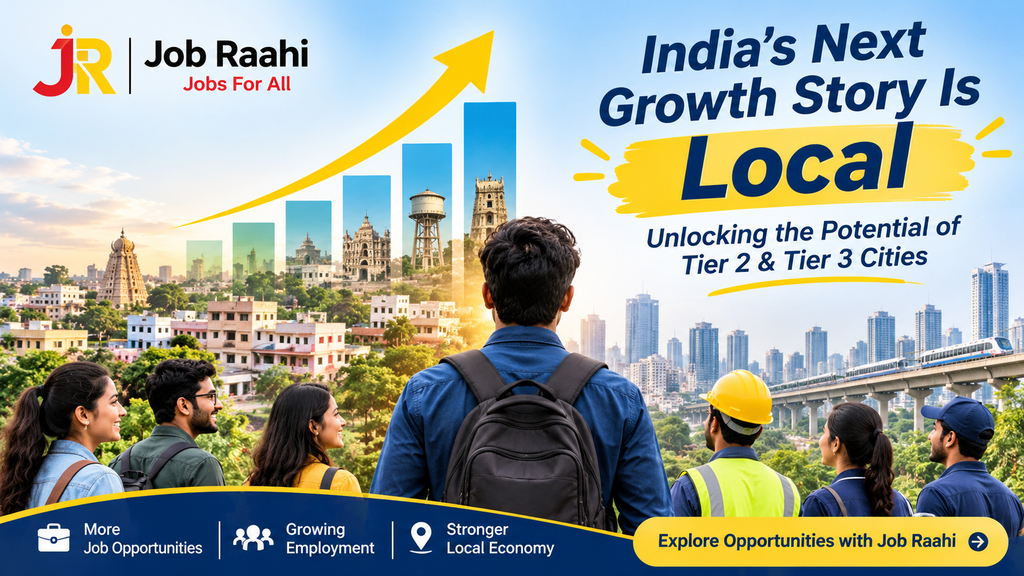
  • India’s Next Growth Story Is Local: The Untapped Potential of Tier 2 and Tier 3 Cities

    India’s Next Growth Story Is Local: The Untapped Potential of Tier 2 and Tier 3 Cities

    Table of Contents

    1. Why Are Tier 2 and Tier 3 Cities Gaining Attention?
    2. What Makes These Cities Attractive for Business Growth?
    3. Industries Creating New Opportunities Beyond Metros
    4. The Biggest Opportunity: India’s Local Workforce
    5. Challenges That Still Need Attention
    6. How Businesses Can Unlock the Potential of Smaller Cities
    7. What This Growth Means for Job Seekers
    8. India’s Next Opportunity May Be Closer Than You Think

    For years, India’s biggest metropolitan cities have attracted businesses, investments and job seekers. Cities such as Delhi, Mumbai, Bengaluru and Hyderabad have become familiar destinations for people looking to build their careers.

    But India’s growth story is no longer limited to these major urban centres.

    Look beyond the metros, and a different picture begins to emerge. Cities such as Indore, Coimbatore, Jaipur, Lucknow, Surat, Nagpur, Bhubaneswar and Guwahati are developing stronger business ecosystems, attracting investments and creating employment opportunities.

    These cities are not simply alternatives to metropolitan areas. They are becoming important contributors to India’s economic development.

    The real question is no longer whether smaller cities have potential. It is whether businesses and job seekers are ready to recognise and make use of it.

    1. Why Are Tier 2 and Tier 3 Cities Gaining Attention?

    India’s urban growth is becoming more geographically distributed.

    Businesses are exploring locations beyond traditional metropolitan markets because smaller cities offer opportunities to expand operations, reach new customers and access local talent.

    The Government of India’s Economic Survey 2025–26 highlights the expansion of manufacturing activity beyond metropolitan cities. It points to advantages such as affordable land, lower real estate and wage costs, and proximity to raw materials.

    This shift matters because when businesses expand into a new city, they create demand beyond just a few specialised positions.

    They need people for production, warehouse operations, transportation, retail, sales, customer support, maintenance and administration.

    That means economic expansion can create opportunities for people with different educational qualifications and experience levels.

    2. What Makes These Cities Attractive for Business Growth?

    There is no single reason behind the growing interest in smaller cities. Several factors are working together.

    A. More Accessible Operating Costs

    Compared with many large metropolitan markets, some Tier 2 and Tier 3 locations offer more affordable commercial space, land and operating costs.

    For businesses looking to establish warehouses, manufacturing units, service centres or retail operations, this can make expansion more practical.

    B. Growing Infrastructure

    Road connectivity, industrial corridors, logistics facilities, airports and digital infrastructure are improving across several smaller cities.

    Better connectivity makes it easier for businesses to transport goods, serve customers and manage operations across different locations.

    C. Expanding Local Markets

    Smaller cities are also becoming important consumer markets.

    As incomes, digital access and purchasing preferences change, demand for retail, e-commerce, financial services, healthcare and other services can grow.

    Businesses that enter these markets can build stronger regional customer relationships.

    D. Availability of Local Talent

    Every city has people looking for employment, including fresh graduates, ITI students, diploma holders, semi-skilled workers and experienced frontline employees.

    Hiring locally can help companies reach candidates who already understand the region, language and customer environment.

    3. Industries Creating New Opportunities Beyond Metros

    The potential of smaller cities becomes clearer when we look at the industries expanding across them.

    Manufacturing and Industrial Operations

    Manufacturing is one of the important drivers of employment beyond metros.

    Industrial clusters and production facilities require machine operators, quality assistants, technicians, helpers, packaging staff and maintenance workers.

    Cities such as Rajkot, Coimbatore, Belagavi and Vadodara have established or emerging manufacturing ecosystems.

    Logistics and Warehousing

    The growth of e-commerce, organised retail and regional distribution networks is increasing the importance of logistics infrastructure.

    Warehouses, fulfilment centres and distribution facilities create demand for:

    • Pickers and packers
    • Warehouse associates
    • Inventory assistants
    • Dispatch coordinators
    • Delivery executives
    • Loading and unloading staff

    As supply chains expand into smaller markets, these roles can become important sources of local employment.

    Retail and Consumer Services

    Growing consumer markets create opportunities for retail stores, supermarkets, electronics outlets, restaurants and service businesses.

    This generates demand for store associates, sales executives, cashiers, customer support staff and store operations teams.

    Local-language communication and familiarity with customer preferences can be valuable advantages in these roles.

    Healthcare and Hospitality

    Healthcare facilities, diagnostic centres, hotels, restaurants and other service businesses also support employment growth.

    These industries require people across different functions, including facility operations, housekeeping, reception, food services, customer assistance and technical support.

    Technology and Digital Services

    Technology-related employment is also expanding beyond traditional IT hubs.

    Coimbatore, Indore, Jaipur, Kochi and other cities are attracting attention for IT services, digital operations and business support functions.

    The opportunity is not limited to software development. It can also include customer support, data operations, technical assistance and administrative roles.
    Tier 2 & 3 cities

    4. The Biggest Opportunity: India’s Local Workforce

    Infrastructure and investment are important, but people are what make economic growth sustainable.

    Tier 2 and Tier 3 cities have large populations of young people who want to build careers without necessarily moving to a major metropolitan city.

    Consider three examples:

    An ITI graduate in a smaller city: A candidate with electrical training may find opportunities in manufacturing, maintenance, solar installation or technical services.

    A Class 12 fresher: Someone who has recently completed school may explore retail, sales, customer support, delivery or warehouse operations.

    An experienced frontline worker: A person with experience in logistics or retail may be able to find a new opportunity closer to home as local businesses expand.

    These examples show why smaller cities should not be viewed only as sources of inexpensive labour.

    They are talent markets with different skills, educational backgrounds, languages and work experiences.

    For employers, recognising this diversity can create access to a much wider candidate base.

    For job seekers, it can mean more opportunities to build a career without relocating immediately.

    5. Challenges That Still Need Attention

    Despite their potential, smaller cities face challenges that businesses and policymakers must address.

    Skill-to-Job Mismatch

    Candidates may have educational qualifications but lack the practical skills required for specific roles.

    Industry-aligned training, apprenticeships and workplace learning can help bridge this gap.

    Limited Awareness of Opportunities

    Many job seekers do not know which companies are hiring in their own cities or what qualifications different roles require.

    Better access to reliable job information can help candidates make informed decisions.

    Infrastructure Gaps

    Not every smaller city has the same level of transport, connectivity, industrial infrastructure or access to support services.

    Companies must evaluate local conditions before expanding operations.

    Recruitment Reach

    Employers entering new markets may not have established recruitment networks or local hiring partners.

    They need ways to connect with suitable candidates, communicate job requirements and manage applications efficiently.

    Addressing these challenges is essential to converting potential into sustainable employment.

    6. How Businesses Can Unlock the Potential of Smaller Cities

    Companies that want to expand beyond major metros need to think beyond simply opening a new office or facility.

    They should build a local employment strategy.

    Here are five practical steps:

    1. Understand local demand: Identify which roles are required and whether hiring needs are seasonal, recurring or long-term.
    2. Explore local talent sources: Connect with ITIs, colleges, training institutes and relevant employment platforms.
    3. Design location-specific recruitment: Consider language, commute, shift timings and local candidate preferences.
    4. Invest in practical training: Provide role-specific training to help candidates meet workplace expectations.
    5. Build a wider hiring network: Use digital platforms and local outreach to reach candidates across different neighbourhoods and surrounding towns.

    A local hiring strategy can help companies expand their reach while creating stronger connections with the communities in which they operate.

    7. What This Growth Means for Job Seekers

    For candidates living in smaller cities, this changing employment landscape is worth paying attention to.

    You do not necessarily need to relocate to Delhi, Mumbai or Bengaluru to begin your professional journey.

    Depending on your qualifications and interests, you can explore opportunities in:

    • Manufacturing and production
    • Retail and sales
    • Logistics and warehousing
    • Delivery and field operations
    • Customer support
    • Hospitality
    • Technical services
    • Digital and business support operations

    Start by understanding what industries operate in and around your city.

    Identify the skills required for their jobs, prepare your resume and explore relevant vacancies regularly.

    If you are a fresher, do not ignore entry-level positions. Your first job can help you gain practical experience, understand workplace expectations and develop skills for future opportunities.

    8. India’s Next Opportunity May Be Closer Than You Think

    India’s Tier 2 and Tier 3 cities have the potential to become important centres of business activity and employment.

    Their growth can benefit companies looking to expand, job seekers searching for opportunities and communities looking for stronger local economies.

    However, this potential will only become meaningful when investment, infrastructure, skills and employment opportunities grow together.

    At Job Raahi, we believe access to employment opportunities should not be limited by geography.

    Our platform connects job seekers with employers across industries, helping freshers and frontline candidates discover relevant opportunities.

    Whether you live in a major city or a smaller town, your next career opportunity deserves to be within reach.

    Your city has potential. Your skills have value. Your journey can start right where you are.

    Explore opportunities with Job Raahi and take your next step towards a better career.
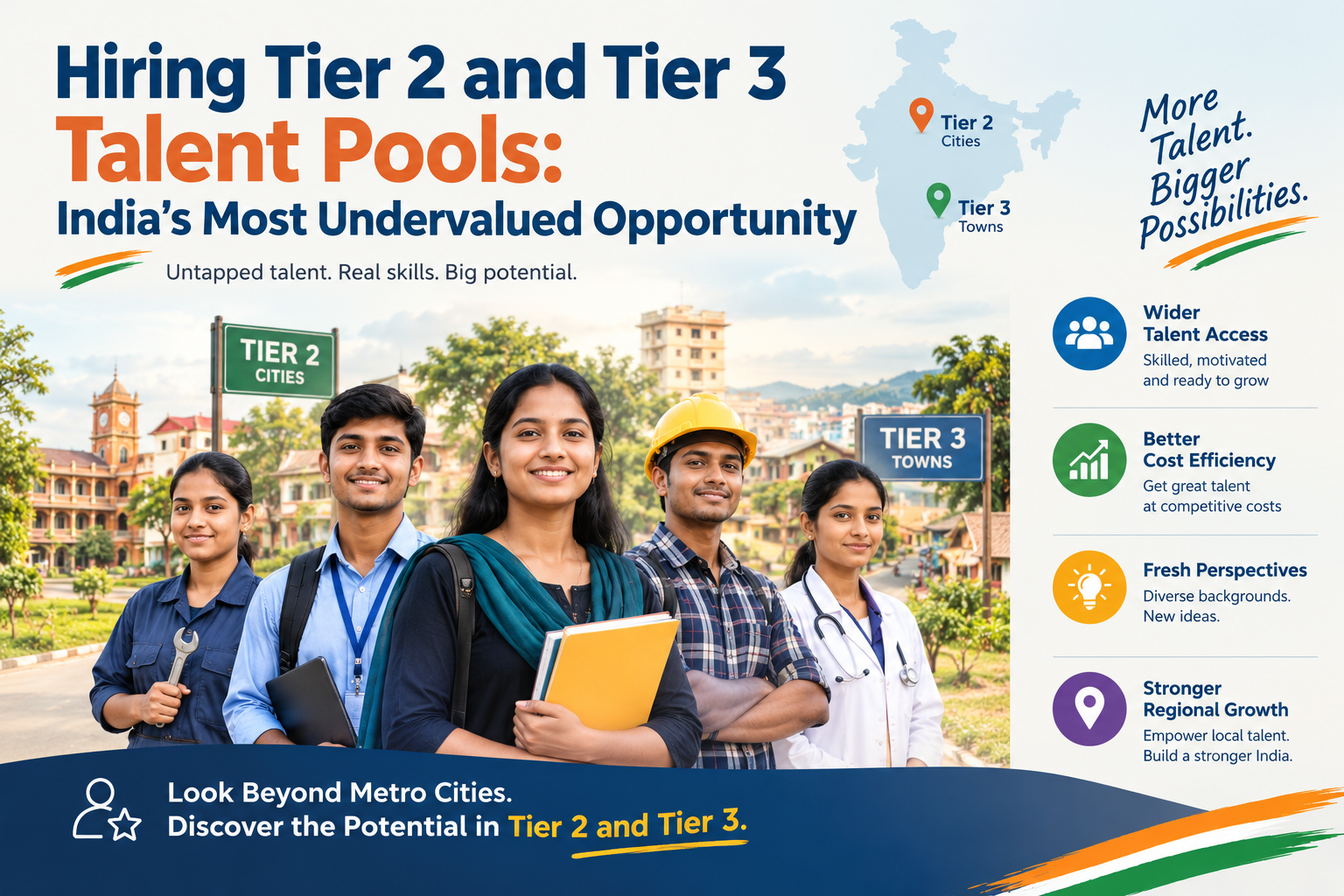
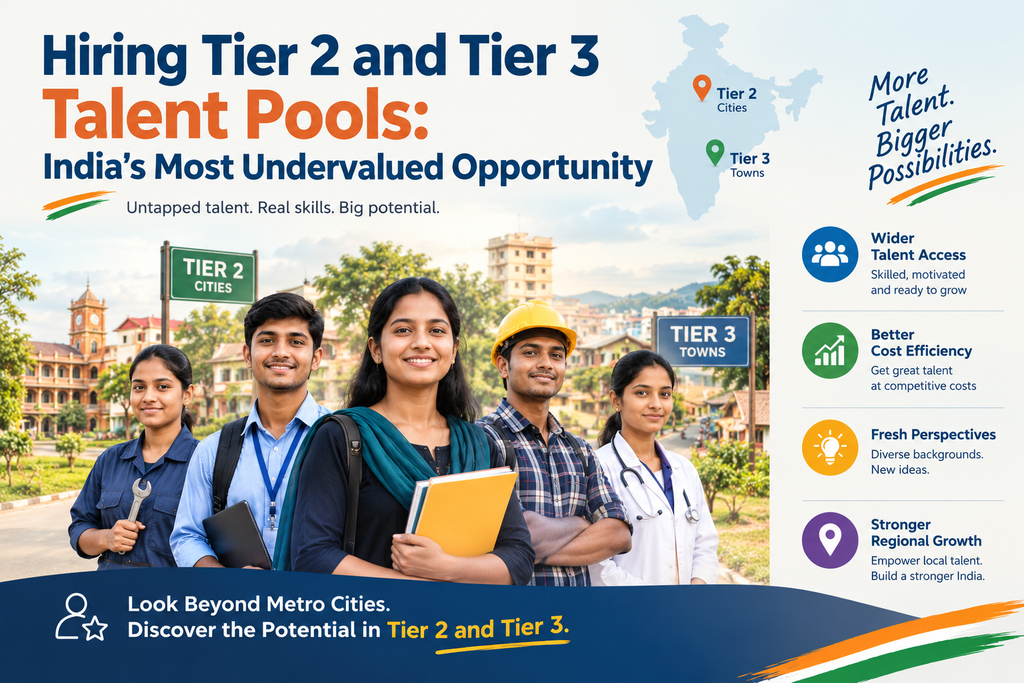
  • Hiring Tier 2 and Tier 3 Talent Pools: India’s Most Undervalued Opportunity

    Hiring Tier 2 and Tier 3 Talent Pools: India’s Most Undervalued Opportunity

    For years, India’s hiring conversation has revolved around the same major cities. Bengaluru for technology, Mumbai for finance, Delhi-NCR for corporate operations, and Hyderabad, Pune and Chennai for a wide range of industries.

    These cities continue to play an important role in the employment landscape. But there is another side to India’s talent story that deserves more attention.

    Across Tier 2 and Tier 3 cities, candidates are completing their education, developing practical skills, looking for their first jobs and building the experience employers need. Many are ready to work, yet they may not appear on the radar of companies that depend on familiar recruitment channels.

    The problem may not be a shortage of talent. It may be that businesses are looking for talent in too few places.

    For employers dealing with rising hiring needs, difficult-to-fill frontline positions or competition for entry-level candidates, smaller cities offer an opportunity to rethink how talent is discovered and recruited.

    Why Tier 2 and Tier 3 Cities Deserve More Attention

    The terms Tier 2 and Tier 3 are commonly used to describe cities outside India’s largest metropolitan centres, although there is no single classification applied consistently across every industry.

    Cities such as Jaipur, Indore, Lucknow, Coimbatore, Bhubaneswar, Nagpur, Kochi and many smaller regional centres are part of a changing employment landscape.

    Their importance is not simply about offering an alternative to metro hiring. It is about finding candidates whose skills, location and career goals align with actual business requirements.

    Several factors make these markets worth exploring.

    1. A Wider Pool of Emerging Talent

    A company’s existing recruitment database reflects the channels it has used in the past. It does not necessarily represent every suitable candidate available in the market.

    Smaller cities have students graduating from ITIs, polytechnic institutes, colleges and vocational training programmes. They also have candidates with practical work experience who want to move into better opportunities.

    For entry-level and frontline positions, this creates an opportunity to connect with people who may have the required educational background, basic skills or willingness to learn.

    Employers who expand their sourcing networks can discover candidates they might otherwise miss.

    2. Growing Demand for Local Employment

    Not every candidate wants to move to a major city for work.

    Relocation can involve additional expenses, accommodation challenges, unfamiliar surroundings and time away from family. For some job seekers, finding a suitable opportunity closer to home is a more practical choice.

    This creates a strong reason for businesses to consider location-based hiring.

    A retail chain opening new stores, a logistics company expanding warehouse operations or a service business building regional teams may find suitable candidates within the surrounding area.

    Local hiring is not always possible for every role, but where it works, it can align business needs with candidates’ preferences.

    3. Opportunity to Build Talent Before Demand Peaks

    Many companies begin searching for candidates only after a hiring requirement becomes urgent.

    This approach can work for small numbers of vacancies, but large-scale recruitment often requires more preparation.

    By developing relationships with local colleges, ITIs, skill centres and recruitment partners, employers can start building talent pipelines before the next hiring cycle.

    These relationships can help companies understand the local candidate market, identify relevant skills and communicate upcoming opportunities more effectively.

    Instead of asking, “Where can we find 100 candidates next week?”, recruitment teams can start asking, “Which locations and institutions can help us build a reliable pipeline for the next six months?”

    That change in approach can make recruitment more organised and less reactive.

    Hiring Beyond Metros

    The Opportunity Is Especially Strong in Frontline Hiring

    The value of regional talent pools extends across industries, but it is particularly relevant to businesses that recruit large numbers of frontline and entry-level employees.

    Consider the following examples:

    • Retail: Store associates, sales executives, cashiers and stock handlers.
    • Logistics and warehousing: Pickers, packers, warehouse associates and helpers.
    • Delivery and field operations: Delivery executives, field staff and local sales representatives.
    • Hospitality: Housekeeping staff, kitchen assistants and service employees.
    • Manufacturing: Production assistants, machine operators and shop-floor workers.
    • Customer support: Entry-level support executives and contact-centre employees.

    These roles often require candidates to work from a specific location, follow defined processes and meet practical job requirements.

    A candidate living near the workplace may be a more realistic match than someone who would need to relocate. Similarly, a fresher who meets the essential requirements and can be trained may be suitable for a role that does not genuinely require previous experience.

    The important question is not whether a candidate comes from a metro or a smaller city. It is whether that candidate can perform the job, meet its requirements and succeed in the working environment.

    Why Employers Still Miss These Talent Pools

    If the opportunity is so significant, why do many recruitment strategies remain concentrated in established hiring markets?

    Familiarity with Existing Channels

    Recruitment teams naturally return to the platforms, agencies and databases they already know. These channels offer convenience and established processes.

    However, familiarity can become a limitation when the same sources repeatedly produce insufficient or unsuitable candidates.

    The answer is not to discard existing channels. It is to add new ones and measure their performance.

    Limited Visibility of Suitable Candidates

    Candidates in smaller cities may not be visible through a company’s existing sourcing network. Some rely on local contacts, educational institutions or informal information about vacancies.

    Without an effective way to reach them, employers may conclude that a suitable talent pool does not exist.

    In reality, they may simply need a different route to discover it.

    Concerns About Readiness and Quality

    Employers may have questions about candidates’ communication skills, practical abilities, reliability or readiness for work.

    These are legitimate concerns, but city of origin is not a reliable substitute for assessing job fit.

    A consistent screening process, practical assessments where appropriate, reference checks and structured onboarding can help employers evaluate candidates on relevant criteria.

    The objective should be to maintain hiring standards while widening access to the opportunity.

    Fragmented Recruitment Processes

    Reaching candidates is only the beginning. Employers must still screen applications, schedule interviews, communicate decisions and support successful joining.

    If these processes are slow or unclear, candidates can drop out regardless of where they were sourced.

    Regional hiring therefore needs more than wider advertising. It needs a recruitment process that takes candidates from discovery to joining.

    How Companies Can Build a Stronger Regional Hiring Strategy

    Expanding into Tier 2 and Tier 3 markets works best when it is planned around business needs rather than treated as a one-time experiment.

    Start With the Role, Not the City

    Identify the positions that are suitable for regional hiring.

    Ask whether the role requires a specific qualification, prior experience, specialist skills or simply a defined level of readiness and trainability.

    Also consider workplace location, shift requirements, transport, compensation and the realistic commuting radius.

    Once these factors are clear, identify cities and districts where a relevant candidate pool may exist.

    Develop Local Partnerships

    Colleges, ITIs, polytechnic institutes, vocational training centres and community organisations can help employers reach candidates who may not be active on conventional job portals. Partnerships should be built around actual requirements. Share clear job descriptions, eligibility criteria, expected joining dates and selection processes.

    For recurring vacancies, maintaining a relationship with institutions can be more useful than contacting them only when hiring becomes urgent.

    Combine Local Reach With Digital Recruitment

    Offline outreach and digital recruitment can complement each other.

    Local partnerships provide access to communities and institutions. Digital platforms can help candidates discover openings, review job information and apply without necessarily travelling to a recruitment location just to learn about a vacancy.

    Employers can use both approaches to extend their reach while maintaining a consistent screening and selection process.

    The right combination depends on the role, location, candidate profile and hiring volume.

    Give Trainable Freshers a Fair Chance

    Some entry-level roles can be performed by candidates who have the right foundational skills and the ability to learn on the job.

    Employers should distinguish between requirements that are essential and those that are simply preferred.

    Where appropriate, practical assessments, role-specific training and structured onboarding can help identify candidates with potential.

    This can open opportunities for freshers and vocational graduates while helping businesses develop a workforce suited to their operating needs.

    Measure Outcomes, Not Just Applications

    A regional hiring strategy should be evaluated through clear recruitment metrics.

    Track:

    • Number of qualified candidates sourced by location
    • Application-to-interview conversion rate
    • Interview attendance
    • Offer acceptance rate
    • Joining rate
    • Time to fill a vacancy
    • Cost per successful joining
    • Early retention, where reliable data is available

    Compare results across sourcing channels and locations, taking role requirements and sample sizes into account.

    A city that generates many applications but few successful joiners may need a different approach from one that produces fewer, better-matched candidates.

    Over time, this information helps employers decide where to invest more effort and which sourcing partnerships to strengthen.

    Technology Can Help Make Regional Talent More Accessible

    Digital recruitment platforms are making it easier for employers and candidates to connect across geographical boundaries.

    For candidates, they can provide a more convenient way to discover openings, understand eligibility requirements and submit applications.

    For employers, they can create additional sourcing opportunities beyond established recruitment networks.

    However, technology is not a complete solution on its own. Job information must be clear, suitable candidates must be reached, and employers need reliable screening and communication processes.

    Platforms work best when they complement local knowledge and human follow-through.

    At Job Raahi, this is an important opportunity: helping employers reach frontline and entry-level candidates across India, including people from smaller cities and underserved talent markets.

    For companies, Job Raahi can serve as an additional channel to explore a wider candidate pool without requiring them to abandon their existing hiring methods.

    The larger objective is to make relevant opportunities easier to discover and help employers connect with candidates based on their actual workforce requirements.

    Looking Beyond the Traditional Hiring Map

    Tier 2 and Tier 3 cities should not be treated as a backup option when metropolitan hiring becomes difficult.

    They deserve to be considered as part of a deliberate, long-term talent strategy.

    That does not mean every smaller city will suit every role. Candidate availability, infrastructure, skills, compensation and workplace requirements differ from one location to another. Employers need to assess each market on its own merits.

    But companies that never explore these markets may miss candidates who could contribute to their growth.

    The next step is straightforward: identify suitable roles, map relevant locations, build local and digital sourcing channels, and measure the results.

    India’s talent opportunity is larger than the recruitment networks many companies currently use.

    The most valuable candidate may not be in the city everyone is hiring from. Sometimes, the opportunity begins when employers look beyond the usual map.

    Looking to expand your frontline hiring reach? Explore Job Raahi as an additional channel to connect with candidates for entry-level and frontline roles across India.