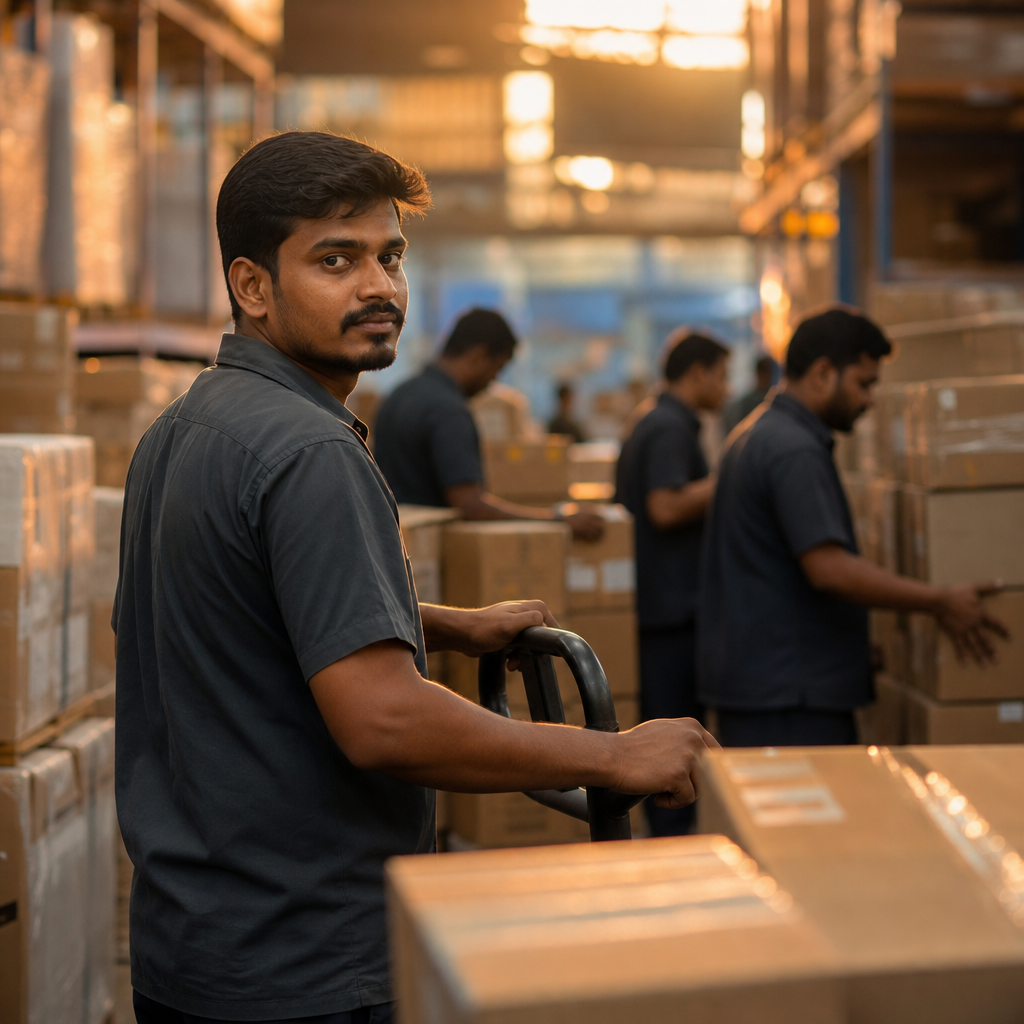
Think about what happens after you place an order online. The product may be stored in a warehouse, located through an inventory system, picked by a warehouse associate, checked, packed and prepared for dispatch. Only after completing these steps does it move towards your doorstep.
Behind this seemingly simple process is an entire team of people managing products, technology, inventory and daily operations.
As e-commerce, retail, manufacturing and logistics businesses expand, warehouse operations are becoming increasingly organised and technology-driven. Warehouses are no longer just storage spaces. They are important parts of the supply chain, where every activity contributes to delivering products accurately and on time.
This transformation is also creating different employment opportunities for freshers, ITI students, Class 10 and 12 pass candidates and people looking to enter the frontline workforce.
Let’s explore the new age of warehouse jobs, the roles available and the skills candidates need to get started.
1. How Warehouse Jobs Are Changing
Traditionally, warehouse work was associated mainly with loading, unloading and storing goods. While these activities remain important, modern warehouse operations involve much more.
Businesses now use digital systems to track inventory, manage orders, monitor stock movement and coordinate dispatch activities.
For example, when an online order is received, warehouse teams may use handheld scanners or mobile applications to locate products, confirm quantities and update order status.
This means warehouse employees need a combination of practical, technical and operational skills.
Some important changes include:
- Digital inventory management: Stock information is increasingly recorded and updated through software.
- Barcode scanning: Employees use scanners to identify products and update their movement.
- Order-based operations: Picking and packing activities are organised around customer orders.
- Quality checks: Products are inspected to reduce errors, damage and incorrect deliveries.
- Faster dispatch processes: Teams coordinate to prepare orders within operational timelines.
- Safety and process compliance: Warehouses follow defined procedures for handling products, equipment and workplace risks.
As a result, warehouse jobs are becoming more structured, and employees who understand both physical operations and basic technology can be valuable to employers.
2. Understanding How a Modern Warehouse Works
Before exploring job roles, it helps to understand the basic warehouse process.
A typical warehouse operation involves several stages.
A. Receiving Goods
Products arrive at the warehouse from suppliers, manufacturers or distribution centres. Employees receive shipments and check quantities against delivery documents.
B. Sorting and Put-Away
After receiving, products are sorted and moved to their designated storage locations. Proper placement makes it easier to locate items when orders arrive.
C. Inventory Management
The warehouse team maintains records of available stock, product movement and storage locations. Accurate inventory information helps businesses avoid shortages, excess stock and misplaced products.
D. Picking and Packing
When an order is received, employees locate the required products, collect the correct quantities and prepare them for packaging.
E. Quality Checking
Products may be checked for damage, incorrect quantities, packaging issues or other problems before dispatch.
F. Dispatch
Finally, orders are labelled, sorted and handed over for transportation or delivery.
Every stage depends on coordination. A mistake in receiving or inventory management can affect picking, packing and dispatch. This is why warehouse employees play an important role in the overall supply chain.
3. Different Types of Warehouse Jobs
Warehouse operations offer several entry-level and specialised roles. Candidates can explore opportunities based on their education, physical capabilities, technical knowledge and interests.
1. Warehouse Associate
Warehouse associates support everyday operations, including receiving, sorting, moving and organising products.
Typical responsibilities:
- Handling products and maintaining organised storage areas.
- Supporting loading and unloading activities.
- Following instructions from supervisors.
- Maintaining workplace cleanliness and safety.
This can be a starting point for candidates entering the logistics industry.
2. Picker
Pickers locate and collect products according to customer orders or internal requirements.
Typical responsibilities:
- Checking order details.
- Locating products in assigned storage areas.
- Collecting the correct quantity and product.
- Using barcode scanners or picking applications where required.
Accuracy and attention to detail are important for this role.
3. Packer
Packers prepare products for shipment while ensuring they are properly protected.
Typical responsibilities:
- Checking picked items against order details.
- Selecting suitable packaging materials.
- Packing and labelling products.
- Following packaging and quality guidelines.
This role requires care, consistency and the ability to follow standard procedures.
4. Inventory Assistant
Inventory assistants help maintain accurate records of products stored in a warehouse.
Typical responsibilities:
- Updating stock information.
- Supporting physical stock counts.
- Identifying discrepancies.
- Recording incoming and outgoing products.
- Coordinating with warehouse supervisors.
Basic computer knowledge and attention to detail can be useful.
5. Scanning and Data Entry Associate
Many warehouses use barcode-based systems to track products and orders.
Employees in these roles scan items, update records and ensure that product movement is correctly reflected in digital systems.
Basic smartphone or computer knowledge, accuracy and familiarity with digital applications can help candidates perform these responsibilities.
6. Quality Checker
Quality checkers inspect products and packaging before items move to the next stage.
Typical responsibilities:
- Identifying damaged or defective products.
- Checking quantities and product details.
- Reporting packaging issues.
- Following quality inspection procedures.
Observation and attention to detail are particularly important.
7. Dispatch Associate
Dispatch associates help prepare completed orders for transportation.
Typical responsibilities:
- Sorting orders according to destination or route.
- Checking labels and shipment details.
- Coordinating with loading teams.
- Maintaining dispatch records.
- Ensuring orders are handed over according to procedures.
This role requires coordination, organisation and accuracy.
4. Essential Skills Required for Warehouse Jobs
Candidates do not always need advanced qualifications to enter warehouse operations. However, certain skills can improve their ability to perform effectively.
A. Basic Digital Literacy
Employees may need to use smartphones, barcode scanners, handheld devices and basic computer applications.
Knowing how to navigate applications, enter information and follow digital instructions can be an advantage.
B. Attention to Detail
Incorrect product selection, quantity mismatches and scanning errors can affect the entire order process.
Candidates should develop the habit of checking details carefully.
C. Communication and Teamwork
Warehouse activities involve coordination between receiving, inventory, picking, packing and dispatch teams.
Clear communication helps employees understand instructions and complete tasks efficiently.
D. Time Management
Warehouse operations often work according to order volumes and dispatch schedules. Employees need to manage their assigned tasks while maintaining accuracy and safety.
E. Safety Awareness
Workers should understand basic workplace safety, proper handling procedures and the correct use of protective equipment.
Training is particularly important when handling machinery, heavy goods or specialised equipment.
F. Willingness to Learn
Warehouse technologies and processes can vary between employers. Candidates who are open to learning new systems and following standard operating procedures can adapt more effectively.
5. How Technology Is Transforming Warehouse Operations
Technology is changing how warehouses manage products, employees and orders.
Some commonly used technologies include:
Barcode Scanners: Help employees identify products and record stock movement accurately.
Warehouse Management Systems (WMS): Software used to manage inventory, storage locations, orders and warehouse activities.
Digital Inventory Tools: Help teams monitor stock availability and maintain records.
Conveyor Systems: Move products between different operational areas and support faster handling.
Automated Equipment: Some facilities use automated storage systems, sorting equipment and robotics to support repetitive tasks.
However, technology does not eliminate the need for people. Employees are still needed to monitor processes, handle exceptions, maintain equipment, perform quality checks and coordinate daily activities.
The ability to work alongside digital tools is becoming an increasingly useful skill for warehouse employees.

6. Can Freshers Build a Career in Warehousing?
Yes. Warehouse operations can offer an entry point into the employment market for candidates with different educational backgrounds.
Freshers do not necessarily need previous warehouse experience for every entry-level vacancy. Employers may provide role-specific training to help new employees understand operational procedures.
Candidates who may explore these opportunities include:
- Class 10 and Class 12 pass candidates.
- ITI and Polytechnic students.
- Diploma holders.
- Candidates looking for their first employment opportunity.
- Individuals with basic computer and digital skills.
- Workers interested in developing a career in logistics and supply chain operations.
However, eligibility varies by employer and role. Some positions may have specific educational, physical, location or shift requirements.
Candidates should always review the job description carefully before applying.
7. Career Growth Opportunities in Warehouse Operations
Warehouse jobs do not have to remain limited to entry-level responsibilities.
With experience, performance and additional training, employees may get opportunities to take on greater responsibilities.
A possible career pathway could look like this:
Warehouse Associate → Senior Associate → Team Leader → Warehouse Supervisor → Warehouse Operations Manager
Other employees may choose to specialise in inventory management, quality control, dispatch coordination or warehouse technology.
For example, a warehouse associate who develops strong inventory knowledge and digital skills may eventually explore inventory control responsibilities.
Similarly, an employee who understands team coordination and operational planning may prepare for a supervisory role.
Career progression is not automatic. It depends on performance, available vacancies, employer policies, training and the skills an employee develops over time.
8. How to Prepare for Your First Warehouse Job
If you are interested in entering the warehouse and logistics industry, here are some practical steps to get started.
Step 1: Understand Different Job Roles
Explore the responsibilities of warehouse associates, pickers, packers, inventory assistants and dispatch associates. Identify which roles match your interests and abilities.
Step 2: Improve Basic Digital Skills
Practise using smartphones, mobile applications, basic computer functions and simple data-entry tools.
Step 3: Learn Workplace Safety
Understand the importance of protective equipment, safe product handling, workplace instructions and reporting unsafe conditions.
Step 4: Prepare a Simple Resume
Mention your education, ITI or diploma qualification, relevant training, digital skills and any practical experience.
Step 5: Check Job Requirements
Before applying, understand the location, salary, shift timings, weekly offs, job responsibilities and any additional requirements.
Step 6: Be Ready to Learn
During interviews, communicate your willingness to learn, follow instructions and take responsibility for assigned work.
Candidates can also explore job opportunities through digital employment platforms such as Job Raahi, where they can discover relevant openings and apply according to their qualifications and interests.
9. The Future of Warehouse Jobs
As businesses continue to invest in logistics, e-commerce, retail distribution and supply chain operations, warehouses will remain important employment destinations.
The nature of these jobs may continue to evolve with the adoption of digital tools, automation and improved operational systems.
For candidates, this creates an opportunity to enter an industry where practical skills, discipline, accuracy and continuous learning matter.
For employers, it highlights the importance of recruiting candidates who can adapt to operational requirements and providing them with the training needed to perform effectively.
Conclusion
A modern warehouse is much more than a place where products are stored. It is a coordinated operational environment that connects suppliers, businesses and customers.
From picking and packing to inventory management, scanning, quality checks and dispatch, every role contributes to keeping the supply chain moving.
For freshers, warehouse jobs can offer a practical starting point to gain workplace experience, develop technical and operational skills and explore long-term career opportunities.
Your career in logistics does not have to begin with a management position. It can begin with one opportunity, one skill and the willingness to learn.
At Job Raahi, we believe that every job can be a starting point for something bigger. Our aim is to help candidates discover relevant employment opportunities and connect with employers looking for motivated frontline talent.
Explore opportunities. Build practical skills. Move your career forward.