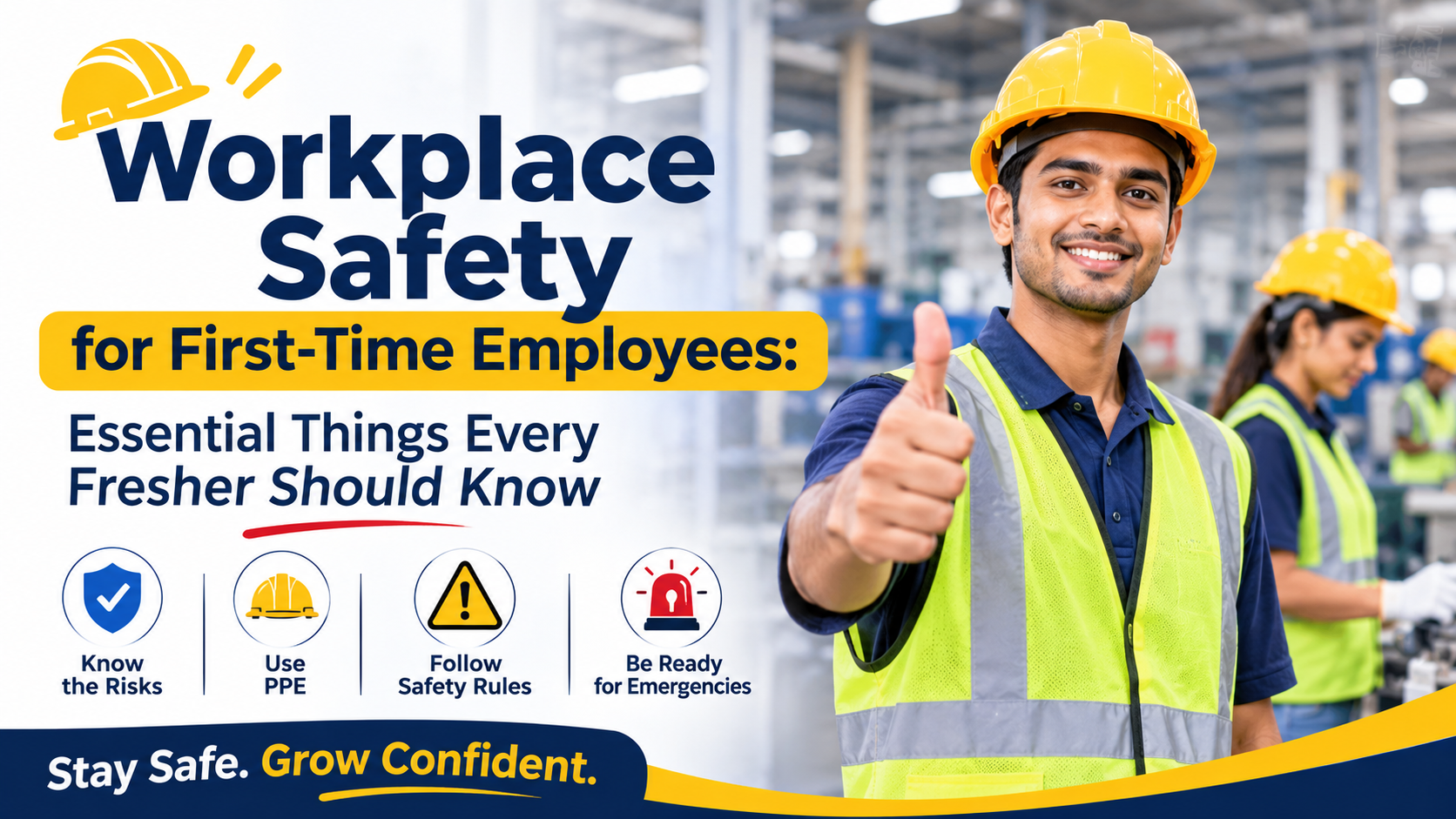
Getting your first job is an important milestone. Whether you are joining a factory, warehouse, retail store, delivery operation or hospitality business, your first few days will involve learning new tasks, meeting colleagues and understanding how the workplace operates.
But there is one thing every new employee should prioritise from the beginning: workplace safety.
For someone entering the workforce for the first time, workplace environments can be unfamiliar. Machinery, electrical equipment, heavy materials, slippery floors, crowded storage areas and long working hours may introduce risks that are not always obvious.
Understanding basic safety practices can help you protect yourself, support your colleagues and become a more responsible employee.
Why Workplace Safety Matters
Workplace safety is not just about following instructions or wearing a helmet. It is about creating an environment where employees can perform their responsibilities without unnecessary risks.
For example:
- A warehouse associate needs to understand safe material handling.
- A factory worker must follow machinery operating instructions.
- A delivery executive should understand road safety and vehicle precautions.
- A retail employee should know how to handle equipment and maintain clear walkways.
Every role comes with different responsibilities and potential hazards. The International Labour Organization recognises a safe and healthy working environment as a fundamental principle and right at work.
For freshers, learning safety practices early can also build confidence and demonstrate professionalism.
Understand Your Workplace Before Starting
Before beginning any task, take time to understand your work environment.
During your induction or initial training, pay attention to:
- Entry and exit points.
- Emergency exits and assembly areas.
- First-aid facilities.
- Fire extinguishers and alarm systems.
- Restricted or hazardous areas.
- Safety signs and instructions.
- The person to contact in case of an emergency.
Never assume that you already know how a workplace operates. Ask your supervisor whenever something is unclear.
A few questions at the beginning can prevent confusion later.
Learn to Use Personal Protective Equipment
Personal Protective Equipment (PPE) refers to equipment designed to reduce exposure to workplace hazards.
Depending on the job, it may include:
- Safety helmets: To protect against certain head injuries.
- Safety shoes: To protect feet from impact and other workplace hazards.
- Gloves: To protect hands when handling suitable materials.
- Safety goggles: To protect eyes from dust, particles or splashes.
- Reflective jackets: To improve visibility in certain work environments.
- Ear protection: To reduce exposure to excessive noise.
However, simply wearing PPE is not enough. Employees must understand which equipment is suitable for their tasks, how to wear it correctly and when it needs replacement.
Always follow your employer’s training and instructions. Never use damaged or unsuitable protective equipment.
Identify and Report Workplace Hazards
A workplace hazard is anything that could potentially cause injury or harm.
Some common examples include:
- Wet or slippery floors.
- Exposed electrical wires.
- Damaged machinery.
- Unsecured heavy materials.
- Blocked emergency exits.
- Poorly stored chemicals.
- Unsafe lifting or handling practices.
Freshers should develop the habit of observing their surroundings.
If you notice something unsafe, inform your supervisor or the designated safety representative immediately. Do not try to repair machinery or handle hazardous materials unless you are trained and authorised to do so.
Reporting a potential risk is not complaining. It is a responsible action that can help prevent accidents.
Follow Safety Rules and Instructions
Every workplace has procedures designed to help employees perform tasks safely.
As a new employee, make sure you:
- Follow the instructions given during training.
- Operate machinery only when authorised.
- Never bypass safety guards or warning systems.
- Avoid running or rushing in work areas.
- Use the correct tools for assigned tasks.
- Follow material handling and lifting instructions.
- Avoid distractions while performing safety-sensitive work.
If you are asked to perform a task you have not been trained for, seek guidance before proceeding.
Being willing to learn is important, but taking unnecessary risks to prove yourself is not.
Know What to Do During an Emergency
Emergencies can happen unexpectedly. Knowing the correct response can make a significant difference.
Every employee should understand:
- How to recognise emergency alarms.
- Which evacuation route to follow.
- Where the assembly point is located.
- Whom to contact during an emergency.
- Where first-aid support is available.
Participate seriously in fire drills and emergency training. Do not use lifts during a fire evacuation unless the workplace’s emergency procedure specifically instructs otherwise.
Most importantly, remain calm and follow the instructions of trained emergency personnel.
Build Good Safety Habits from Day One
Workplace safety becomes more effective when it is part of your daily routine.
Here are a few habits every fresher should develop:
Arrive prepared: Wear the required uniform and protective equipment.
Stay attentive: Avoid distractions while working around machinery, vehicles or moving equipment.
Keep your area organised: Do not leave tools, materials or waste in walkways.
Ask questions: Never hesitate to clarify an unfamiliar instruction.
Take breaks responsibly: Follow workplace guidelines and pay attention to fatigue, heat and physical discomfort.
Look out for others: If you notice a colleague working in an unsafe way, raise the concern respectfully or inform the supervisor.
Small habits can contribute to a safer working environment for everyone.
The Role of Employers in Workplace Safety
Workplace safety is a shared responsibility, but employers play a major role in creating safe working conditions.
Organisations should provide appropriate safety training, communicate workplace risks, maintain equipment, make suitable protective equipment available and establish clear emergency procedures.
New employees should receive role-specific guidance rather than being expected to understand every safety requirement on their own.
The Directorate General Factory Advice Service & Labour Institutes (DGFASLI), under India’s Ministry of Labour & Employment, works on occupational safety, health and welfare in factories and ports.
A workplace that takes safety seriously helps employees learn their responsibilities and perform their jobs with greater confidence.
Conclusion: Make Safety Part of Your Career Journey
Your first job is about more than earning a salary. It is where you develop professional habits, learn practical skills and understand workplace responsibilities.
Whether you are starting as a warehouse associate, production worker, delivery executive, retail assistant or customer support employee, safety should always be part of your working routine.
Remember: A good employee is not just someone who completes tasks on time, but someone who understands how to complete them responsibly and safely.
As you explore new career opportunities, look for employers who value proper training, clear instructions and employee well-being.