Tag: Blue Collar Career

  • Your First Frontline Job: How Freshers Can Manage Workload, Targets and Daily Responsibilities

    Your First Frontline Job: How Freshers Can Manage Workload, Targets and Daily Responsibilities

    Getting your first job is an important milestone. After completing your education or vocational training, entering the professional world gives you an opportunity to earn, learn practical skills and become more independent.

    For many freshers, frontline jobs are an important starting point. Opportunities in retail, warehousing, logistics, manufacturing, delivery, hospitality and customer support allow candidates to gain real workplace experience.

    However, the transition from education to employment also brings new responsibilities.

    You may need to follow a shift schedule, complete assigned tasks within a specific time, coordinate with colleagues, meet daily targets and adapt to an entirely new working environment.

    At first, managing all these responsibilities can feel overwhelming.

    The good news is that workload management is a skill that develops with experience, practice and the right guidance. Understanding your responsibilities and building a few effective work habits can make your first job more manageable.

    Understanding Workload in Frontline Jobs

    Workload refers to the tasks, responsibilities and activities an employee is expected to complete during a particular working period.

    In frontline jobs, workload can vary depending on the industry, role, location and business demand.

    For example:

    • Warehouse Associate: Receiving, sorting, scanning, picking, packing and dispatching products.
    • Retail Associate: Assisting customers, arranging products, managing billing and maintaining store operations.
    • Production Associate: Supporting production activities, operating equipment as instructed and following quality procedures.
    • Delivery Executive: Managing assigned deliveries, following routes and coordinating with customers.
    • Customer Support Executive: Handling customer queries, maintaining records and resolving issues according to company guidelines.
    • Hospitality Associate: Supporting guest services, maintaining cleanliness and coordinating daily service activities.

    Some roles involve physical activities, while others require continuous customer interaction, attention to detail or meeting productivity targets.

    Understanding what your job involves is the first step towards managing your workload effectively.

    Why the First Frontline Job Can Feel Challenging

    For a fresher, the workplace can be very different from a classroom or training environment.

    During education, tasks are often organised around lessons, assignments and examinations. At work, responsibilities may follow operational schedules and business requirements.

    Some common reasons the first job can feel challenging include:

    A New Working Environment: Learning workplace rules, processes, equipment and reporting structures takes time.

    Unfamiliar Tasks: Even if you have studied a subject, performing the actual job may require practical experience.

    Time-Based Responsibilities: Some roles require employees to complete tasks within specific time limits.

    Shift Schedules: Adjusting to fixed shifts, rotating shifts or early reporting times may require changes to daily routines.

    Performance Expectations: Employees may be expected to maintain accuracy, productivity and quality while completing assigned responsibilities.

    These challenges are a normal part of entering the workforce. Freshers should focus on learning the process rather than expecting themselves to perform perfectly from the beginning.

    Common Workload Challenges Freshers May Face

    Different frontline roles have different demands, but some challenges are common across industries.

    Managing Multiple Tasks

    An employee may need to complete several activities during a shift. Without understanding which tasks are most important, it can become difficult to organise the work.

    Meeting Daily Targets

    Some jobs involve daily productivity targets, such as processing orders, completing production tasks or handling customer queries.

    Freshers may initially need time to understand how these targets are measured.

    Maintaining Accuracy

    Working quickly is important in many operational roles, but speed should not come at the cost of accuracy.

    For example, incorrect inventory entries, packaging mistakes or billing errors can affect business operations.

    Adjusting to Physical Work

    Certain frontline positions involve standing for extended periods, walking, lifting approved loads or performing repetitive tasks. Employees need proper training and must follow workplace safety procedures.

    Understanding Instructions

    New employees may receive instructions from supervisors or different team members. Understanding priorities and asking questions when something is unclear can prevent mistakes.

    Practical Ways to Manage Daily Responsibilities

    Good workload management does not require complicated techniques. A few consistent habits can help freshers become more organised.

    A. Understand Your Daily Tasks

    At the beginning of your shift, understand what responsibilities have been assigned to you.

    If the instructions are unclear, ask your supervisor for clarification.

    Knowing what is expected helps you organise your time and avoid unnecessary confusion.

    B. Prioritise Important Activities

    Not every task has the same level of urgency.

    Understand which responsibilities need immediate attention and which can be completed later.

    For example, a warehouse employee may need to prioritise an assigned dispatch activity according to the supervisor’s instructions rather than independently choosing tasks.

    C. Focus on One Task at a Time

    Trying to handle too many activities simultaneously can increase the chances of mistakes.

    Complete tasks in the required sequence, follow standard operating procedures and maintain accuracy.

    D. Learn the Correct Process

    Do not focus only on completing tasks quickly. First understand the correct way to perform them.

    Once you become familiar with the process, your speed and confidence can improve naturally.

    E. Track Your Progress

    Pay attention to the tasks you have completed and those that are still pending.

    Where appropriate, use a checklist or follow the tracking system provided by your organisation.

    This can help you stay organised throughout the shift.
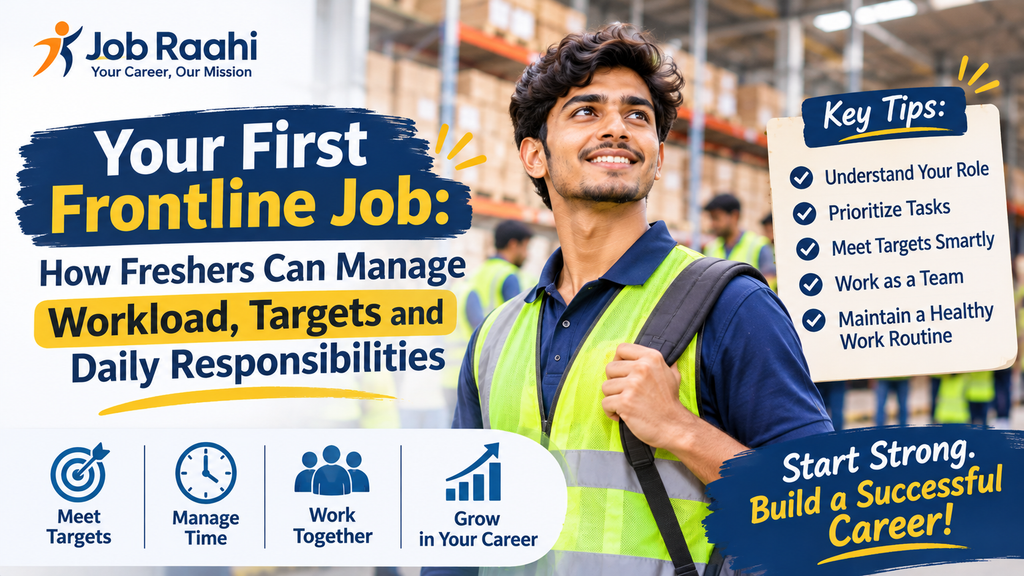
    Frontline jobs for freshers

    How to Handle Targets and Work Pressure

    Targets are common in several frontline roles. They help organisations monitor productivity and plan daily operations.

    However, freshers may find it difficult to meet targets while they are still learning.

    Here are some ways to approach them:

    Understand How Targets Work: Ask your supervisor how performance is measured and what is expected from your role.

    Focus on Consistency: Rather than rushing to complete everything, develop a steady and accurate working pace.

    Learn from Feedback: If your performance needs improvement, understand which part of the process requires attention.

    Communicate Difficulties Early: If you are facing an operational challenge or cannot complete an assigned task, inform your supervisor instead of waiting until the end of the shift.

    Avoid Unnecessary Comparisons: Experienced employees may work faster because they are familiar with the process. Give yourself time to learn and improve.

    It is also important to remember that targets should be realistic, communicated clearly and supported by appropriate training, equipment and working conditions.

    The Importance of Teamwork and Asking for Help

    Frontline operations rarely depend on one employee working independently. Most activities require coordination between different people and teams.

    In a warehouse, employees may work together across receiving, inventory, picking, packing and dispatch. In retail, store associates coordinate with billing teams and supervisors. In hospitality, service staff work together to maintain daily operations.

    Freshers should understand that asking for help is not a sign of weakness.

    If you are unsure about a task, seek guidance from an experienced colleague or supervisor.

    Good teamwork involves:

    • Listening carefully to instructions.
    • Sharing relevant information with colleagues.
    • Respecting assigned responsibilities.
    • Informing the team about delays or difficulties.
    • Supporting others when your own responsibilities allow it.
    • Following established reporting procedures.

    Learning to work as part of a team can make daily responsibilities easier to manage and improve your professional confidence.

    Maintaining a Healthy Work Routine

    Managing workload also involves preparing yourself for the demands of your job outside working hours.

    A consistent routine can help employees adjust to their responsibilities.

    Consider the following habits:

    Get Adequate Rest: Maintain a suitable sleep routine, particularly if your role involves early morning, late-night or rotating shifts.

    Plan Your Commute: Allow enough time to reach the workplace without unnecessary last-minute stress.

    Follow Break Schedules: Use designated breaks appropriately and follow workplace policies.

    Stay Hydrated: Drink water regularly, especially in roles involving physical activity or warm working environments.

    Follow Safety Instructions: Use required protective equipment and follow the training provided for handling tools, machinery or materials.

    Make Time for Personal Life: Maintain a routine that gives you time to rest, spend time with family and pursue personal interests.

    A sustainable work routine can help freshers adjust to their responsibilities over time.

    What Employers Can Do to Support Freshers

    Workload management is not only an employee responsibility. Employers also play an important role in helping new employees adjust to their jobs.

    Companies can support freshers through:

    • Clear explanations of job responsibilities.
    • Structured onboarding and role-specific training.
    • Realistic productivity expectations during the learning period.
    • Accessible supervisors and reporting channels.
    • Proper equipment and workplace safety instructions.
    • Clear shift schedules and break policies.
    • Regular feedback and performance guidance.

    When employees understand their responsibilities and receive the right support, they have a better opportunity to develop confidence and perform their work effectively.

    For frontline businesses, investing in employee readiness can also help create a more organised and productive workforce.

    How Job Raahi Helps Freshers Discover Frontline Opportunities

    Finding a suitable first job is an important part of beginning a professional journey.

    Freshers need opportunities that match their educational background, practical skills and experience level. They also need clear information about job responsibilities and eligibility before applying.

    Job Raahi is a digital job platform focused on connecting companies with candidates exploring frontline, entry-level and mass hiring opportunities.

    It provides candidates with an additional channel to discover openings across sectors such as logistics, warehousing, retail, delivery, sales, hospitality and customer support.

    For freshers and candidates with limited experience, this can help make relevant employment opportunities more accessible.

    Job Raahi also works with skill centres across India, where candidates can be trained and developed in line with industry requirements.

    The objective is to connect candidates with suitable employment opportunities while helping employers reach a wider pool of potential frontline talent.

    For someone beginning their career, discovering the right opportunity is the first step. Learning to manage responsibilities and developing workplace skills comes next.

    Conclusion: Your First Job Is Also Your First Learning Experience

    Starting a frontline job brings new responsibilities, expectations and challenges. Managing daily tasks, understanding targets, adjusting to shifts and working with a team may take time, particularly for someone entering the workforce for the first time.

    The key is to remain organised, understand your responsibilities, follow instructions and stay open to learning.

    Do not measure your progress only by how quickly you complete a task. Focus on improving accuracy, building confidence and developing good professional habits.

    Employers also have a responsibility to provide clear instructions, proper training and a supportive working environment.

    Platforms like Job Raahi can help freshers discover relevant frontline opportunities and take their first step towards employment.

    Your first job is not just about completing daily tasks. It is about learning how the workplace operates, developing responsibility and building the foundation for your future career.
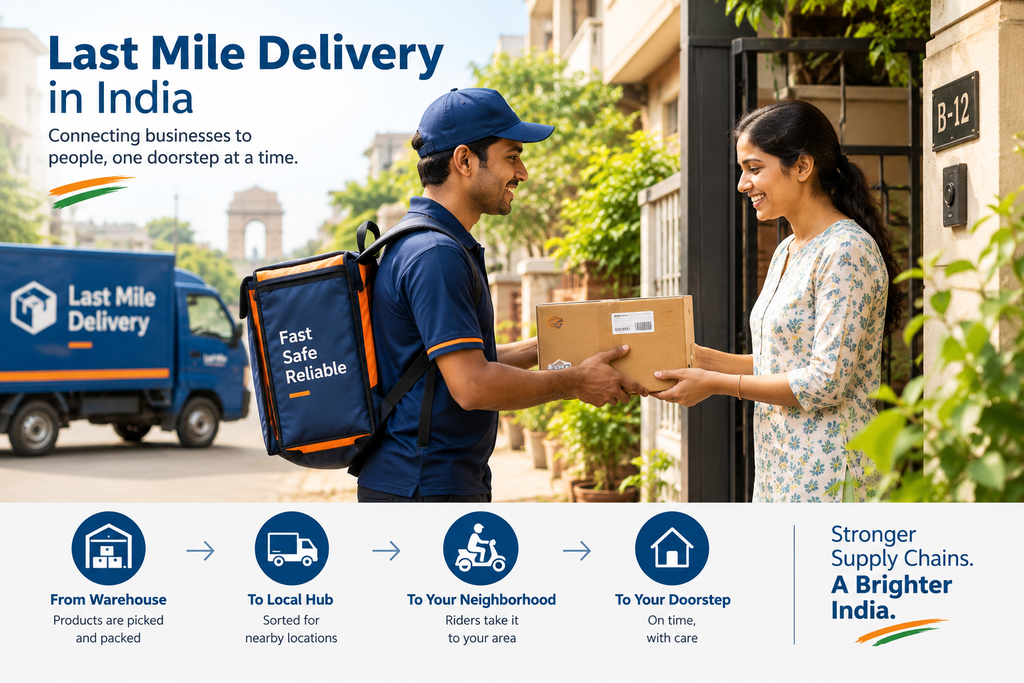
  • Hiring at the Last Mile: Reaching India’s Frontline Workforce

    Hiring at the Last Mile: Reaching India’s Frontline Workforce

    A job opening can be available. A company can be ready to hire. And thousands of people can be looking for work. Yet, somehow, the right candidate and the right employer never connect.

    This is one of the biggest challenges in frontline hiring.

    Across India, businesses need people to manage stores, operate warehouses, deliver products, support customers, work on production lines and keep daily operations running. At the same time, many job seekers in smaller cities, towns and rural areas struggle to discover suitable opportunities.

    The problem is not always a lack of jobs or a lack of candidates. Sometimes, the real challenge is reaching each other at the last mile.

    What Does Last-Mile Hiring Really Mean?

    Last-mile hiring is about reaching potential employees where traditional recruitment channels may not reach them effectively.

    It means moving beyond the usual databases, familiar locations and conventional hiring networks to connect with candidates who may be actively seeking work but remain difficult for employers to discover.

    These candidates may include:

    • Freshers looking for their first job
    • ITI, diploma and vocational training graduates
    • Candidates with six months to two years of experience
    • Workers living in smaller cities and semi-urban areas
    • Candidates looking for jobs closer to home
    • People with practical skills but limited access to formal recruitment channels

    For companies hiring at scale, reaching these candidates can make a meaningful difference.

    A business opening new stores, expanding warehouse operations or increasing its delivery network cannot rely only on candidates who happen to be present on familiar job portals. It needs a recruitment strategy that reaches a wider and more relevant workforce.

    Why Is Reaching Frontline Candidates Still Difficult?

    1. The Right Candidates Are Not Always Visible

    Traditional recruitment often depends on referrals, recruitment agencies, existing databases and established job platforms.

    These channels can be useful, but they may not reach every suitable candidate.

    Someone living in a smaller town might have the education and skills required for a warehouse, retail or customer support role but may not know where to find genuine openings.

    Similarly, a fresher may be ready to learn but have no professional network to help them enter the workforce.

    When employers repeatedly source candidates from the same channels, they risk overlooking people who could be a good fit.

    A wider talent pool starts with wider access to opportunities.

    2. Location Creates a Hiring Gap

    Frontline jobs are often location-dependent.

    A retail associate is needed at a particular store. A warehouse worker needs to reach a specific facility. A delivery executive must serve a defined area. A hospitality employee needs to work at a particular property.

    Yet, recruitment teams may be sourcing candidates from locations that are too far away or unsuitable for the role.

    This can create practical problems around commuting, relocation, joining and long-term retention.

    A location-aware recruitment strategy helps employers reach candidates who can realistically access the workplace.

    It also helps candidates find opportunities that fit their circumstances instead of applying blindly to jobs they may not be able to join.

    3. Complicated Application Processes Lose Candidates

    Frontline candidates often need a straightforward way to discover a job, understand the requirements and apply.

    Long forms, unclear instructions, repeated data entry and delayed responses can discourage candidates from completing the process.

    For someone applying through a mobile phone, every unnecessary step creates friction.

    Employers should make the journey as simple as possible:

    • Explain the job role clearly.
    • Mention the work location and salary or pay range.
    • State the eligibility criteria and experience required.
    • Keep the application process mobile-friendly.
    • Communicate the next steps promptly.
    • Make interview details and joining requirements easy to understand.

    A simpler process does not mean compromising on screening. It means removing barriers that do not help assess a candidate’s suitability.

    4. Urgent Hiring Can Lead to Narrow Sourcing

    When a company needs to fill 50, 100 or several hundred positions quickly, recruitment teams often return to the channels they already know.

    That is understandable. They have deadlines, operational targets and managers waiting for employees to join.

    However, repeatedly using the same sources can limit the available candidate pool.

    A better approach is to maintain multiple sourcing channels before the next urgent requirement arrives. Local institutions, skill centres, community networks, digital platforms and employee referrals can complement existing recruitment methods.

    The goal is not to abandon successful channels. It is to build additional routes to suitable candidates.

    Why Last-Mile Hiring Matters for Indian Businesses

    India’s workforce is spread across metropolitan cities, smaller urban centres, towns and rural communities. Employers who broaden their reach can discover candidates beyond their usual recruitment networks.

    The opportunity is particularly relevant for industries that depend on frontline teams, including:

    • Retail: Store associates, cashiers, sales executives and stock handlers
    • Logistics and warehousing: Pickers, packers, warehouse associates and helpers
    • Delivery and e-commerce: Delivery executives and field operations staff
    • Hospitality: Housekeeping staff, kitchen assistants and service teams
    • Customer support: Entry-level support executives and contact-centre staff
    • Manufacturing: Production operators, assistants and shop-floor workers
    • Field sales: Sales representatives and local market executives

    Each sector has different requirements, but the underlying challenge is similar: finding enough suitable people in the right locations and helping them move from application to joining.

    For growing businesses, effective last-mile hiring can support expansion while giving more candidates access to employment opportunities.

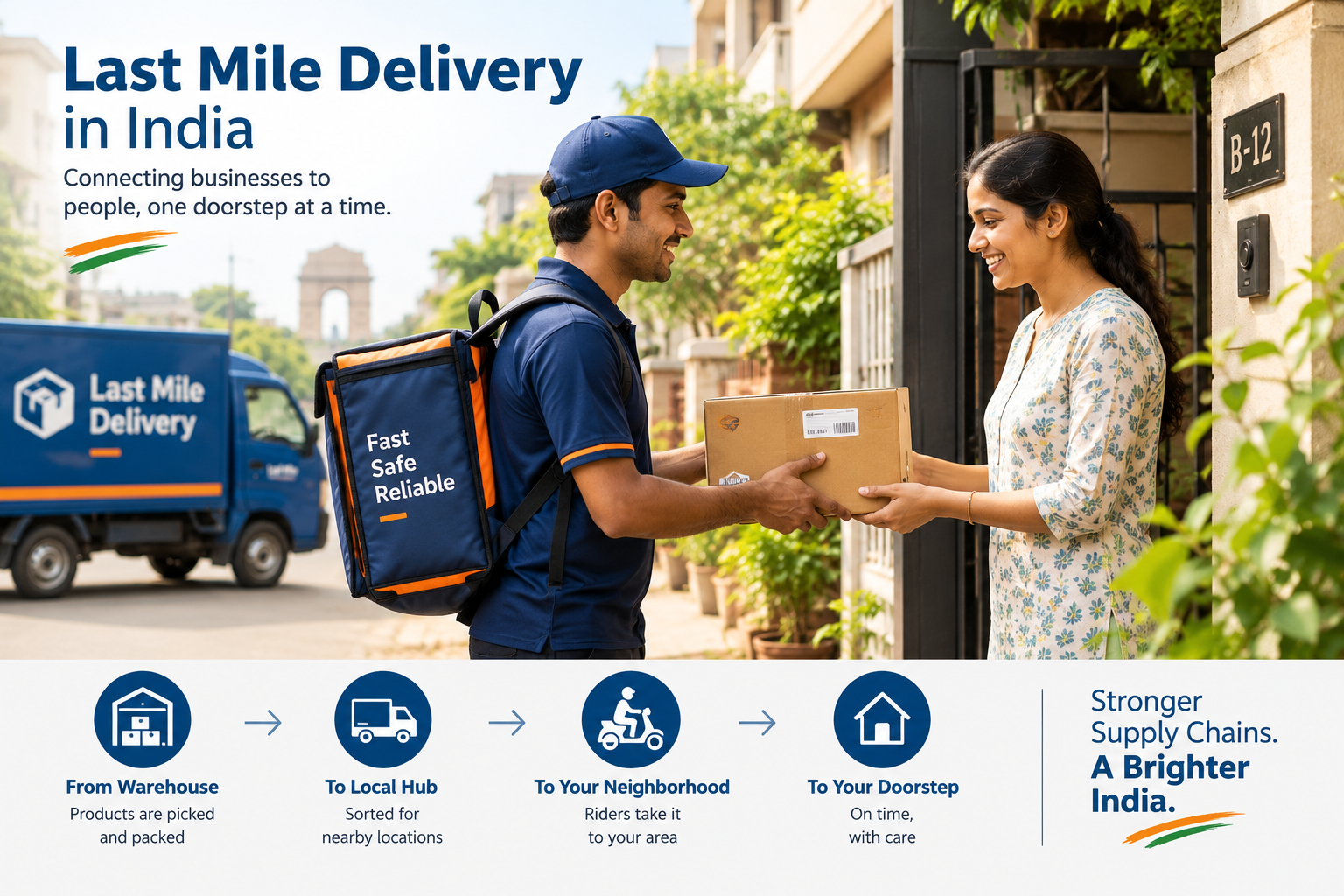
    Companies Hiring Last Mile Delivery executive

    Five Ways Employers Can Improve Last-Mile Hiring

    1. Expand Beyond Traditional Hiring Channels

    Do not depend on a single platform or sourcing method.

    Combine existing recruitment channels with local colleges, ITIs, polytechnic institutes, vocational training centres, community networks and digital job platforms.

    Different channels reach different types of candidates. A combination gives recruitment teams more flexibility when hiring requirements change.

    For example, a company hiring warehouse associates across multiple districts could build connections with local training institutions and digital recruitment partners before new facilities become operational.

    This creates a broader sourcing network rather than a last-minute search.

    2. Build Location-Based Talent Pipelines

    Instead of beginning every recruitment campaign from scratch, identify the locations from which candidates can realistically commute or relocate.

    Map hiring requirements by city, district, workplace and role. Then identify potential sourcing partners in those areas.

    A regional talent pipeline can help employers prepare for future openings, reduce dependence on emergency sourcing and maintain relationships with potential candidates.

    The key is to build these pipelines around actual workforce requirements, not simply collect large numbers of candidate profiles.

    3. Make Job Information Clear and Honest

    Candidates need enough information to decide whether a role is right for them.

    A job post should clearly communicate the responsibilities, location, pay, working hours, eligibility criteria and selection process wherever applicable.

    Avoid vague descriptions that create unrealistic expectations.

    When candidates understand the opportunity before applying, recruiters can spend less time clarifying basic details and more time assessing role fit.

    Transparency also builds trust, which is particularly important when reaching candidates who may be unfamiliar with a company or recruitment platform.

    4. Reduce the Time Between Application and Joining

    Finding candidates is only one part of recruitment. Employers must also help suitable candidates progress through the process.

    Delays in screening, interview scheduling, offer approval or joining communication can cause candidates to lose interest or accept another opportunity.

    Recruitment teams should track each stage of the hiring funnel:

    Application → Screening → Interview → Selection → Offer → Joining

    Measure how many candidates move from one stage to the next, where drop-offs occur and how long each stage takes.

    These insights can help identify whether the main problem is sourcing, eligibility, communication, interview attendance or joining readiness.

    The objective should be to improve the complete hiring journey, rather than focus only on the number of applications received.

    5. Use Digital Platforms to Extend Your Reach

    Digital recruitment platforms can help employers connect with candidates across locations without depending entirely on physical recruitment drives or existing databases.

    Candidates can discover relevant openings, review job details and apply through their phones. Employers can promote vacancies, reach wider talent pools and manage applications more efficiently, depending on the platform’s features.

    However, technology alone is not enough.

    A digital listing must still reach the right audience. Candidates need access to smartphones or other application channels, clear information and timely communication. Employers also need appropriate screening and verification processes.

    The strongest approach combines digital reach with local understanding and human follow-through.

    Hiring Freshers: An Opportunity Worth Exploring

    One way to expand the frontline talent pool is to reconsider how employers evaluate freshers.

    Not every entry-level role requires years of previous experience. Some positions can be filled by candidates who have the necessary basic skills, willingness to learn and ability to complete role-specific training.

    ITI graduates, diploma holders, vocational trainees and other early-career candidates may bring practical knowledge that is relevant to particular roles.

    Employers can identify which positions genuinely require prior experience and which could be suitable for trainable candidates.

    For suitable roles, structured onboarding, clear supervision and practical training can help new employees become productive.

    This approach can also open the door to candidates who have struggled to enter the workforce because most advertised positions ask for prior experience.

    The aim is not to lower hiring standards. It is to assess candidates against the actual requirements of the job.

    What Job Platforms Can Do to Bridge the Last-Mile Gap

    Recruitment platforms have an important role to play in connecting employers with candidates who are difficult to reach through conventional channels.

    They can make job opportunities more discoverable, provide a convenient way to apply and help employers extend recruitment beyond familiar locations.

    When combined with local outreach and skill-development networks, digital platforms can support a more accessible hiring ecosystem.

    At Job Raahi, this is the opportunity: helping companies connect with frontline and entry-level talent across India, including candidates from smaller cities and underserved communities.

    For employers, an additional sourcing channel can offer a way to explore new candidate pools without immediately replacing existing recruitment methods.

    For candidates, better access to job information can make it easier to discover opportunities, understand requirements and take the next step in their careers.

    The important measure of success is not simply how many people see a vacancy. It is whether suitable candidates are reached, apply, progress through selection and successfully join.

    The Future of Hiring Starts at the Last Mile

    Frontline workers are essential to the everyday functioning of businesses. They help products reach customers, stores operate smoothly, warehouses fulfil orders and service teams deliver reliable experiences.

    Yet, recruitment strategies can overlook the very people businesses need to reach.

    Closing this gap requires employers to think beyond familiar hiring channels, make applications simpler, communicate clearly and build talent pipelines closer to where candidates live.

    It also requires a more inclusive view of talent — one that considers skills, potential, location and role fit rather than relying only on experience or access to established networks.

    India’s frontline workforce is not limited to major cities or candidates already visible to recruiters.

    The opportunity is to reach further, build smarter sourcing networks and make genuine employment opportunities easier to access.

    Because successful hiring isn’t just about finding candidates. It’s about reaching the right people, wherever they are.

    Looking to expand your frontline talent reach? Explore Job Raahi as an additional channel for connecting with candidates for entry-level and frontline roles.

  • Blue Collar Career Can Open the Door to White Collar Jobs.

    Blue Collar Career Can Open the Door to White Collar Jobs.

    Your first job doesn’t have to be your final career. For many freshers, getting the first opportunity is the hardest part. You may not have experience. You may not have a strong resume and you may find that many office jobs ask for skills that you haven’t had the chance to develop yet.

    That’s where blue collar, grey collar and frontline jobs can provide a starting point. A first job can give you something that a fresher often needs most: A Real work experience.

    What Can a Fresher Learn from a Blue-Collar Job?

    A blue-collar job is often associated with hands-on work and rightly so. But working in a factory, warehouse, logistics operation, delivery network, technical service or other frontline environment can also expose you to how businesses actually operate.

    You may learn:

    • How teams work together
    • How customers are handled
    • How orders are processed
    • How inventory moves
    • How workplace targets work
    • How supervisors manage teams
    • How to follow standard processes
    • How to use workplace technology
    • How to solve day-to-day problems

    These experiences can become useful as your responsibilities grow.

    Skills Can Change Your Career Direction

    Warehouse-worker-handling-shipments

    Say someone starts working as a warehouse associate.

    At first, their responsibilities may be focused on receiving, picking, packing or dispatching goods. Over time, they may become familiar with:

    Inventory → Warehouse Operations → Reporting → Team Coordination → Supervisory Responsibilities

    With the right experience and additional skills, that person may eventually explore roles involving more coordination, administration or operations management.

    The same principle can apply across other industries. A delivery professional may develop an interest in logistics. A machine operator may develop technical expertise. A field sales executive may move towards sales coordination or business development. A technician may take on supervisory responsibilities.

    There is no single career path, and progression is not automatic. It depends on the worker’s skills, experience, qualifications and available opportunities.

    Blue Collar Does Not Mean “No Career Growth”

    This is an important misconception. Skilled blue-collar workers are increasingly important to industries such as manufacturing and logistics. Deloitte’s 2025 analysis notes increasing demand for skilled labour and highlights the role of training and skill development in the sector.

    And the distinction between hands-on work and technology is becoming less clear.

    Modern frontline and blue-collar workers may use scanners, digital platforms, machinery, tracking systems and other technologies as part of their everyday work. Research and industry reporting have also highlighted increasing technology and AI-related upskilling among blue collar workers.

    So, starting in a frontline job doesn’t mean you have stopped learning.

    It can be the beginning of learning.

    A Possible Career Journey

    There is no guaranteed formula, but career progression can sometimes look like this:

    Fresher → Entry-Level Job → Skill Development → Experienced Worker → Senior Role → Supervisory/Coordination Role

    For example:

    Warehouse Associate → Senior Associate → Team Leader → Warehouse Supervisor

    Or:

    Field Sales Executive → Senior Sales Executive → Business Development → Sales Operations

    Or:

    Machine Operator → Senior Operator → Production Supervisor

    Career in Blue collar

    The exact path depends on the industry and the individual.

    Start Where You Can, Keep Building from there. If you’re a fresher struggling to get your first office job, don’t automatically consider every blue collar or frontline opportunity as a dead end.

    Look at what the job can teach you.

    Ask yourself:

    • What skills will I gain?
    • Will I get practical industry experience?
    • Can I learn something new while working?
    • Can I take on more responsibility over time?

    Those questions can help you think about your career beyond your first job title.

    Find Blue Collar and Grey Collar Opportunities with Job Raahi

    Job Raahi is a digital job portal specializing in blue collar, grey collar and frontline jobs.

    The platform is built to help job seekers discover relevant employment opportunities and help employers connect with skilled and frontline talent.

    For freshers, skilled workers and people looking for their next opportunity, the goal is simple:

    Find a job. Build skills. Gain experience. Keep moving forward.

    Your first job doesn’t have to define your entire career. It can simply be where your career begins.

  • Frontline Workforce in India: 5 Valuable Career Skills Field Sales Jobs CanBuild

    Frontline Workforce in India: 5 Valuable Career Skills Field Sales Jobs CanBuild

    When people hear the word sales, they often imagine someone going door to door or sitting in an office and making phone calls. But the large part of Sales happens outside the office.

    How Frontline Sales can be build real career skills?

    A field sales executive might spend the day visiting customers, understanding their requirements, explaining a product, following up with the prospects and building relationship. That makes a field sales one of the many important frontline jobs in India. And while the field sales can be challenging, it can also teach skills that stay useful throughout a person’s career.

    Frontline workforce includes people who directly interacts with customers, operate business processes or deliver products and services. This can include:

    • Field Sales executives
    • Delivery Executives
    • Retail Employees
    • Warehouse Workers
    • Technicians
    • Drivers
    • Manufacturing Workers
    • Field Sales Professionals. 

    Recent workforce research describes frontline employees as the people working across areas such as retail, factories, warehouses and customer service — roles that keep day-to-day operations moving.

    Frontline Field Sales in India

    What Does a Field Sales Executive Actually Do?

    A sales professional job is not simply about selling something. A typical field sales executive may have to:

    • Find and contact potential customers
    • Visit customers
    • Understand their requirements
    • Explain products or services
    • Handle questions and objections
    • Negotiate with customers
    • Follow up regularly
    • Maintain customer information
    • Coordinate with internal teams
    • Work towards sales targets

    Every customer interaction is different.
    That means a sales executive gets practical experience that cannot always be learned from a classroom.

    The Skills You Build in Sales

    One of the biggest advantages of a frontline sales job is the range of skills you develop.

    • Communication

    You learn how to explain an idea clearly to different types of customers.

    • Customer Handling

    Not every customer will be interested. Learning how to listen, respond to objections and maintain a professional conversation is an important skill.

    • Negotiation

    Customers may question pricing, features or value. Handling these conversations teaches you how to negotiate and communicate value.

    • Time Management

    A customer facing executive may have several meetings or visits in one day. Planning the day properly becomes an important part of the job.

    • Problem Solving

    Customers don’t always give you a straightforward requirement. You often have to understand the actual problem and find a suitable solution.

    Field Sales Can Be a Starting Point, Not the Final Destination

    A person’s first job does not necessarily determine their entire career. Someone who starts as a field sales executive can gradually develop experience in areas such as:

    Field Sales → Senior Sales Executive → Business Development → Key Account Management

    Or, depending on their skills and interests:

    Frontline Sales → Sales Operations → CRM / Sales Coordination → Business Operations

    The actual career path depends on the person’s experience, performance, education, skills and the opportunities available to them.

    The important point is that frontline work can help build transferable skills.

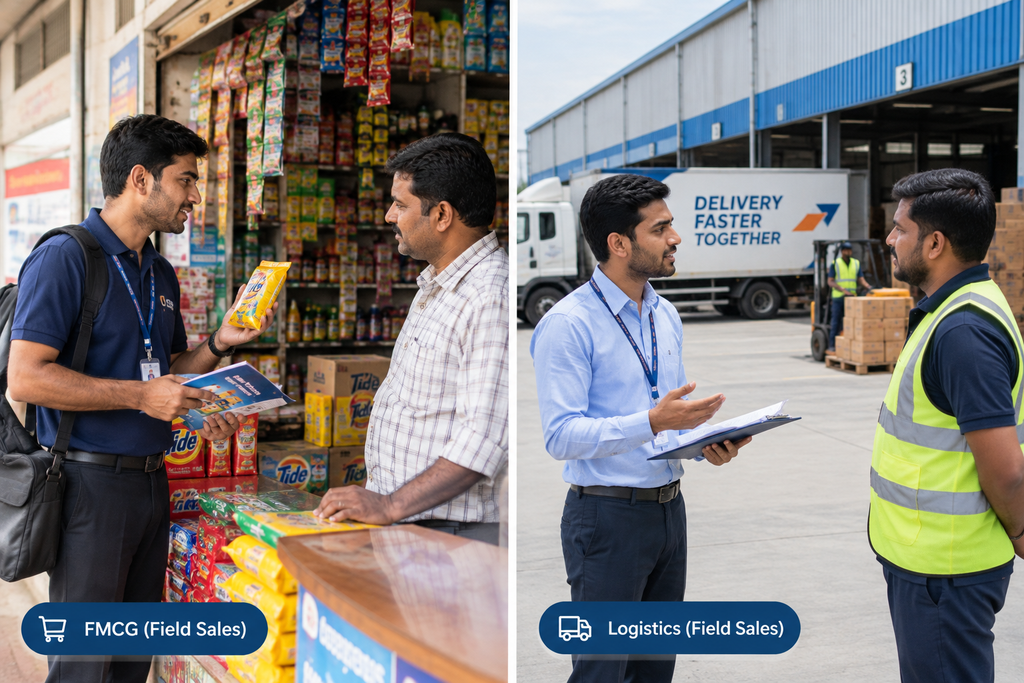
    Field Sales In FMCG and Logistics

    Why Digital Job Discovery Matters

    Finding suitable frontline jobs can sometimes be difficult. Many workers traditionally depend on personal contacts, local references or word-of-mouth to discover opportunities.

    Digital job platforms are creating another way for workers to discover jobs and present their skills to potential employers.

    Find Frontline and Field Sales Opportunities with Job Raahi

    Job Raahi is a digital job portal specializing in blue collar, grey collar and frontline employment.

    The platform connects job seekers with employment opportunities across different frontline and skilled-work categories. For someone looking for a field sales job, sales executive job, logistics job, delivery job, manufacturing job or other frontline opportunity, having access to relevant vacancies can make the job search more organized.

    Your First Job Can Teach You More Than You Expect

    A frontline job can teach you how to communicate with people, handle pressure, solve problems and take responsibility. These skills can remain useful even when your career direction changes later.

    So, if you’re starting your career and considering a field sales job, don’t look at it only as a job title.

    Look at the skills you can build along the way. Every customer conversation, every visit and every problem you solve can become part of your professional experience.

  • Blue Collar Job Search

    Blue Collar Job Search

    Blue Collar Jobs

    Blue Collar Jobs are the backbone of any economy, providing essential services and products to the masses. Furthermore, the demand for skilled blue-collar workers is on the rise, making it an exciting time for job seekers in this sector. Additionally, with the advent of online job search platforms, finding Blue Collar Jobs has become easier than ever.

    Benefits of Online Job Search

    Moreover, online job search platforms have made it possible for job seekers to explore various Blue Collar Jobs from the comfort of their own homes. Consequently, this has increased the chances of finding the right job, as job seekers can now browse through numerous job openings and apply to the ones that suit their skills and interests. For instance, the Job Raahi Blog provides valuable insights and tips on how to create a effective resume and cover letter.

    Creating a Profile and Applying for Blue Collar Jobs

    Additionally, creating a profile on online job search platforms is a straightforward process, requiring basic information such as name, contact details, and work experience. Therefore, job seekers can easily create a profile and start applying for Blue Collar Jobs that match their skills and qualifications. However, it is essential to ensure that the profile is complete and up-to-date, as this will increase the chances of getting noticed by potential employers.

    Blue Collar Jobs

    Tips for Creating a Effective Profile

    Furthermore, here are some tips for creating a effective profile:
    * Use a clear and concise headline that highlights your skills and experience
    * Use keywords related to your job search to increase visibility
    * Include a professional profile picture and cover photo
    * Make sure your contact information is accurate and up-to-date

    Blue Collar Job Openings and Career Opportunities

    Moreover, Blue Collar Jobs offer a wide range of career opportunities, from factory workers and warehouse workers to drivers, electricians, fitters, welders, and machine operators. Consequently, job seekers can explore various job openings and find the one that suits their skills and interests. For example, the Job Raahi platform provides a wide range of Blue Collar Jobs in various industries, including manufacturing, logistics, and construction.

    Types of Blue Collar Jobs

    Additionally, here are some types of Blue Collar Jobs:
    * Factory workers
    * Warehouse workers
    * Drivers
    * Electricians
    * Fitters
    * Welders
    * Machine operators

    Blue Collar Recruitment and Hiring Process

    Blue Collar Jobs recruitment and hiring process typically involves a series of steps, including screening, interviewing, and training. Furthermore, the hiring process may vary depending on the company and the type of job. However, with the help of online job search platforms, job seekers can now easily find and apply for Blue Collar Jobs, and also get tips and advice on how to prepare for the hiring process. For instance, the download Job Raahi app provides a range of resources and tools to help job seekers prepare for the hiring process.

    Preparing for the Hiring Process

    Consequently, here are some tips for preparing for the hiring process:
    * Research the company and the job requirements
    * Practice your interview skills and prepare answers to common interview questions
    * Make sure your resume and cover letter are up-to-date and tailored to the job
    * Be prepared to ask questions during the interview

    Job Title Industry Location Salary
    Factory Worker Manufacturing Mumbai 15000
    Warehouse Worker Logistics Delhi 12000
    Driver Transportation Bangalore 18000
    Electrician Construction Chennai 20000

    Conclusion

    In conclusion, finding Blue Collar Jobs has become easier than ever, thanks to online job search platforms. Moreover, with the right skills and qualifications, job seekers can explore various career opportunities and find their dream job. Therefore, we encourage all job seekers to download Job Raahi app and start their job search journey today.

    Sources and References

    For more information on Blue Collar Jobs and job search platforms, please visit the following websites:
    * National Career Service
    * Ministry of Skill Development

  • Blue Collar Skills

    Blue Collar Skills

    Blue Collar Skills

    Blue Collar Skills are essential for individuals seeking to excel in their careers, particularly in the Indian job market. Furthermore, acquiring the right Blue Collar Skills can significantly enhance one’s prospects of landing a well-paying job. Additionally, it is crucial for blue collar job seekers to stay updated with the latest industry trends and requirements.

    Introduction to Blue Collar Skills

    For instance, skills such as electrical work, plumbing, and carpentry are in high demand, and having these skills can open up numerous job opportunities. Moreover, the Indian government has launched various initiatives to promote Blue Collar Skills, including the National Career Service and the Ministry of Skill Development. Consequently, it is essential for blue collar job seekers to take advantage of these initiatives and acquire the necessary skills.

    Blue Collar Skills

    Key Areas of Focus

    However, it is crucial to identify the key areas of focus when it comes to acquiring Blue Collar Skills. For example, some of the key areas include:

    • Technical skills
    • Soft skills
    • Problem-solving skills
    • Communication skills

    Blue Collar Skills and Career Prospects

    Therefore, acquiring Blue Collar Skills can significantly enhance one’s career prospects. Additionally, having the right skills can lead to better job opportunities, higher salaries, and greater job satisfaction. Furthermore, blue collar job seekers can visit the Job Raahi Blog to stay updated with the latest industry trends and requirements.

    Benefits of Blue Collar Skills

    Moreover, there are numerous benefits of acquiring Blue Collar Skills, including:

    1. Improved job prospects
    2. Higher salaries
    3. Greater job satisfaction
    4. Opportunities for career advancement

    Types of Blue Collar Jobs

    However, there are various types of blue collar jobs available, including:

    Job Title Job Description Required Skills
    Electrician Installing and maintaining electrical systems Electrical work, problem-solving skills
    Welder Joining metal parts together using heat and pressure Welding skills, safety protocols
    Machine Operator Operating and maintaining machinery and equipment Technical skills, problem-solving skills
    Driver Transporting goods and people from one place to another Driving skills, navigation skills

    Industry Requirements

    Consequently, it is essential to understand the industry requirements and acquire the necessary Blue Collar Skills. For instance, the manufacturing industry requires skills such as machine operation, welding, and quality control. Moreover, the logistics industry requires skills such as driving, navigation, and warehouse management.

    Benefits of Acquiring Blue Collar Skills

    Additionally, acquiring Blue Collar Skills can lead to numerous benefits, including:

    • Improved job security
    • Opportunities for career advancement
    • Higher salaries
    • Greater job satisfaction

    Furthermore, blue collar job seekers can visit the Job Raahi website to search for job opportunities and acquire the necessary skills.

    Blue Collar Skills and Industry Requirements with Blue Collar Skills

    However, it is crucial to understand the industry requirements and acquire the necessary Blue Collar Skills. For example, the construction industry requires skills such as carpentry, masonry, and electrical work. Moreover, the automotive industry requires skills such as vehicle repair, maintenance, and welding. Consequently, blue collar job seekers can download Job Raahi app to stay updated with the latest industry trends and requirements.

    Conclusion

    In conclusion, acquiring Blue Collar Skills is essential for blue collar job seekers to enhance their career prospects. Therefore, it is crucial to identify the key areas of focus and acquire the necessary skills. Moreover, blue collar job seekers can visit the Job Raahi Blog to stay updated with the latest industry trends and requirements. Consequently, we encourage all blue collar job seekers to download Job Raahi app and acquire the necessary Blue Collar Skills to succeed in their careers.

    Sources and References

    Some of the sources used in this article include:

  • Blue Collar Interview Questions

    Blue Collar Interview Questions

    Blue Collar Interview

    Blue Collar Interview is an essential step for ITI students, diploma holders, and freshers to get hired in their desired field. Furthermore, it is crucial to prepare for common interview questions to increase the chances of getting selected. Additionally, a well-prepared resume and cover letter can make a significant difference in the Blue Collar Interview process.

    Introduction to Blue Collar Interview Questions

    For instance, a Blue Collar Interview can be intimidating, especially for freshers. However, with proper preparation and practice, it can become a cakewalk. Consequently, it is essential to research the company and the position you are applying for. Moreover, practicing common interview questions can help you to build confidence. Therefore, it is crucial to prepare a list of questions that are commonly asked in a Blue Collar Interview.

    Blue Collar Interview Questions and Answers

    Moreover, a Blue Collar Interview requires a different set of skills and knowledge. Furthermore, it is essential to be honest and transparent during the interview process. Additionally, a positive attitude and a willingness to learn can make a significant difference.

    Blue Collar Interview

    For example, some common Blue Collar Interview questions include:

    • What are your strengths and weaknesses?
    • Why do you want to work for our company?
    • What are your long-term career goals?
    • How would you handle a difficult situation at work?
    • Why do you think you are the best fit for this position?

    Types of Blue Collar Interview Questions

    However, there are different types of Blue Collar Interview questions that can be asked. For instance, behavioral questions, technical questions, and situational questions are common. Moreover, it is essential to prepare for each type of question to increase the chances of getting selected. Consequently, researching the company and the position can help you to prepare for the interview.

    Tips for Blue Collar Interview Preparation

    Additionally, preparing for a Blue Collar Interview requires a lot of effort and dedication. Furthermore, it is essential to practice common interview questions and to research the company. Moreover, a well-prepared resume and cover letter can make a significant difference. Therefore, it is crucial to tailor your resume and cover letter to the position you are applying for. You can find more tips and tricks on Job Raahi Blog to help you prepare for your Blue Collar Interview.

    Importance of Blue Collar Interview Preparation

    However, preparing for a Blue Collar Interview is not just about practicing common interview questions. For instance, it is essential to research the company and the position you are applying for. Moreover, a positive attitude and a willingness to learn can make a significant difference. Consequently, it is crucial to be honest and transparent during the interview process. You can also visit Job Raahi to find more resources on Blue Collar Interview preparation.

    Common Blue Collar Interview Questions

    Furthermore, common Blue Collar Interview questions can vary depending on the position and the company. However, some common questions include:

    • What are your strengths and weaknesses?
    • Why do you want to work for our company?
    • What are your long-term career goals?
    • How would you handle a difficult situation at work?
    • Why do you think you are the best fit for this position?

    You can also download Job Raahi app to get more information on Blue Collar Interview questions and answers.

    Blue Collar Interview Questions and Answers for Freshers

    However, freshers may face different challenges during a Blue Collar Interview. For instance, they may not have the required experience or skills. Moreover, they may not know how to answer common interview questions. Consequently, it is essential to prepare for the interview and to practice common interview questions. You can visit the National Career Service website to get more information on Blue Collar Interview questions and answers for freshers.

    Blue Collar Career and Salary

    Moreover, a Blue Collar career can be rewarding and challenging. Furthermore, the salary for Blue Collar jobs can vary depending on the position and the company. Additionally, the salary can also depend on the location and the industry. Therefore, it is essential to research the company and the position to get an idea of the salary range. You can visit the Ministry of Skill Development website to get more information on Blue Collar careers and salaries.

    Position Salary Range Location Industry
    Electrician 20000-50000 Delhi Construction
    Fitter 15000-30000 Mumbai Manufacturing
    Welder 10000-25000 Chennai Automotive
    Machine Operator 12000-28000 Bangalore IT

    Conclusion

    In conclusion, a Blue Collar Interview requires preparation and practice. Furthermore, it is essential to research the company and the position to get an idea of the salary range and the required skills. Additionally, a positive attitude and a willingness to learn can make a significant difference. Therefore, it is crucial to prepare for common Blue Collar Interview questions and to practice answering them. You can download Job Raahi app to get more information on Blue Collar Interview questions and answers and to prepare for your interview.

    Sources and References

    Some of the sources used in this article include:

  • Blue Collar Job Trends

    Blue Collar Job Trends

    Blue Collar Jobs

    Blue Collar Jobs are in high demand, and the market is witnessing a significant surge in the number of job openings. Furthermore, the Blue Collar Jobs sector is expected to grow exponentially in the coming years, creating numerous opportunities for job seekers. Consequently, it is essential for individuals to stay updated on the latest market trends and acquire the necessary skills to excel in their careers.

    Introduction to Blue Collar Jobs

    Blue Collar Jobs encompass a wide range of occupations, including factory workers, warehouse workers, drivers, electricians, fitters, welders, and machine operators. Additionally, these jobs require specialized skills and training, which can be acquired through vocational courses or on-the-job experience. Moreover, Blue Collar Jobs offer a sense of job satisfaction and stability, making them an attractive option for many job seekers.

    Blue Collar Jobs

    Blue Collar Jobs Market Trends

    The Blue Collar Jobs market is witnessing a significant shift, with an increasing demand for skilled workers. For instance, the National Career Service has reported a surge in the number of job openings in the Blue Collar sector. Furthermore, the Ministry of Skill Development has launched various initiatives to promote vocational training and skill development.
    Some of the key trends in the Blue Collar Jobs market include:
    * Increased demand for skilled workers
    * Growing importance of vocational training and skill development
    * Rising salaries and benefits for Blue Collar workers
    * Expanding job opportunities in emerging industries

    Blue Collar Jobs and Industry

    The Blue Collar Jobs sector encompasses a wide range of industries, including manufacturing, construction, and logistics. Moreover, these industries are experiencing rapid growth, creating new job opportunities for Blue Collar workers. Consequently, it is essential for job seekers to stay updated on the latest industry trends and acquire the necessary skills to excel in their careers.

    Benefits of Blue Collar Jobs

    Blue Collar Jobs offer numerous benefits, including job stability, sense of satisfaction, and opportunities for career advancement. Additionally, Blue Collar workers are in high demand, making it easier to find employment. Moreover, Blue Collar Jobs provide a sense of community and camaraderie, which can be lacking in other types of jobs.
    Some of the benefits of Blue Collar Jobs include:
    * Job stability and security
    * Sense of satisfaction and fulfillment
    * Opportunities for career advancement
    * Competitive salaries and benefits

    Blue Collar Jobs and Recruitment

    The recruitment process for Blue Collar Jobs typically involves a combination of online and offline methods. For instance, job seekers can search for job openings on the Job Raahi website or through the download Job Raahi app. Furthermore, employers often use social media and job fairs to recruit Blue Collar workers.

    Blue Collar Jobs and Salary

    Blue Collar Jobs offer competitive salaries and benefits, making them an attractive option for many job seekers. Moreover, the salaries for Blue Collar workers are increasing, with some jobs offering salaries upwards of Rs. 50,000 per month. Consequently, it is essential for job seekers to research the market rates and negotiate their salaries accordingly.
    The following table provides an overview of the average salaries for different Blue Collar Jobs:

    Job Title Average Salary
    Factory Worker Rs. 25,000 – Rs. 35,000 per month
    Warehouse Worker Rs. 20,000 – Rs. 30,000 per month
    Driver Rs. 25,000 – Rs. 40,000 per month
    Electrician Rs. 30,000 – Rs. 50,000 per month

    Blue Collar Jobs and Training

    Blue Collar Jobs require specialized skills and training, which can be acquired through vocational courses or on-the-job experience. Moreover, the Job Raahi Blog provides expert advice and tips on how to acquire the necessary skills and training for Blue Collar Jobs. Furthermore, job seekers can also enroll in vocational courses offered by the Ministry of Skill Development.

    Blue Collar Jobs and Skills

    Blue Collar Jobs require a range of skills, including technical, communication, and problem-solving skills. Additionally, Blue Collar workers need to be physically fit and able to work in a fast-paced environment. Moreover, the ability to work in a team and adapt to new situations is essential for success in Blue Collar Jobs.
    Some of the key skills required for Blue Collar Jobs include:
    * Technical skills and knowledge
    * Communication and teamwork skills
    * Problem-solving and adaptability skills
    * Physical fitness and stamina

    Conclusion

    Blue Collar Jobs are in high demand, and the market is witnessing a significant surge in the number of job openings. Consequently, it is essential for job seekers to stay updated on the latest market trends and acquire the necessary skills to excel in their careers. Therefore, we recommend that job seekers download Job Raahi app to stay updated on the latest job openings and market trends.

    Sources and References

    * National Career Service
    * Ministry of Skill Development

  • Blue Collar Recruitment Awareness

    Blue Collar Recruitment Awareness

    Blue Collar Recruitment

    Blue Collar Recruitment is a vital process for ITI students and diploma holders to discover the best job opportunities in various industries. Furthermore, it is essential for them to learn how to get hired by top companies and explore the available resources and services. Additionally, blue collar job seekers must be aware of the current trends and requirements in the job market to increase their chances of getting hired.

    Introduction to Blue Collar Recruitment

    Blue Collar Recruitment is a crucial aspect of the job market, providing opportunities for ITI students and diploma holders to work in various industries such as manufacturing, construction, and logistics. Moreover, it helps to bridge the gap between the demand and supply of skilled workers in the job market. Consequently, blue collar job seekers must be aware of the available opportunities and resources to increase their chances of getting hired.

    Blue Collar Recruitment

    Benefits of Blue Collar Recruitment

    The benefits of Blue Collar Recruitment are numerous, including providing job opportunities for ITI students and diploma holders, helping to reduce unemployment, and contributing to the growth of the economy. Additionally, it helps to increase the productivity and efficiency of industries by providing them with skilled and trained workers. For instance, the National Career Service provides a platform for blue collar job seekers to find job opportunities and get trained.

    Types of Blue Collar Jobs

    There are various types of blue collar jobs available, including factory worker, warehouse worker, driver, electrician, fitter, welder, and machine operator. Furthermore, these jobs require specific skills and training, which can be obtained through ITI courses and diploma programs. Therefore, ITI students and diploma holders must be aware of the available job opportunities and the required skills and training.

    Blue Collar Recruitment Challenges

    However, there are several challenges faced by blue collar job seekers, including lack of awareness about job opportunities, limited access to training and resources, and high competition in the job market. Consequently, blue collar job seekers must be proactive and take advantage of the available resources and services to increase their chances of getting hired. For example, the Ministry of Skill Development provides various schemes and programs for skill development and training.

    Blue Collar Recruitment Process

    The Blue Collar Recruitment process involves several steps, including job posting, application, screening, interview, and selection. Moreover, it is essential for blue collar job seekers to have a strong resume and cover letter to increase their chances of getting hired. Additionally, they must be prepared for the interview and have the required skills and training.

    Blue Collar Job Search Tips

    There are several tips for blue collar job seekers to find job opportunities, including using job search platforms, networking, and taking advantage of the available resources and services. Furthermore, they must be proactive and persistent in their job search efforts. Therefore, blue collar job seekers must visit the Job Raahi Blog to get the latest updates and tips on blue collar recruitment.

    Tips for Blue Collar Job Seekers

    Blue Collar Recruitment requires blue collar job seekers to have specific skills and training, including technical skills, communication skills, and problem-solving skills. Moreover, they must be aware of the current trends and requirements in the job market to increase their chances of getting hired. Additionally, they must be proactive and take advantage of the available resources and services, such as the Job Raahi platform.

    Some of the key skills required for blue collar jobs include:
    * Technical skills
    * Communication skills
    * Problem-solving skills
    * Teamwork skills
    * Time management skills

    Blue Collar Recruitment and Job Raahi

    Blue Collar Recruitment is an essential aspect of the Job Raahi platform, which provides job opportunities for ITI students and diploma holders. Furthermore, it offers various resources and services, including job search tips, resume building, and interview preparation. Additionally, blue collar job seekers can download Job Raahi app to get the latest updates and job opportunities.

    Job Title Industry Location Salary
    Factory Worker Manufacturing Mumbai 15000
    Warehouse Worker Logistics Delhi 12000
    Driver Transportation Bangalore 18000
    Electrician Construction Chennai 20000

    Conclusion

    In conclusion, Blue Collar Recruitment is a vital process for ITI students and diploma holders to discover the best job opportunities in various industries. Therefore, blue collar job seekers must be aware of the available resources and services, such as the Job Raahi platform, to increase their chances of getting hired. Consequently, we recommend blue collar job seekers to download Job Raahi app to get the latest updates and job opportunities.

    Sources and References

    Some of the sources and references used in this article include:
    * National Career Service
    * Ministry of Skill Development

  • Blue Collar Jobs India 2026

    Blue Collar Jobs India 2026

    Blue Collar Jobs

    Blue Collar Jobs are in high demand in India, with numerous opportunities available for workers in various sectors. Furthermore, the job market is expected to grow significantly in the coming years, providing a wide range of Blue Collar Jobs for freshers and experienced workers alike. Additionally, many companies are looking to hire skilled and unskilled laborers to fill vacant positions, making it an ideal time to search for Blue Collar Jobs.

    Introduction to Blue Collar Jobs

    Blue Collar Jobs typically involve manual labor and are often found in industries such as manufacturing, construction, and transportation. Moreover, these jobs can be physically demanding and may require workers to be on their feet for long periods. Consequently, it is essential to be physically fit and have the necessary skills to perform the job requirements. For instance, workers can visit the Job Raahi Blog to learn more about the latest trends and opportunities in Blue Collar Jobs.

    Types of Blue Collar Jobs

    There are various types of Blue Collar Jobs available, including:

    • Construction workers
    • Manufacturing line workers
    • Delivery drivers
    • Warehouse workers
    • Customer service representatives

    Additionally, many companies are looking for skilled workers in areas such as electrical work, plumbing, and carpentry. Therefore, it is crucial to have the necessary training and certifications to be considered for these positions.

    Blue Collar Jobs

    Blue Collar Jobs in India

    Blue Collar Jobs in India are plentiful, with many companies looking to hire workers in various sectors. Furthermore, the Indian government has initiated several programs to promote Blue Collar Jobs and provide training and employment opportunities to workers. For example, the National Career Service provides a platform for workers to search and apply for Blue Collar Jobs. Moreover, the Ministry of Skill Development offers various training programs to help workers develop the necessary skills for Blue Collar Jobs.

    Benefits of Working in India

    Working in India can provide numerous benefits, including:

    • Cultural diversity
    • Opportunities for career growth
    • Competitive salaries
    • Access to training and development programs

    Consequently, many workers are looking to India as a prime destination for Blue Collar Jobs.

    How to Apply for Blue Collar Jobs

    Applying for Blue Collar Jobs can be a straightforward process, with many companies using online platforms to recruit workers. Moreover, workers can visit the Job Raahi website to search and apply for Blue Collar Jobs. Additionally, workers can download Job Raahi app to stay updated on the latest job openings and apply on the go.

    Company Job Title Location Salary
    ABC Corporation Construction Worker Mumbai 25000
    DEF Manufacturing Line Worker Delhi 20000
    GHI Logistics Delivery Driver Bangalore 30000
    JKL Warehouse Warehouse Worker Chennai 22000

    Preparing for Blue Collar Jobs

    To prepare for Blue Collar Jobs, workers should:

    • Develop the necessary skills and training
    • Build a strong physical foundation
    • Improve communication and teamwork skills
    • Stay updated on the latest industry trends

    Furthermore, workers should be prepared to work in a fast-paced environment and be adaptable to changing situations.

    Blue Collar Jobs and Career Growth

    Blue Collar Jobs can provide opportunities for career growth and advancement. Moreover, workers can move up the career ladder by acquiring new skills and taking on additional responsibilities. Consequently, it is essential to be proactive and seek out opportunities for growth and development.

    Benefits of Blue Collar Jobs

    Blue Collar Jobs can provide numerous benefits, including job security, competitive salaries, and opportunities for career growth. Furthermore, many companies offer additional benefits such as health insurance, retirement plans, and paid time off. Additionally, Blue Collar Jobs can provide a sense of satisfaction and fulfillment, as workers are able to see the direct impact of their work.

    Conclusion

    In conclusion, Blue Collar Jobs are in high demand in India, with numerous opportunities available for workers in various sectors. Therefore, workers should take advantage of these opportunities and apply for Blue Collar Jobs on Job Raahi. Moreover, workers can download Job Raahi app to stay updated on the latest job openings and apply on the go.

    Sources and References

    For more information on Blue Collar Jobs, please visit: