Tag: freshers career

  • Digital Job Platforms for Freshers: How to Turn Online Applications into Real Opportunities

    Digital Job Platforms for Freshers: How to Turn Online Applications into Real Opportunities

    Completing your education or vocational training is an important achievement. But what comes next?

    For many freshers, the biggest challenge is finding the right first job. You may have the required education, basic skills and willingness to work, but limited experience can make the job search confusing.

    Traditionally, candidates depended on newspaper advertisements, personal references, walk-in interviews and college placement opportunities. These methods still have value, but the way people discover jobs is changing.

    Today, digital job platforms are becoming an important part of the employment journey. They allow candidates to explore vacancies, understand job requirements and apply for opportunities through online channels.

    For freshers, knowing how to use these platforms effectively can make the job search more organised and accessible.

    Why Finding the First Job Can Be Difficult

    The first job search comes with a different set of challenges compared to searching for a new job after gaining experience.

    Some common difficulties include:

    • Limited work experience: Many entry-level vacancies require candidates to demonstrate practical knowledge, even when they are applying for their first job.
    • Lack of awareness: Freshers may not know which companies are hiring or what roles match their qualifications.
    • Limited professional networks: Candidates starting their careers may not have industry contacts who can help them discover vacancies.
    • Location-related challenges: Suitable opportunities may exist in nearby cities or industrial areas, but candidates might not know where to find them.
    • Confusion about job requirements: Understanding salary, working hours, responsibilities and eligibility can be difficult when candidates are new to the employment market.

    Digital job platforms can help address some of these challenges by bringing job information and application opportunities together.

    What Are Digital Job Platforms?

    Digital job platforms are online services that help employers share vacancies and allow candidates to discover and apply for suitable jobs.

    Instead of depending entirely on physical advertisements or personal references, candidates can explore available opportunities using a website or mobile application.

    Depending on the platform, candidates may be able to:

    • Create a professional profile.
    • Add educational qualifications and skills.
    • Search for jobs by role or location.
    • Review eligibility requirements.
    • Apply for suitable vacancies.
    • Receive updates about opportunities.

    These platforms serve as an additional channel connecting job seekers with employers.

    For freshers, this means they can begin exploring opportunities without necessarily having an established professional network.

    How Digital Job Platforms Help Freshers

    Digital job platforms can make several parts of the job search process more convenient.

    A. Access to More Job Information

    Freshers can explore opportunities across different industries and job categories instead of depending on a single source of information.

    For example, candidates may discover openings in retail, logistics, warehousing, manufacturing, hospitality, customer support and sales.

    B. Opportunities Based on Qualifications

    Candidates can look for vacancies that match their education, training and experience level.

    An ITI graduate may explore technical or machine-operation roles, while a 12th-pass candidate may consider suitable retail, delivery or warehouse opportunities.

    C. Convenient Job Discovery

    Candidates can explore job listings online rather than visiting multiple workplaces just to enquire about vacancies.

    This can save time during the initial job search.

    D. Better Understanding of Job Requirements

    Job descriptions can help candidates understand the qualifications, responsibilities and skills expected by employers.

    This also allows freshers to identify areas where they need additional preparation.

    E. Exploring Opportunities Beyond Familiar Locations

    Candidates can discover openings in different locations and consider opportunities they might not have heard about through their immediate networks.

    However, they should always check the work location, relocation requirements and other employment conditions before applying.

    How to Use a Job Platform Effectively

    Simply registering on a job platform is not enough. Candidates need to use it actively and carefully.

    Here are some practical steps freshers can follow.

    Step 1: Create an Accurate Profile

    Enter your correct name, contact details, educational qualifications and relevant skills. Make sure the information is updated and easy for employers to understand.

    Step 2: Mention Your Practical Skills

    Even without formal work experience, you may have practical knowledge from ITI training, diploma courses, college projects, internships or vocational programmes.

    Highlight relevant abilities rather than leaving your profile incomplete.

    Step 3: Search for Relevant Roles

    Look for vacancies that match your qualifications and interests. Do not apply randomly to every available opening.

    Step 4: Read Job Descriptions Carefully

    Before applying, understand the responsibilities, eligibility criteria, work location, salary information and working hours wherever provided.

    Step 5: Apply Consistently

    Make job searching a regular activity. Check for relevant openings, submit suitable applications and keep track of where you have applied.

    Step 6: Prepare for the Next Stage

    An online application is only the beginning. Be prepared for recruiter calls, interviews, document verification and other selection steps.

    How to Identify Genuine Job Opportunities

    One important responsibility of every job seeker is to verify an opportunity before proceeding.

    Not every job advertisement available online is necessarily genuine.

    Freshers should keep these points in mind:

    • Check the company name and available company information.
    • Read the complete job description.
    • Verify the work location and contact details.
    • Be cautious if someone demands money in exchange for a guaranteed job.
    • Never share OTPs, passwords or sensitive banking information with unknown individuals.
    • Confirm important employment conditions directly with the employer through reliable contact channels.

    A responsible job search involves checking opportunities instead of applying without understanding the details.

    Common Mistakes Freshers Should Avoid

    Even with access to digital platforms, some common mistakes can reduce the effectiveness of a job search.

    Creating an incomplete profile: Missing educational details or contact information can make it harder for employers to understand your suitability.

    Applying without reading requirements: Every vacancy has different eligibility conditions. Check them before applying.

    Ignoring phone calls: Recruiters may contact candidates using the details provided during registration. Keep your contact information active.

    Sharing incorrect information: Always provide accurate qualifications, experience and personal details.

    Expecting immediate results: Finding the right opportunity can take time. Consistency and preparation matter.

    Ignoring job conditions: Salary, location, shifts, responsibilities and employment terms should be understood before accepting an offer.

    The Growing Role of Digital Platforms in Frontline Hiring

    Digital recruitment is relevant not only for corporate and office-based positions but also for frontline and mass hiring.

    Industries such as logistics, warehousing, retail, manufacturing, delivery and hospitality regularly require employees for operational roles.

    For employers, digital job platforms offer an additional channel to share vacancies and reach candidates.

    For job seekers, they provide another way to discover opportunities beyond traditional networks and local advertisements.

    This is particularly relevant for freshers and candidates with limited experience who are exploring their first employment opportunities.

    As access to smartphones and digital services continues to expand, online platforms can play a useful role in connecting employers with a wider range of job seekers.

    However, successful hiring still depends on suitable candidates, clear job information, employer selection processes and effective communication.

    How Job Raahi Supports the Job Search Journey

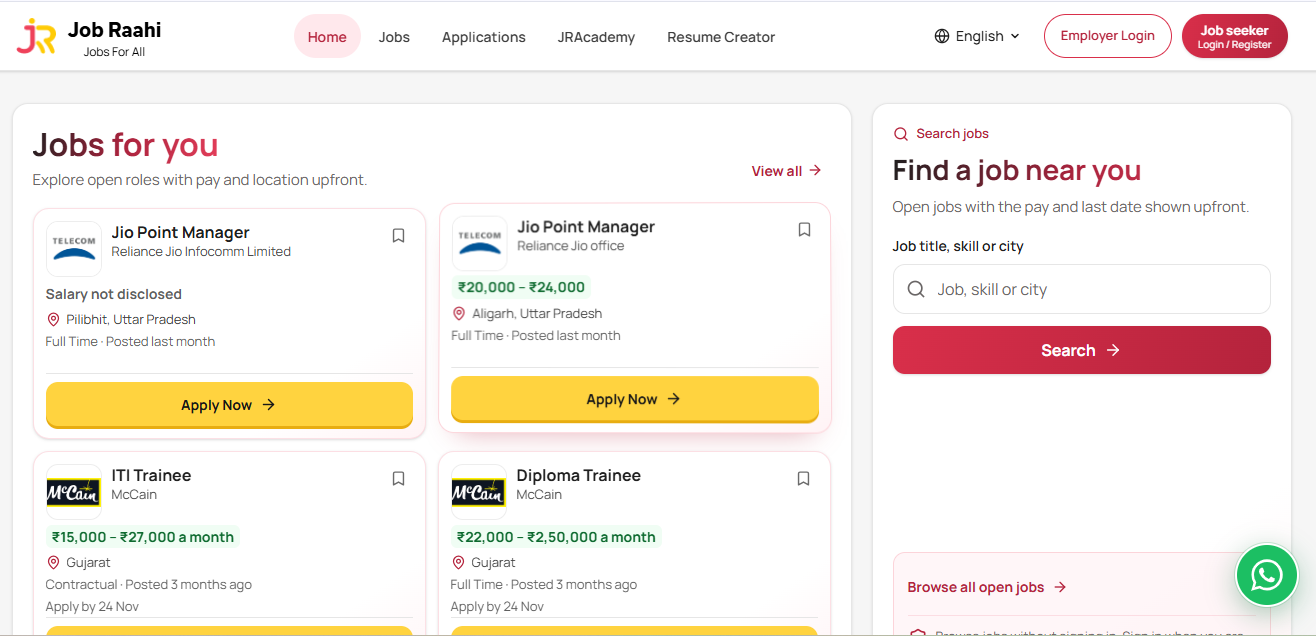
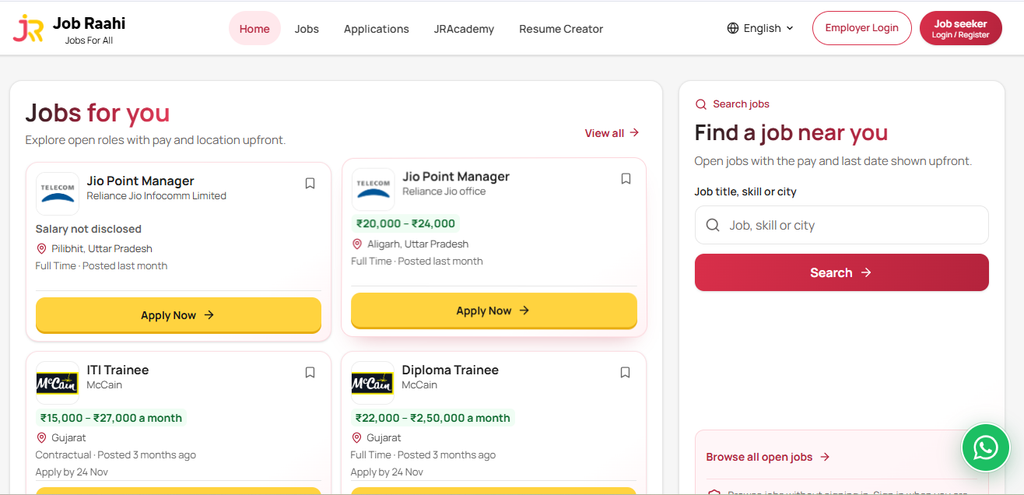
    Job Raahi is a digital job platform focused on frontline and mass hiring opportunities.

    It connects companies with candidates exploring employment opportunities across areas such as logistics, warehousing, retail, delivery, sales, customer support, hospitality and other frontline roles.

    For freshers and candidates with limited work experience, platforms like Job Raahi offer an additional channel to discover relevant job openings and explore opportunities.

    The objective is to make job discovery more accessible by connecting employers with candidates from different backgrounds and locations.

    For someone starting their career, exploring digital job platforms can be one practical step towards understanding the employment market and finding suitable opportunities.
    DIgital Job platform Job Raahi for freshers

    Conclusion: Make Digital Platforms Part of Your Career Journey

    Your first job search does not have to depend on personal references or limited local information alone.

    Digital job platforms have created another way for freshers to discover vacancies, understand employer requirements and apply for opportunities across different industries.

    However, the real value comes from using these platforms wisely.

    Build an accurate profile, explore relevant vacancies, verify employers, apply consistently and prepare yourself for the selection process.

    Remember, your first job is not just about getting employed. It is about finding an opportunity where you can learn, gain practical experience and build the foundation for your future career.

    Start exploring, keep learning and take your first step towards a career with confidence

  • How to find your First Job? 8 Practical Job Search Guide for Freshers and Frontline Workers

    How to find your First Job? 8 Practical Job Search Guide for Freshers and Frontline Workers

    1. Why Does Finding Your First Job Feel Difficult?

    You have completed your education and are ready to start working. You are motivated to earn, learn new skills and become financially independent. But when you begin searching for your first job, you may not know where to start.

    Some employers ask for experience. Certain vacancies require strong English communication skills. Sometimes, the job description itself is difficult to understand. You may also feel uncertain about preparing a resume, applying online or answering interview questions.

    For freshers and frontline workers, these challenges can make the job search feel overwhelming.

    The good news is that finding your first job is a skill you can develop. With the right information, a little planning and consistent effort, you can begin identifying opportunities that match your qualifications and abilities.

    Whether you have completed Class 10, Class 12, an ITI course, a diploma or a degree, your first step is to understand what you can offer and which roles are suitable for you.

    2. Start by Choosing the Right Job for You

    Every job has different requirements. Instead of applying randomly, focus on positions that match your education, interests, skills and location.

    Retail and store jobs

    If you enjoy interacting with people, explaining products and helping customers, consider roles such as retail associate, cashier or store assistant. Depending on the position, employers may look for communication skills, customer service ability and basic numerical skills.

    Frontline sales jobs

    If you are comfortable meeting people, explaining products and building relationships, explore opportunities such as field sales executive, sales representative or field promoter.

    Understanding the local market, listening to customers and following up professionally can be valuable strengths in these roles.

    Warehouse and logistics jobs

    If you prefer practical, operational work, consider positions such as warehouse associate, picker, packer, inventory assistant or dispatch associate.

    Some positions may require physical fitness, shift flexibility, basic digital skills or familiarity with warehouse processes. Always review the specific requirements before applying.

    Delivery and customer support jobs

    Delivery roles may require local area knowledge, punctuality and the ability to follow route instructions. Customer support roles often require patience, listening skills and the ability to communicate clearly in the language used by customers.

    Remember: The right job is not necessarily the one with the most impressive title. It is one that matches your current abilities, offers suitable working conditions and gives you a realistic opportunity to learn and grow.

    3. Where Should You Begin Your Job Search?

    You do not have to depend only on newspaper advertisements or personal contacts to find employment. Online job portals, government employment services, educational institutions and local employer networks can all help you discover vacancies.

    Use online job portals

    Job platforms allow you to explore openings based on location, qualifications, experience and preferred job roles.

    Complete your profile accurately, read the job description carefully and apply for positions that match your background.

    Platforms such as Job Raahi can help candidates explore frontline and entry-level opportunities across different sectors.

    Explore government employment resources

    The National Career Service (NCS), an initiative of the Ministry of Labour and Employment, provides job-search services and career-related resources.

    You can also explore the Skill India Digital Hub for information about skill development and training opportunities.

    These resources can help you understand available career pathways and identify opportunities relevant to your interests.

    Use your local network

    Check the official career pages of nearby stores, warehouses, service businesses and other employers. If you have studied at an ITI, polytechnic or college, ask the placement office about relevant vacancies.

    You can also ask trusted contacts about openings in your area. However, always verify the employer and job details before sharing personal information or accepting an offer.

    Your first job starts here

    4. Six Things to Check Before Applying

    Before applying for any vacancy, make sure you understand what the employer is offering.

    1. Job responsibilities: What tasks will you be expected to perform?
    2. Job location: How far is the workplace, and what will your daily travel cost?
    3. Salary: What is the expected in-hand salary? Are incentives, deductions or additional payments involved?
    4. Working hours: What are the shift timings, weekly holidays and overtime arrangements?
    5. Eligibility: Does your education, experience and skill set meet the requirements?
    6. Employer details: Can you verify the company name, workplace address and official contact information?

    If anything is unclear, ask questions before accepting the position.

    A suitable job is one where you understand the responsibilities, salary and working conditions well enough to make an informed decision.

    5. Not Confident in English? You Can Still Get Started

    English proficiency is important for some of your first jobs, but it is not a universal requirement for every frontline or entry-level role. Language expectations depend on the employer, position and customers the employee will serve.

    If you are more comfortable communicating in Hindi or another regional language, begin by strengthening your overall communication skills.

    Practise introducing yourself, understanding instructions, asking questions and responding politely. These abilities can help you prepare for interviews and workplace interactions.

    For example, you could introduce yourself by explaining your education, relevant abilities, willingness to learn and preferred job role in the language you speak confidently.

    You can then practise a simple English version if your target position requires it.

    It is also helpful to learn job-specific vocabulary. Sales professionals may need to understand terms related to products, orders and customer follow-ups. Warehouse workers may benefit from learning common terms related to stock, packing and dispatch.

    You do not need to master every aspect of a language before applying for a job. Instead, understand the language requirements of your chosen role and work towards meeting them.

    Your language background does not define your potential. Focus on the skills the job requires while continuing to improve your communication.

    6. How to Protect Yourself from Job Scams

    When you urgently need employment, it can be tempting to trust anyone promising a quick job. Unfortunately, misleading recruitment offers can put job seekers at financial and personal risk.

    Keep these precautions in mind:

    • Be cautious if someone demands a registration, interview or guaranteed-placement fee without clearly explaining the terms.
    • Verify the company’s official website, contact details and workplace address.
    • Understand the salary, responsibilities and joining conditions before accepting an offer.
    • Never share passwords, banking PINs or OTPs with someone claiming to be a recruiter.
    • Do not assume a vacancy is genuine simply because it appears on social media or arrives through a messaging app.
    • Be especially careful when an offer promises unusually high earnings without a credible selection process.

    Not every payment or recruitment arrangement is necessarily fraudulent, but you should verify its purpose, terms and legitimacy before paying anything.

    If an offer seems suspicious, pause and seek advice from a trusted person or an appropriate official resource.

    7. A Seven-Day Action Plan for Your First Job

    If you are unsure what to do each day, follow this simple plan to organise your job search.

    Day 1: Understand your profile. Write down your education, location, skills, preferred roles and salary expectations.

    Day 2: Prepare your resume. Keep it clear and accurate. If you have no work experience, highlight relevant training, projects, practical skills or responsibilities you have handled.

    Day 3: Create your job-search profiles. Register on suitable job platforms and complete your profile with accurate information.

    Day 4: Shortlist relevant vacancies. Compare job responsibilities, eligibility, location, salary and working conditions.

    Day 5: Apply for suitable positions. Submit applications that match your background rather than applying indiscriminately.

    Day 6: Practise for interviews. Prepare answers to common questions, including “Tell me about yourself,” “What are your strengths?” and “Why do you want this job?”

    Day 7: Review and follow up. Track your applications, check for responses and identify areas where you can improve your profile.

    Repeat this process as needed. Finding a job can take time, so focus on consistent effort rather than expecting immediate results.

    8. Explore Your Next Opportunity with Job Raahi

    Finding your first job begins with taking action. Understand your qualifications, identify your strengths and learn how to apply for suitable vacancies.

    If you are a fresher or looking to build your career in the frontline workforce, explore available opportunities on Job Raahi.

    You can look for openings in retail, field sales, delivery, logistics, warehouse operations, customer support and other frontline roles. Review each vacancy carefully to check whether its qualifications, location and requirements match your profile.

    You do not need to know everything on your first day. What matters is choosing a suitable role, being honest about your abilities and staying willing to learn.

    Your first job can help you build practical experience, develop workplace skills and prepare for future opportunities.

    Start with one application today. Your next career opportunity could begin with that first step.