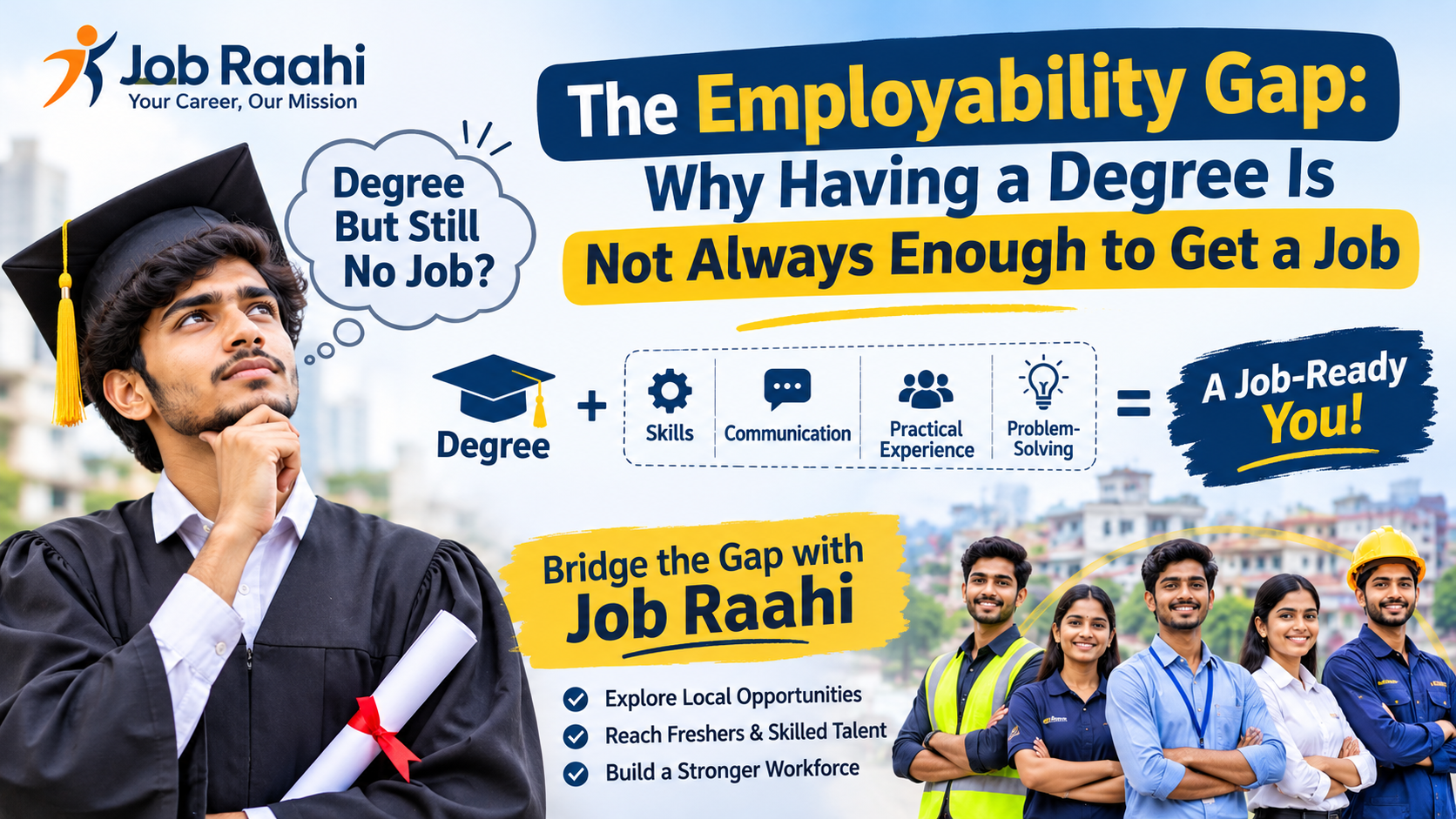
For many students, earning a college degree is considered one of the most important steps towards building a successful career. Years of studying, attending classes, completing assignments and passing examinations are all directed towards one goal: getting a good job.
However, after graduation, many candidates discover that finding employment is not as straightforward as they expected.
They have a degree, but employers are asking for practical knowledge. They understand academic concepts, but struggle to apply them in a professional environment. They meet the educational requirements of a vacancy, but may not have the communication, technical or workplace skills needed to perform the role.
This difference between educational qualifications and the skills required to secure and perform a job is known as the employability gap.
It does not mean that degrees have lost their value. Rather, it highlights the need to connect academic learning with practical skills, industry expectations and workplace readiness.
What Is the Employability Gap?
The employability gap refers to the difference between the skills and abilities candidates possess and what employers expect from them in the workplace.
A candidate may have completed a bachelor’s degree, diploma or professional course but still require additional preparation before becoming suitable for a particular job.
For example, a commerce graduate may understand accounting principles but have limited experience using accounting software. An engineering graduate may understand technical concepts but have little exposure to industrial equipment or practical operations.
Similarly, a graduate applying for a customer support role may have good academic results but struggle with professional communication and customer interaction.
The gap is not always about a lack of intelligence or education. It can also result from limited practical exposure, outdated learning methods or insufficient understanding of actual job responsibilities.
The issue is important in India. Mercer | Mettl’s India Graduate Skill Index 2025 reported that 42.6% of Indian graduates assessed in its study were overall employable. The report also highlighted the importance of non-technical skills alongside technical capabilities.
This finding indicates why employability needs to be considered beyond academic qualifications alone.
Why a Degree Does Not Always Translate into Employment
A degree provides knowledge and demonstrates academic achievement. However, employers also need to understand whether a candidate can apply that knowledge to real responsibilities.
Several factors contribute to the employability gap.
Limited Practical Exposure
Many students spend most of their academic years learning theoretical concepts. Although theory builds a foundation, candidates may have limited opportunities to work with industry tools, equipment, software or actual workplace processes.
Outdated or Limited Industry Exposure
Industries continue to adopt new technologies, processes and working methods. When educational programmes do not keep pace with these changes, graduates may enter the job market without familiarity with current industry requirements.
Lack of Workplace Skills
Professional environments require more than subject knowledge. Communication, teamwork, punctuality, problem-solving and the ability to follow instructions are important across many roles.
Limited Understanding of Job Roles
Some freshers apply for positions without fully understanding the responsibilities, working conditions or skills required. This can create a mismatch between candidate expectations and employer requirements.
Insufficient Practical Training
Internships, apprenticeships, vocational training and industry projects can help students understand how work happens outside the classroom. Without such exposure, the transition from education to employment can become difficult.
The Difference Between Being Educated and Being Job-Ready
Being educated and being job-ready are related, but they are not exactly the same.
Education provides a foundation of knowledge. Job readiness involves using that knowledge, developing relevant skills and adapting to workplace expectations.
Consider the following examples:
| Academic Qualification | Additional Skills That May Be Needed |
|---|---|
| B.Com graduate | Accounting software, Excel, documentation and professional communication |
| B.A. graduate | Communication, digital literacy, administration and customer interaction |
| B.Tech graduate | Practical application, technical tools, teamwork and problem-solving |
| ITI graduate | Equipment handling, workplace safety and practical operations |
| Diploma holder | Technical execution, quality checks and industry-specific processes |
These are indicative examples. The skills required depend on the specific job and employer.
The important takeaway is that academic qualifications and practical capabilities should complement each other.
Skills Employers Look for Beyond Academic Qualifications
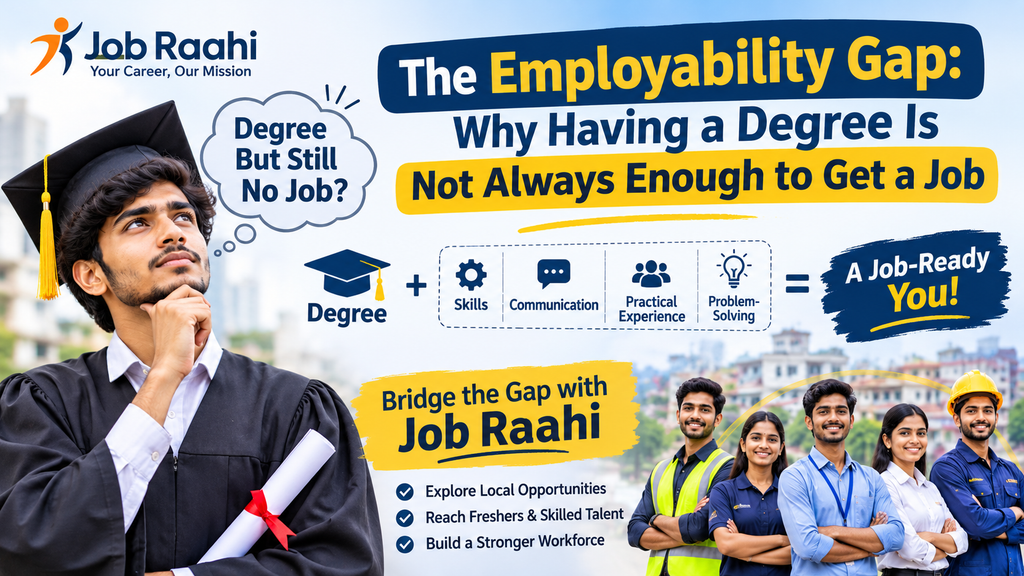
While technical requirements vary by industry, certain skills are valuable across a wide range of entry-level and professional roles.
Communication Skills
Employees need to understand instructions, interact with colleagues, communicate with supervisors and share information clearly.
Digital Literacy
Basic computer knowledge, email, online applications, spreadsheets and familiarity with digital tools are increasingly useful in different industries.
Problem-Solving
Employers value candidates who can understand challenges, think logically and seek appropriate solutions rather than simply waiting for instructions.
Teamwork and Coordination
Most workplaces require people to work together. The ability to cooperate, respect responsibilities and communicate with colleagues is essential.
Adaptability and Learning Agility
Work processes and technologies change. Candidates who are willing to learn new tasks and adapt to different situations can become more effective employees.
Role-Specific Practical Skills
A warehouse associate may need to understand inventory handling and scanning processes. A retail employee may need customer interaction and billing knowledge. A production trainee may need basic machine awareness and safety practices.
Employability is therefore a combination of foundational knowledge, practical ability and professional behaviour.
How Freshers Can Bridge the Employability Gap
Freshers do not need to wait until they have completed several years of employment to become more job-ready. They can begin developing relevant capabilities while studying or searching for their first job.
Here are some practical steps:
Identify the Skills Required for Your Target Role: Read job descriptions and understand what employers expect. Focus on developing skills that are relevant to the roles you want.
Gain Practical Exposure: Participate in internships, apprenticeships, workshops, academic projects or vocational training programmes.
Improve Digital Skills: Develop confidence in using computers, smartphones, email, spreadsheets and other tools relevant to your career interests.
Work on Communication: Practise introducing yourself, explaining your qualifications, asking questions and communicating professionally.
Understand Workplace Expectations: Learn about punctuality, discipline, teamwork, safety procedures and professional conduct.
Be Open to Entry-Level Opportunities: Your first job does not have to be your final career destination. Suitable entry-level roles can provide practical experience and help you understand the professional environment.
Keep Learning: Use short courses, online learning resources and practical assignments to strengthen your knowledge.
The goal is not to collect as many certificates as possible. It is to develop skills that can actually be applied at work.
The Role of Employers in Building a Job-Ready Workforce
Bridging the employability gap is not only the responsibility of students and educational institutions. Employers also have an important role to play.
Companies can improve the transition from education to employment by:
- Clearly defining the skills and qualifications required for each role.
- Considering practical ability and learning potential alongside academic credentials.
- Offering internships, apprenticeships and structured entry-level opportunities.
- Providing appropriate onboarding and workplace training.
- Working with educational institutions to communicate changing industry requirements.
- Giving freshers opportunities to demonstrate their capabilities.
For many frontline and operational positions, employers may find that a candidate’s willingness to learn, discipline and relevant basic skills are valuable starting points.
Instead of expecting every fresher to arrive fully trained, organisations can identify suitable candidates and help them develop through workplace exposure.
How Digital Job Platforms Can Connect Skills with Opportunities
Even when candidates have the required qualifications and skills, they need access to relevant employment opportunities.
This is another important part of the employability challenge.
Many freshers are unaware of companies hiring in their region. Some candidates from smaller cities may have limited access to professional networks or recruitment channels. Others may not know which job roles match their educational background.
For candidates, they provide another way to discover opportunities, understand job requirements and apply for suitable positions.
For employers, they create an additional channel to reach candidates across different locations and experience levels.
However, finding a vacancy is only one part of the process. Candidates must still evaluate the opportunity, meet its requirements and prepare themselves for the responsibilities involved.
How Job Raahi Supports Freshers and Employers
The platform can contribute to bridging the employability gap by improving access to relevant employment opportunities, particularly for freshers and candidates with limited professional experience.
Making Entry-Level Opportunities More Accessible
Freshers often struggle to find opportunities because many vacancies ask for previous experience. Job Raahi provides a digital platform where candidates can explore relevant openings and apply according to the eligibility requirements.
Connecting Employers with a Wider Candidate Pool
Companies hiring for frontline and operational roles can use Job Raahi as an additional sourcing channel to reach candidates from different regions, including smaller cities and hinterland areas.
Supporting Candidates from Different Educational Backgrounds
Not every job requires the same qualification or level of experience. Depending on the vacancy, candidates with 10th, 12th, ITI, diploma or graduate qualifications may find relevant opportunities across different sectors.
Connecting Skill Development with Employment Needs
Job Raahi’s wider ecosystem includes skill centres that focus on developing candidates in line with industry requirements. This creates an opportunity to connect practical skill development with relevant employment opportunities.
For freshers, the objective is to make the first step towards employment more accessible. For employers, it is to explore candidates beyond conventional hiring channels and identify people who may be suitable for their requirements.
Job Raahi does not replace education or practical training. Instead, it aims to help connect candidates with employment opportunities where their qualifications, skills and experience may be relevant.
Conclusion: A Degree Opens the Door, Skills Help You Move Forward
A degree remains an important achievement. It builds knowledge, demonstrates commitment and can create access to career opportunities.
However, in today’s employment landscape, qualifications alone may not be enough. Employers also need people who can apply their knowledge, communicate effectively, adapt to workplace expectations and perform the responsibilities of a role.
Bridging the employability gap requires collaboration between students, educational institutions, training providers and employers.
Freshers should focus on practical learning and continuous skill development. Employers should create opportunities for candidates with potential, including those who are beginning their professional journeys.
Platforms like Job Raahi can support this connection by helping candidates discover relevant entry-level and frontline opportunities while giving companies an additional way to reach emerging talent.
Your degree tells employers what you have studied. Your skills, attitude and ability to learn show them what you can contribute.
The future of employment depends not just on how many people earn degrees, but on how effectively education, skills and opportunities come together.