Completing your education or vocational training is an important achievement. But what comes next?
For many freshers, the biggest challenge is finding the right first job. You may have the required education, basic skills and willingness to work, but limited experience can make the job search confusing.
Traditionally, candidates depended on newspaper advertisements, personal references, walk-in interviews and college placement opportunities. These methods still have value, but the way people discover jobs is changing.
For freshers, knowing how to use these platforms effectively can make the job search more organised and accessible.
Why Finding the First Job Can Be Difficult
The first job search comes with a different set of challenges compared to searching for a new job after gaining experience.
Some common difficulties include:
- Limited work experience: Many entry-level vacancies require candidates to demonstrate practical knowledge, even when they are applying for their first job.
- Lack of awareness: Freshers may not know which companies are hiring or what roles match their qualifications.
- Limited professional networks: Candidates starting their careers may not have industry contacts who can help them discover vacancies.
- Location-related challenges: Suitable opportunities may exist in nearby cities or industrial areas, but candidates might not know where to find them.
- Confusion about job requirements: Understanding salary, working hours, responsibilities and eligibility can be difficult when candidates are new to the employment market.
Digital job platforms can help address some of these challenges by bringing job information and application opportunities together.
What Are Digital Job Platforms?
Digital job platforms are online services that help employers share vacancies and allow candidates to discover and apply for suitable jobs.
Instead of depending entirely on physical advertisements or personal references, candidates can explore available opportunities using a website or mobile application.
Depending on the platform, candidates may be able to:
- Create a professional profile.
- Add educational qualifications and skills.
- Search for jobs by role or location.
- Review eligibility requirements.
- Apply for suitable vacancies.
- Receive updates about opportunities.
These platforms serve as an additional channel connecting job seekers with employers.
For freshers, this means they can begin exploring opportunities without necessarily having an established professional network.
How Digital Job Platforms Help Freshers
Digital job platforms can make several parts of the job search process more convenient.
A. Access to More Job Information
Freshers can explore opportunities across different industries and job categories instead of depending on a single source of information.
For example, candidates may discover openings in retail, logistics, warehousing, manufacturing, hospitality, customer support and sales.
B. Opportunities Based on Qualifications
Candidates can look for vacancies that match their education, training and experience level.
An ITI graduate may explore technical or machine-operation roles, while a 12th-pass candidate may consider suitable retail, delivery or warehouse opportunities.
C. Convenient Job Discovery
Candidates can explore job listings online rather than visiting multiple workplaces just to enquire about vacancies.
This can save time during the initial job search.
D. Better Understanding of Job Requirements
Job descriptions can help candidates understand the qualifications, responsibilities and skills expected by employers.
This also allows freshers to identify areas where they need additional preparation.
E. Exploring Opportunities Beyond Familiar Locations
Candidates can discover openings in different locations and consider opportunities they might not have heard about through their immediate networks.
However, they should always check the work location, relocation requirements and other employment conditions before applying.
How to Use a Job Platform Effectively
Simply registering on a job platform is not enough. Candidates need to use it actively and carefully.
Here are some practical steps freshers can follow.
Step 1: Create an Accurate Profile
Enter your correct name, contact details, educational qualifications and relevant skills. Make sure the information is updated and easy for employers to understand.
Step 2: Mention Your Practical Skills
Even without formal work experience, you may have practical knowledge from ITI training, diploma courses, college projects, internships or vocational programmes.
Highlight relevant abilities rather than leaving your profile incomplete.
Step 3: Search for Relevant Roles
Look for vacancies that match your qualifications and interests. Do not apply randomly to every available opening.
Step 4: Read Job Descriptions Carefully
Before applying, understand the responsibilities, eligibility criteria, work location, salary information and working hours wherever provided.
Step 5: Apply Consistently
Make job searching a regular activity. Check for relevant openings, submit suitable applications and keep track of where you have applied.
Step 6: Prepare for the Next Stage
An online application is only the beginning. Be prepared for recruiter calls, interviews, document verification and other selection steps.
How to Identify Genuine Job Opportunities
One important responsibility of every job seeker is to verify an opportunity before proceeding.
Not every job advertisement available online is necessarily genuine.
Freshers should keep these points in mind:
- Check the company name and available company information.
- Read the complete job description.
- Verify the work location and contact details.
- Be cautious if someone demands money in exchange for a guaranteed job.
- Never share OTPs, passwords or sensitive banking information with unknown individuals.
- Confirm important employment conditions directly with the employer through reliable contact channels.
A responsible job search involves checking opportunities instead of applying without understanding the details.
Common Mistakes Freshers Should Avoid
Even with access to digital platforms, some common mistakes can reduce the effectiveness of a job search.
Creating an incomplete profile: Missing educational details or contact information can make it harder for employers to understand your suitability.
Applying without reading requirements: Every vacancy has different eligibility conditions. Check them before applying.
Ignoring phone calls: Recruiters may contact candidates using the details provided during registration. Keep your contact information active.
Sharing incorrect information: Always provide accurate qualifications, experience and personal details.
Expecting immediate results: Finding the right opportunity can take time. Consistency and preparation matter.
Ignoring job conditions: Salary, location, shifts, responsibilities and employment terms should be understood before accepting an offer.
The Growing Role of Digital Platforms in Frontline Hiring
Digital recruitment is relevant not only for corporate and office-based positions but also for frontline and mass hiring.
Industries such as logistics, warehousing, retail, manufacturing, delivery and hospitality regularly require employees for operational roles.
For employers, digital job platforms offer an additional channel to share vacancies and reach candidates.
For job seekers, they provide another way to discover opportunities beyond traditional networks and local advertisements.
This is particularly relevant for freshers and candidates with limited experience who are exploring their first employment opportunities.
As access to smartphones and digital services continues to expand, online platforms can play a useful role in connecting employers with a wider range of job seekers.
However, successful hiring still depends on suitable candidates, clear job information, employer selection processes and effective communication.
How Job Raahi Supports the Job Search Journey
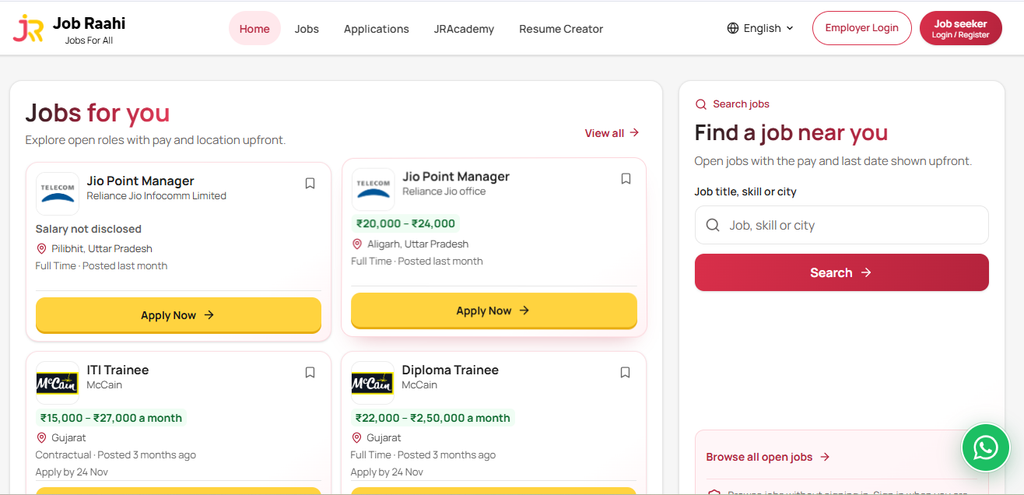
Job Raahi is a digital job platform focused on frontline and mass hiring opportunities.
It connects companies with candidates exploring employment opportunities across areas such as logistics, warehousing, retail, delivery, sales, customer support, hospitality and other frontline roles.
For freshers and candidates with limited work experience, platforms like Job Raahi offer an additional channel to discover relevant job openings and explore opportunities.
The objective is to make job discovery more accessible by connecting employers with candidates from different backgrounds and locations.
For someone starting their career, exploring digital job platforms can be one practical step towards understanding the employment market and finding suitable opportunities.
Conclusion: Make Digital Platforms Part of Your Career Journey
Your first job search does not have to depend on personal references or limited local information alone.
Digital job platforms have created another way for freshers to discover vacancies, understand employer requirements and apply for opportunities across different industries.
However, the real value comes from using these platforms wisely.
Build an accurate profile, explore relevant vacancies, verify employers, apply consistently and prepare yourself for the selection process.
Remember, your first job is not just about getting employed. It is about finding an opportunity where you can learn, gain practical experience and build the foundation for your future career.
Start exploring, keep learning and take your first step towards a career with confidence