
Your first job doesn’t have to be your final career. For many freshers, getting the first opportunity is the hardest part. You may not have experience. You may not have a strong resume and you may find that many office jobs ask for skills that you haven’t had the chance to develop yet.
That’s where blue collar, grey collar and frontline jobs can provide a starting point. A first job can give you something that a fresher often needs most: A Real work experience.
What Can a Fresher Learn from a Blue-Collar Job?
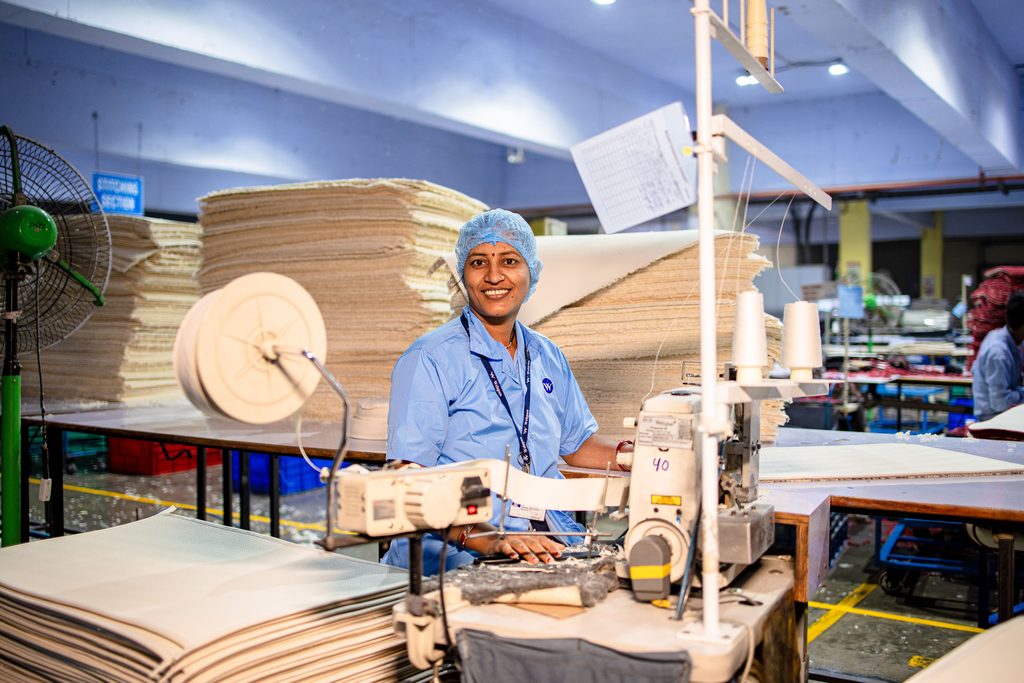
A blue-collar job is often associated with hands-on work and rightly so. But working in a factory, warehouse, logistics operation, delivery network, technical service or other frontline environment can also expose you to how businesses actually operate.
You may learn:
- How teams work together
- How customers are handled
- How orders are processed
- How inventory moves
- How workplace targets work
- How supervisors manage teams
- How to follow standard processes
- How to use workplace technology
- How to solve day-to-day problems
These experiences can become useful as your responsibilities grow.
Skills Can Change Your Career Direction

Say someone starts working as a warehouse associate.
At first, their responsibilities may be focused on receiving, picking, packing or dispatching goods. Over time, they may become familiar with:
Inventory → Warehouse Operations → Reporting → Team Coordination → Supervisory Responsibilities
With the right experience and additional skills, that person may eventually explore roles involving more coordination, administration or operations management.
The same principle can apply across other industries. A delivery professional may develop an interest in logistics. A machine operator may develop technical expertise. A field sales executive may move towards sales coordination or business development. A technician may take on supervisory responsibilities.
There is no single career path, and progression is not automatic. It depends on the worker’s skills, experience, qualifications and available opportunities.
Blue Collar Does Not Mean “No Career Growth”
This is an important misconception. Skilled blue-collar workers are increasingly important to industries such as manufacturing and logistics. Deloitte’s 2025 analysis notes increasing demand for skilled labour and highlights the role of training and skill development in the sector.
And the distinction between hands-on work and technology is becoming less clear.
Modern frontline and blue-collar workers may use scanners, digital platforms, machinery, tracking systems and other technologies as part of their everyday work. Research and industry reporting have also highlighted increasing technology and AI-related upskilling among blue collar workers.
So, starting in a frontline job doesn’t mean you have stopped learning.
It can be the beginning of learning.
A Possible Career Journey
There is no guaranteed formula, but career progression can sometimes look like this:
Fresher → Entry-Level Job → Skill Development → Experienced Worker → Senior Role → Supervisory/Coordination Role
For example:
Warehouse Associate → Senior Associate → Team Leader → Warehouse Supervisor
Or:
Field Sales Executive → Senior Sales Executive → Business Development → Sales Operations
Or:
Machine Operator → Senior Operator → Production Supervisor
The exact path depends on the industry and the individual.
Start Where You Can, Keep Building from there. If you’re a fresher struggling to get your first office job, don’t automatically consider every blue collar or frontline opportunity as a dead end.
Look at what the job can teach you.
Ask yourself:
- What skills will I gain?
- Will I get practical industry experience?
- Can I learn something new while working?
- Can I take on more responsibility over time?
Those questions can help you think about your career beyond your first job title.
Find Blue Collar and Grey Collar Opportunities with Job Raahi
Job Raahi is a digital job portal specializing in blue collar, grey collar and frontline jobs.
The platform is built to help job seekers discover relevant employment opportunities and help employers connect with skilled and frontline talent.
For freshers, skilled workers and people looking for their next opportunity, the goal is simple:
Find a job. Build skills. Gain experience. Keep moving forward.
Your first job doesn’t have to define your entire career. It can simply be where your career begins.