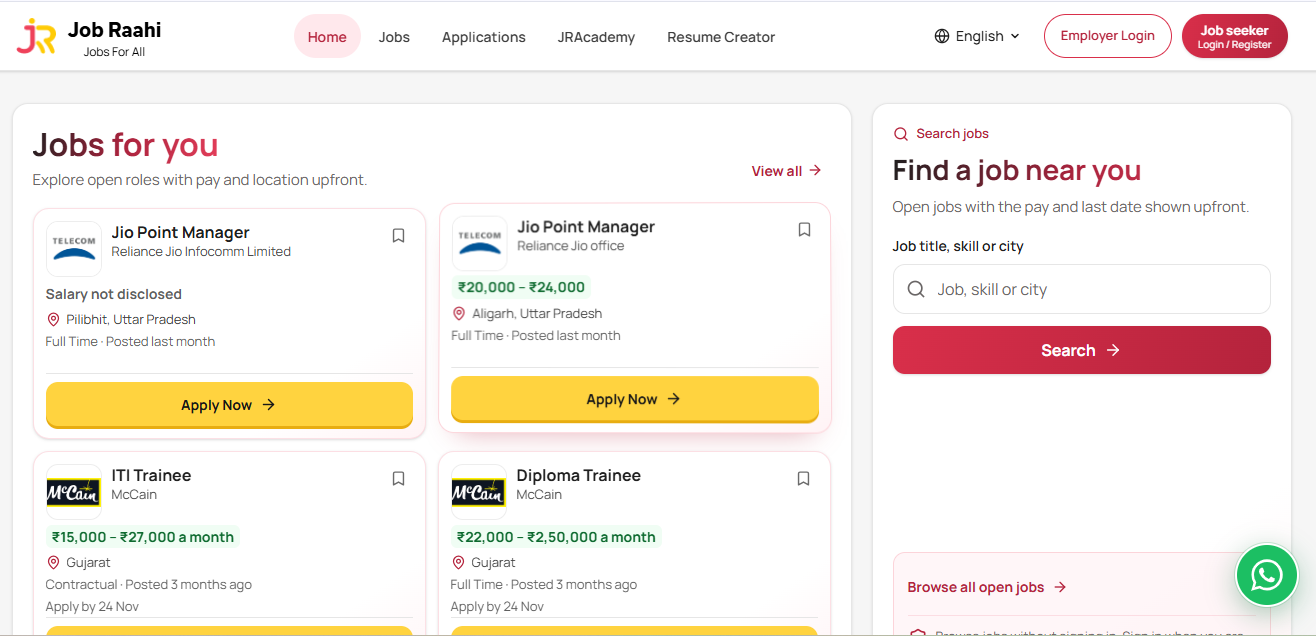
Tag: Job Raahi

  • From Apprentice to Employee: How Practical Training Opens Career Doors

    From Apprentice to Employee: How Practical Training Opens Career Doors

    Completing an ITI course, diploma, graduation or vocational programme is an important milestone for any student. It represents years of learning, effort and preparation for a professional career.

    But once education is complete, a new challenge begins: entering the workplace.

    Many freshers understand the concepts they have studied but have limited experience applying them in real working environments. They may know how a process works theoretically but have never performed it independently. They may understand technical concepts but need practical exposure to workplace equipment, tools and procedures.

    This is where apprenticeships and practical training become valuable.

    They provide an opportunity to learn while experiencing the actual responsibilities of a job. For freshers, this can be an important step towards becoming more confident, developing relevant skills and preparing for future employment.

    Why Practical Experience Matters for Freshers

    The transition from education to employment is not always easy.

    Educational institutions provide foundational knowledge, but workplaces have their own processes, expectations and working environments.

    For example, an ITI student may understand the basics of electrical systems but still need hands-on experience with industrial equipment. A logistics student may know the fundamentals of supply chain operations but need practical exposure to inventory handling, scanning and dispatch processes.

    Similarly, a graduate joining a customer support team may understand communication principles but need experience handling actual customer interactions.

    Practical experience helps candidates understand:

    • How daily workplace operations function.
    • How to use tools, equipment and technology relevant to their roles.
    • How to follow instructions and standard operating procedures.
    • How to coordinate with supervisors and colleagues.
    • How to manage time and assigned responsibilities.
    • How workplace safety and quality standards are maintained.

    These experiences help freshers connect what they have learned with what employers expect.

    What Is an Apprenticeship?

    An apprenticeship is a structured form of practical training in which individuals learn a trade, occupation or specific job-related skills through a combination of workplace exposure and relevant instruction.

    Unlike purely classroom-based learning, apprenticeships allow participants to understand how work is performed in an actual professional environment.

    Apprenticeships are available across different industries and occupational areas, depending on employer requirements and applicable programmes.

    They can be particularly useful for:

    • ITI students and graduates.
    • Polytechnic and diploma holders.
    • Technical course students.
    • Fresh graduates.
    • Candidates looking to develop industry-specific skills.

    An apprenticeship is not automatically the same as a permanent job. Its duration, training structure, stipend, responsibilities and employment possibilities depend on the specific programme and applicable terms.

    However, the experience can help candidates prepare for future employment.

    How Apprenticeships Bridge the Education-to-Employment Gap

    One of the biggest advantages of practical training is that it introduces candidates to real workplace responsibilities.

    Here are some ways apprenticeships can support this transition.

    Applying Theoretical Knowledge

    Students get an opportunity to understand how academic concepts are used in actual work situations.

    For example, someone who has studied mechanical engineering may gain exposure to equipment maintenance, production processes or quality checks.

    Understanding Workplace Expectations

    An apprenticeship introduces candidates to reporting structures, working schedules, workplace discipline and professional communication.

    These experiences can make the transition into full-time employment easier.

    Developing Industry-Relevant Skills

    Candidates can learn tools, equipment, technologies and processes that are specific to their chosen field.

    This helps them understand the practical requirements of different job roles.

    Building Professional Confidence

    Working alongside experienced employees gives freshers an opportunity to ask questions, observe processes and gradually take on responsibilities.

    As they become familiar with their tasks, their confidence can improve.

    Understanding Career Interests

    Practical exposure can also help candidates understand which roles and industries match their interests and abilities.

    This can help them make better career decisions.
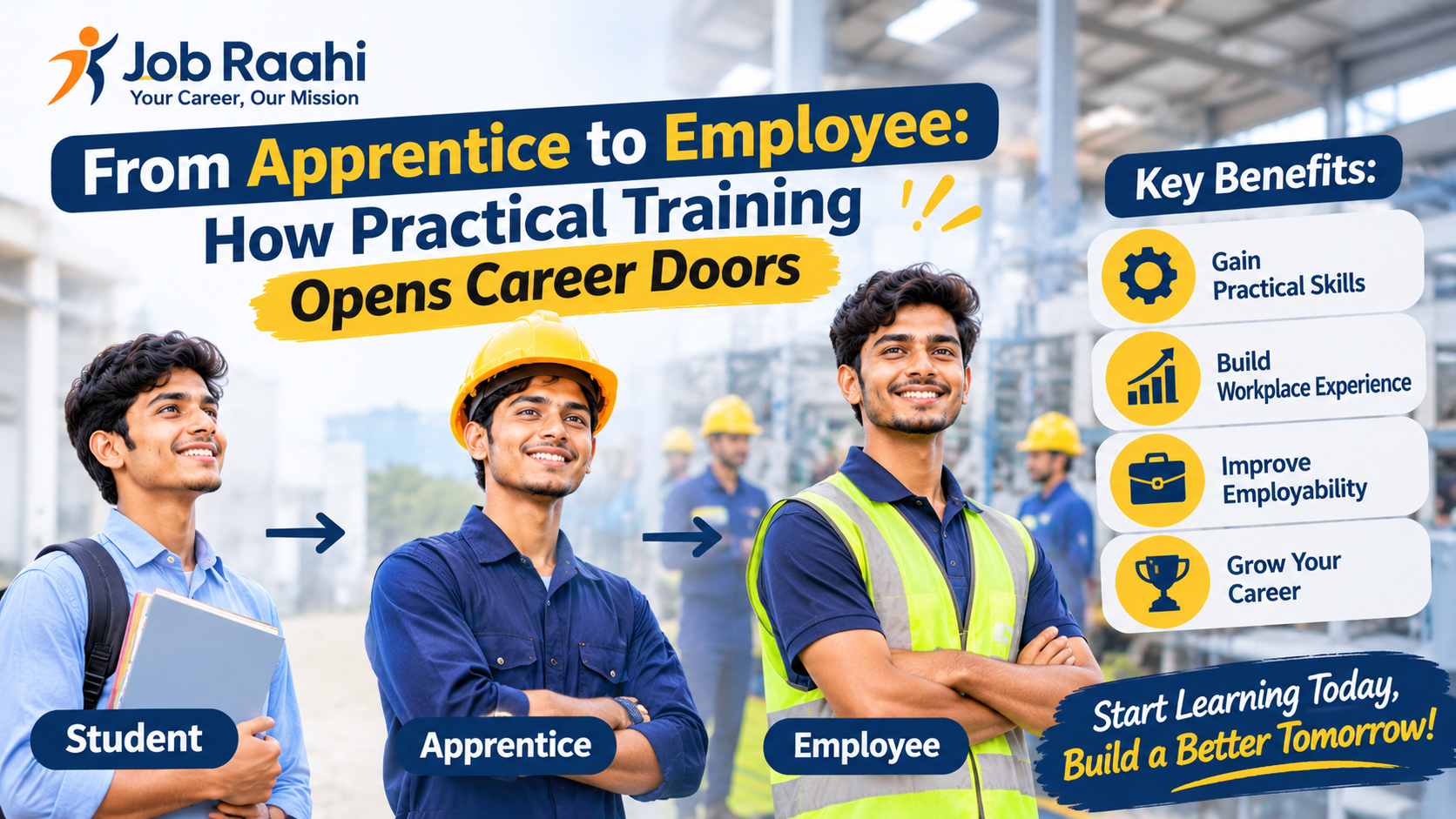
    Apprenticeship to practical training

    Industries Offering Practical Learning Opportunities

    Apprenticeship and workplace training opportunities exist across several industries. The available roles depend on the employer, qualification requirements and training programme.

    IndustryExamples of Practical Learning Areas
    ManufacturingProduction processes, machine operations, quality checks
    AutomotiveVehicle assembly, maintenance, inspection
    Logistics and WarehousingInventory handling, picking, packing, dispatch
    RetailStore operations, billing, customer service
    Electrical and ElectronicsEquipment maintenance, installation, testing
    HospitalityGuest services, food operations, housekeeping
    IT and Business ServicesTechnical support, data handling, customer support

    For freshers, these opportunities can provide exposure to different professional environments and help them identify suitable career paths.

    Skills Freshers Can Develop Through Apprenticeships

    Practical training is not limited to learning how to perform a particular task. It also helps candidates develop professional skills that are useful throughout their careers.

    Technical Skills: Candidates learn to use relevant tools, machinery, software and equipment according to their roles.

    Communication: They practise interacting with supervisors, colleagues and customers in professional situations.

    Time Management: They understand how to organise tasks and complete responsibilities within assigned schedules.

    Teamwork: They learn to coordinate with others and contribute towards shared objectives.

    Problem-Solving: They develop the ability to identify issues, understand instructions and seek appropriate solutions.

    Workplace Safety: They become familiar with safety procedures, protective equipment and responsible working practices.

    Adaptability: They learn to adjust to new tasks, technologies and working environments.

    These capabilities can make a candidate better prepared for the expectations of an employer.

    From Apprentice to Full-Time Employee: Understanding the Journey

    For many candidates, an apprenticeship can become an important stepping stone towards a professional career.

    The journey generally involves several stages:

    Stage 1: Learning the Basics

    The candidate understands the role, workplace environment, safety requirements and basic procedures.

    Stage 2: Gaining Practical Exposure

    The candidate observes experienced employees and begins performing assigned tasks under appropriate supervision.

    Stage 3: Developing Competence

    With practice, the candidate becomes more familiar with the processes and improves the quality and consistency of their work.

    Stage 4: Demonstrating Workplace Readiness

    The candidate develops confidence, understands responsibilities and demonstrates the ability to work within established procedures.

    Stage 5: Exploring Employment Opportunities

    After completing the training, the candidate can explore relevant vacancies based on their skills, experience and eligibility.

    Some employers may consider apprentices for further employment, depending on business requirements and performance. However, permanent employment is not guaranteed simply because an apprenticeship has been completed.

    The experience itself can still strengthen a candidate’s preparation for future opportunities.

    How Freshers Can Find the Right Apprenticeship

    Choosing the right training opportunity is important. Freshers should not select an apprenticeship only because it is available.

    They should consider whether it supports their long-term career interests.

    Here are some things to check:

    1. Match Your Educational Background: Look for programmes related to your ITI trade, diploma, degree or vocational qualification.
    2. Understand the Job Responsibilities: Check what you will actually learn and perform during the training period.
    3. Verify the Employer: Research the organisation and confirm that the opportunity is genuine.
    4. Check the Training Structure: Understand the duration, working conditions, supervision and learning objectives.
    5. Review the Stipend and Terms: Read the applicable conditions carefully before accepting.
    6. Understand Future Opportunities: Ask whether the employer has any potential pathway to further employment, without assuming that a job is guaranteed.

    Candidates can explore official resources such as Apprenticeship India and the National Career Service to learn about available opportunities and employment-related information.

    The Role of Employers in Developing Young Talent

    Employers also benefit from creating opportunities for practical learning.

    Apprenticeship programmes allow organisations to introduce young candidates to their processes while helping them develop relevant skills.

    For businesses across manufacturing, logistics, retail and other operational sectors, developing entry-level talent can contribute to building a more prepared workforce.

    Employers can make these programmes more effective by:

    • Defining clear learning objectives.
    • Assigning experienced employees or trainers for guidance.
    • Providing appropriate equipment and safety training.
    • Giving candidates meaningful practical exposure.
    • Offering regular feedback on performance.
    • Communicating possible career pathways honestly.

    A good training environment should help candidates learn, not simply assign them routine work without guidance.

    How Job Raahi Supports the Journey Towards Employment

    Practical training is an important step, but candidates also need access to suitable employment opportunities after developing their skills.

    This is where digital job platforms can help connect trained candidates with employers.

    Job Raahi is a digital job platform focused on frontline, entry-level and mass hiring opportunities.

    It aims to connect companies with candidates across different educational and experience backgrounds, including freshers and individuals with limited professional experience.

    Through Job Raahi, candidates can explore relevant openings across sectors such as logistics, warehousing, retail, delivery, sales, hospitality and customer support, depending on available vacancies and eligibility requirements.

    Job Raahi’s wider ecosystem also includes skill centres across India, where candidates can be trained and developed in line with industry requirements.

    For employers, this provides an additional channel to reach candidates who are beginning their careers or developing practical skills.

    For freshers, it creates another opportunity to move from learning and preparation towards actual employment.

    The connection between training and employment is important: candidates need the right skills, but they also need visibility of opportunities where those skills can be applied.

    Conclusion: Practical Learning Can Be the Beginning of a Strong Career

    A qualification provides a foundation, but practical experience helps candidates understand how to use their knowledge in a professional environment.

    For freshers, apprenticeships can provide valuable exposure to workplace responsibilities, industry processes and professional expectations.

    They also give employers an opportunity to engage with emerging talent and help develop candidates according to relevant industry requirements.

    The journey from apprentice to employee may not look the same for everyone. Some candidates may continue in the same industry, while others may use their experience to explore different roles.

    What matters is the learning gained along the way.

    Platforms like Job Raahi can support the next step by helping candidates discover relevant employment opportunities and helping employers connect with emerging frontline talent.

    Your first professional opportunity does not always have to be a permanent job. Sometimes, the right practical learning experience can become the foundation of your entire career.
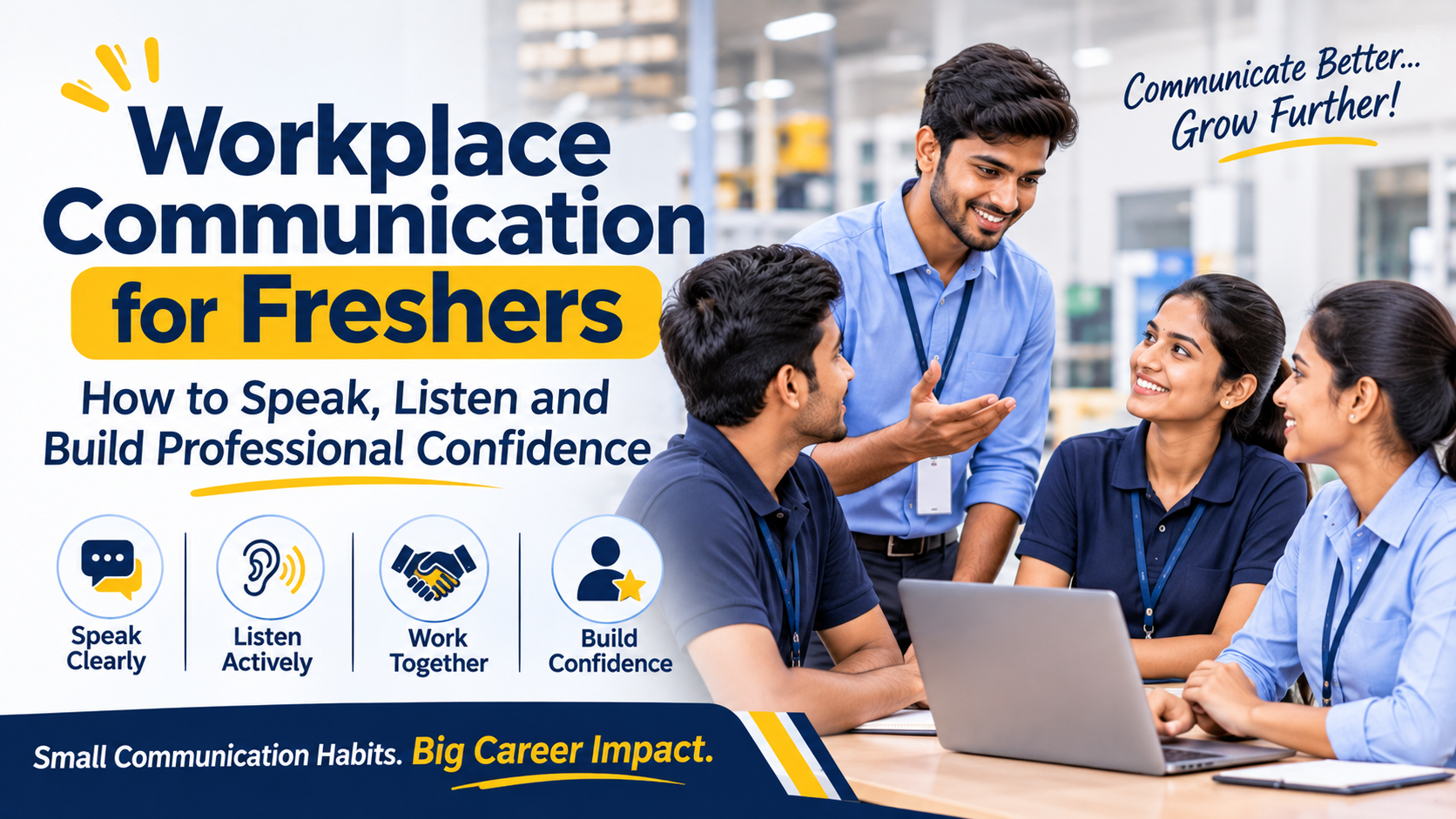
  • Workplace Communication for Freshers: How to Speak, Listen and Build Professional Confidence

    Workplace Communication for Freshers: How to Speak, Listen and Build Professional Confidence

    Starting your first job brings many new experiences. You meet unfamiliar people, learn new responsibilities and adjust to a professional environment.

    While technical knowledge and practical skills help you perform your tasks, communication plays an equally important role in how you work with others.

    Whether you are joining a warehouse, factory, retail store, delivery operation, hospitality business or office, you will need to communicate with supervisors, colleagues and customers.

    Good communication does not mean speaking fluent English or using complicated words. It means expressing information clearly, listening carefully, asking questions when necessary and responding respectfully.

    For freshers, developing these habits early can make the transition from education to employment much easier.

    Why Workplace Communication Matters

    Every workplace depends on people working together. Even when employees have individual responsibilities, their tasks are often connected.

    Consider a warehouse where one employee receives goods, another checks inventory and another prepares orders for dispatch. If information is not communicated properly, mistakes and delays can occur.

    Similarly, a retail employee needs to understand customer requirements, while a production worker must follow instructions and report operational problems.

    Effective communication helps employees:

    • Understand their responsibilities.
    • Avoid confusion and unnecessary mistakes.
    • Coordinate with team members.
    • Report problems on time.
    • Build professional relationships.
    • Develop confidence in the workplace.

    It is therefore an important skill for employees at every experience level.

    Understand the Different Types of Workplace Communication

    Workplace communication happens in different ways. Freshers should understand when and how to use each one.

    Verbal communication: Speaking directly with supervisors, colleagues or customers to exchange information.

    Written communication: Sharing information through emails, messages, notices or work-related documents.

    Non-verbal communication: Using body language, facial expressions and eye contact to support what you communicate.

    Active listening: Paying attention to instructions, understanding information and responding appropriately.

    For example, a supervisor may explain a task verbally, share the schedule through a message and expect employees to confirm that they understand their responsibilities.

    Being comfortable with these different forms of communication can help you work more effectively.

    How to Communicate with Your Supervisor

    For a fresher, communicating with a supervisor can sometimes feel intimidating. You may hesitate to ask questions because you do not want to appear inexperienced.

    However, asking for clarification is better than making assumptions and completing a task incorrectly.

    Here are some useful habits:

    • Listen carefully when instructions are given.
    • Ask questions if any part of the task is unclear.
    • Confirm important deadlines and responsibilities.
    • Inform your supervisor if you face a problem.
    • Share updates when requested.
    • Accept feedback positively.

    For example, instead of saying, “I don’t understand this work,” you can ask, “Could you please explain the process once more so I can complete it correctly?”

    Similarly, if you are unable to finish a task on time, communicate the reason early instead of waiting until the deadline has passed.

    Communication at workplace & it's importance

    The Importance of Listening

    Communication is not only about speaking. Listening is equally important.

    Many workplace mistakes happen because employees do not fully understand instructions or miss important details.

    Good listening involves:

    • Paying attention without interrupting.
    • Avoiding distractions during instructions.
    • Asking questions when something is unclear.
    • Repeating important information to confirm understanding.
    • Remembering key details such as quantities, deadlines and safety instructions.

    For example, if a warehouse supervisor assigns you a particular set of orders, confirm the order numbers, quantities and expected completion time before starting.

    Listening carefully can save time and reduce avoidable errors.

    Communicating with Colleagues and Team Members

    Most jobs involve some level of teamwork. Your ability to communicate respectfully with colleagues can influence how smoothly daily work gets completed.

    A few simple practices can help:

    Be respectful: Treat colleagues with courtesy, regardless of their role or experience.

    Share relevant information: Inform team members about important updates that affect their work.

    Offer support: Help colleagues when appropriate and within your responsibilities.

    Avoid unnecessary arguments: Discuss disagreements calmly and focus on resolving the issue.

    Appreciate teamwork: Recognise the contribution of others.

    Remember, a good team is built not only through individual performance but also through cooperation and mutual respect.

    Professional Communication on Calls and Messages

    Digital communication has become a regular part of many workplaces. Employees may receive shift updates, task instructions and work-related information through phone calls or messaging applications.

    Freshers should follow a few basic guidelines:

    • Respond to work-related messages within a reasonable time.
    • Keep messages short and clear.
    • Use respectful language.
    • Avoid sending incomplete or confusing information.
    • Confirm important instructions when necessary.
    • Do not share confidential workplace information with unauthorised people.

    For example, if your supervisor asks whether you can report for a scheduled shift, respond clearly instead of sending an unclear or unrelated message.

    Professional communication does not require formal language in every situation. It requires clarity, respect and responsibility.

    Common Communication Mistakes to Avoid

    Even small communication mistakes can create unnecessary confusion.

    Here are some habits freshers should avoid:

    Pretending to understand: Never say you understand an instruction if you are actually confused.

    Not reporting problems: Inform the concerned person when something goes wrong rather than hiding the issue.

    Interrupting others: Allow people to finish explaining before responding.

    Using disrespectful language: Maintain professional behaviour even during disagreements.

    Ignoring messages or calls: Important work-related information should not be overlooked.

    Sharing incorrect information: If you are unsure about something, verify it before communicating it to others.

    The goal is not to communicate perfectly every time. It is to develop the habit of communicating responsibly.

    How Freshers Can Improve Their Communication Skills

    Communication is a skill that improves with regular practice. You do not need expensive courses or advanced language knowledge to begin.

    Try these simple exercises:

    1. Practice introducing yourself: Prepare a short introduction that includes your name, education, skills and career interests.
    2. Read instructions carefully: Develop the habit of understanding information before responding.
    3. Practise asking questions: Learn to seek clarification politely and confidently.
    4. Improve your vocabulary: Learn common workplace words related to your industry and job responsibilities.
    5. Practice active listening: Pay attention when someone is explaining a task.
    6. Learn basic digital communication: Practise writing clear and professional messages.
    7. Ask for feedback: Request suggestions from trainers, supervisors or experienced colleagues.

    Most importantly, do not let language barriers stop you from communicating. Clear and respectful communication matters more than using complicated vocabulary.

    Conclusion: Communication Is a Skill You Build Every Day

    Your first job is an opportunity to learn more than just technical tasks. It teaches you how to work with people, manage responsibilities and become part of a professional environment.

    Good communication helps you understand instructions, build relationships, solve problems and become a dependable team member.

    Whether you work in a factory, warehouse, retail store, delivery operation or office, the ability to communicate clearly can support your professional development.

    As you explore your first career opportunity, remember that confidence does not come from knowing everything. It comes from being willing to listen, learn, ask questions and improve.

    Speak clearly. Listen carefully. Learn continuously. Build your career confidently.

    Job Raahi aims to connect candidates with employment opportunities across frontline and mass hiring roles. As you explore suitable openings, continue developing the practical and professional skills that help you prepare for the workplace.

  • Digital Job Platforms for Freshers: How to Turn Online Applications into Real Opportunities

    Digital Job Platforms for Freshers: How to Turn Online Applications into Real Opportunities

    Completing your education or vocational training is an important achievement. But what comes next?

    For many freshers, the biggest challenge is finding the right first job. You may have the required education, basic skills and willingness to work, but limited experience can make the job search confusing.

    Traditionally, candidates depended on newspaper advertisements, personal references, walk-in interviews and college placement opportunities. These methods still have value, but the way people discover jobs is changing.

    Today, digital job platforms are becoming an important part of the employment journey. They allow candidates to explore vacancies, understand job requirements and apply for opportunities through online channels.

    For freshers, knowing how to use these platforms effectively can make the job search more organised and accessible.

    Why Finding the First Job Can Be Difficult

    The first job search comes with a different set of challenges compared to searching for a new job after gaining experience.

    Some common difficulties include:

    • Limited work experience: Many entry-level vacancies require candidates to demonstrate practical knowledge, even when they are applying for their first job.
    • Lack of awareness: Freshers may not know which companies are hiring or what roles match their qualifications.
    • Limited professional networks: Candidates starting their careers may not have industry contacts who can help them discover vacancies.
    • Location-related challenges: Suitable opportunities may exist in nearby cities or industrial areas, but candidates might not know where to find them.
    • Confusion about job requirements: Understanding salary, working hours, responsibilities and eligibility can be difficult when candidates are new to the employment market.

    Digital job platforms can help address some of these challenges by bringing job information and application opportunities together.

    What Are Digital Job Platforms?

    Digital job platforms are online services that help employers share vacancies and allow candidates to discover and apply for suitable jobs.

    Instead of depending entirely on physical advertisements or personal references, candidates can explore available opportunities using a website or mobile application.

    Depending on the platform, candidates may be able to:

    • Create a professional profile.
    • Add educational qualifications and skills.
    • Search for jobs by role or location.
    • Review eligibility requirements.
    • Apply for suitable vacancies.
    • Receive updates about opportunities.

    These platforms serve as an additional channel connecting job seekers with employers.

    For freshers, this means they can begin exploring opportunities without necessarily having an established professional network.

    How Digital Job Platforms Help Freshers

    Digital job platforms can make several parts of the job search process more convenient.

    A. Access to More Job Information

    Freshers can explore opportunities across different industries and job categories instead of depending on a single source of information.

    For example, candidates may discover openings in retail, logistics, warehousing, manufacturing, hospitality, customer support and sales.

    B. Opportunities Based on Qualifications

    Candidates can look for vacancies that match their education, training and experience level.

    An ITI graduate may explore technical or machine-operation roles, while a 12th-pass candidate may consider suitable retail, delivery or warehouse opportunities.

    C. Convenient Job Discovery

    Candidates can explore job listings online rather than visiting multiple workplaces just to enquire about vacancies.

    This can save time during the initial job search.

    D. Better Understanding of Job Requirements

    Job descriptions can help candidates understand the qualifications, responsibilities and skills expected by employers.

    This also allows freshers to identify areas where they need additional preparation.

    E. Exploring Opportunities Beyond Familiar Locations

    Candidates can discover openings in different locations and consider opportunities they might not have heard about through their immediate networks.

    However, they should always check the work location, relocation requirements and other employment conditions before applying.

    How to Use a Job Platform Effectively

    Simply registering on a job platform is not enough. Candidates need to use it actively and carefully.

    Here are some practical steps freshers can follow.

    Step 1: Create an Accurate Profile

    Enter your correct name, contact details, educational qualifications and relevant skills. Make sure the information is updated and easy for employers to understand.

    Step 2: Mention Your Practical Skills

    Even without formal work experience, you may have practical knowledge from ITI training, diploma courses, college projects, internships or vocational programmes.

    Highlight relevant abilities rather than leaving your profile incomplete.

    Step 3: Search for Relevant Roles

    Look for vacancies that match your qualifications and interests. Do not apply randomly to every available opening.

    Step 4: Read Job Descriptions Carefully

    Before applying, understand the responsibilities, eligibility criteria, work location, salary information and working hours wherever provided.

    Step 5: Apply Consistently

    Make job searching a regular activity. Check for relevant openings, submit suitable applications and keep track of where you have applied.

    Step 6: Prepare for the Next Stage

    An online application is only the beginning. Be prepared for recruiter calls, interviews, document verification and other selection steps.

    How to Identify Genuine Job Opportunities

    One important responsibility of every job seeker is to verify an opportunity before proceeding.

    Not every job advertisement available online is necessarily genuine.

    Freshers should keep these points in mind:

    • Check the company name and available company information.
    • Read the complete job description.
    • Verify the work location and contact details.
    • Be cautious if someone demands money in exchange for a guaranteed job.
    • Never share OTPs, passwords or sensitive banking information with unknown individuals.
    • Confirm important employment conditions directly with the employer through reliable contact channels.

    A responsible job search involves checking opportunities instead of applying without understanding the details.

    Common Mistakes Freshers Should Avoid

    Even with access to digital platforms, some common mistakes can reduce the effectiveness of a job search.

    Creating an incomplete profile: Missing educational details or contact information can make it harder for employers to understand your suitability.

    Applying without reading requirements: Every vacancy has different eligibility conditions. Check them before applying.

    Ignoring phone calls: Recruiters may contact candidates using the details provided during registration. Keep your contact information active.

    Sharing incorrect information: Always provide accurate qualifications, experience and personal details.

    Expecting immediate results: Finding the right opportunity can take time. Consistency and preparation matter.

    Ignoring job conditions: Salary, location, shifts, responsibilities and employment terms should be understood before accepting an offer.

    The Growing Role of Digital Platforms in Frontline Hiring

    Digital recruitment is relevant not only for corporate and office-based positions but also for frontline and mass hiring.

    Industries such as logistics, warehousing, retail, manufacturing, delivery and hospitality regularly require employees for operational roles.

    For employers, digital job platforms offer an additional channel to share vacancies and reach candidates.

    For job seekers, they provide another way to discover opportunities beyond traditional networks and local advertisements.

    This is particularly relevant for freshers and candidates with limited experience who are exploring their first employment opportunities.

    As access to smartphones and digital services continues to expand, online platforms can play a useful role in connecting employers with a wider range of job seekers.

    However, successful hiring still depends on suitable candidates, clear job information, employer selection processes and effective communication.

    How Job Raahi Supports the Job Search Journey

    Job Raahi is a digital job platform focused on frontline and mass hiring opportunities.

    It connects companies with candidates exploring employment opportunities across areas such as logistics, warehousing, retail, delivery, sales, customer support, hospitality and other frontline roles.

    For freshers and candidates with limited work experience, platforms like Job Raahi offer an additional channel to discover relevant job openings and explore opportunities.

    The objective is to make job discovery more accessible by connecting employers with candidates from different backgrounds and locations.

    For someone starting their career, exploring digital job platforms can be one practical step towards understanding the employment market and finding suitable opportunities.

    DIgital Job platform Job Raahi for freshers

    Conclusion: Make Digital Platforms Part of Your Career Journey

    Your first job search does not have to depend on personal references or limited local information alone.

    Digital job platforms have created another way for freshers to discover vacancies, understand employer requirements and apply for opportunities across different industries.

    However, the real value comes from using these platforms wisely.

    Build an accurate profile, explore relevant vacancies, verify employers, apply consistently and prepare yourself for the selection process.

    Remember, your first job is not just about getting employed. It is about finding an opportunity where you can learn, gain practical experience and build the foundation for your future career.

    Start exploring, keep learning and take your first step towards a career with confidence

  • Job Raahi: Making Job Opportunities More Accessible for Everyone

    Job Raahi: Making Job Opportunities More Accessible for Everyone

    Table of Contents

    1. Why Does Finding the Right Job Still Feel Difficult?
    2. What Is Job Raahi?
    3. Who Can Explore Opportunities on Job Raahi?
    4. How Does Job Raahi Make Job Searching Simpler?
    5. How Job Raahi Supports Employers
    6. Why Accessibility Matters in the Future of Employment
    7. Take Your Next Step with Job Raahi

    A job is more than a monthly salary. It can mean financial independence, a fresh beginning, greater confidence and an opportunity to build a better future.

    Yet, finding the right job is not always easy.

    Many candidates struggle to discover openings in their preferred locations. Freshers may not know where to begin, while frontline workers may find it difficult to identify opportunities that match their experience and skills. At the same time, employers often face challenges reaching suitable candidates, especially when they need to hire across multiple locations.

    This raises an important question: Can technology make the connection between job seekers and employers simpler?

    This is the idea behind Job Raahi — a digital employment platform designed to connect job seekers with employers and make job opportunities more accessible.

    1. Why Does Finding the Right Job Still Feel Difficult?

    The job market has changed significantly. People can now search for opportunities through websites, mobile applications, social media and professional networks.

    However, access to information does not automatically make the job-search process easier.

    Consider a fresher who has completed Class 12 or an ITI course. They may have the required skills but might not know which companies are hiring or where to find suitable openings.

    Similarly, a warehouse associate looking for a new opportunity may want a job closer to home but struggle to identify relevant vacancies.

    Employers face a different challenge. Businesses in retail, logistics, hospitality, manufacturing and other industries regularly need frontline employees. Reaching the right candidates at the right location and time can be difficult.

    The problem is not always a lack of opportunities or talent. Sometimes, it is the gap between the two.

    2. What Is Job Raahi?

    Job Raahi is a digital job platform that connects job seekers with employment opportunities across India.

    The platform focuses on making job discovery accessible to people from different educational and professional backgrounds, including freshers, blue-collar workers, grey-collar workers and frontline employees.

    Instead of limiting job opportunities to a particular qualification or professional category, Job Raahi aims to help people explore roles that match their profiles and requirements.

    The platform also helps employers connect with candidates through structured candidate information and digital hiring tools.

    Its central idea is simple: make job opportunities easier to discover and hiring easier to manage.

    3. Who Can Explore Opportunities on Job Raahi?

    A career journey can begin at different stages of life. Job Raahi is designed to serve candidates with different levels of education, skills and experience.

    Freshers Starting Their Careers

    If you have recently completed school, college, ITI or a diploma, finding your first job can feel confusing.

    Job Raahi helps freshers explore entry-level opportunities and identify openings that match their qualifications and interests.

    Blue-Collar and Frontline Workers

    People working in delivery, warehousing, retail, field operations and other frontline roles can explore opportunities relevant to their experience and location.

    Grey-Collar and Semi-Skilled Workers

    Candidates with practical knowledge, technical abilities or supervisory experience can also explore relevant employment opportunities.

    Candidates Looking for a Career Change

    Sometimes, people want to move to a different company, location or role. Exploring new vacancies can help them understand what opportunities are available and what employers require.

    4. How Does Job Raahi Make Job Searching Simpler?

    A useful job platform should do more than display vacancies. It should help candidates understand opportunities and take action.

    Here are some features of the Job Raahi experience.

    Explore Jobs Near You

    Location matters when searching for a job. A suitable opportunity may be less useful if it involves an impractical daily commute.

    Job Raahi allows candidates to explore job openings and discover opportunities relevant to their locations.

    Check Important Job Details

    Job seekers should understand what they are applying for before submitting an application.

    The Job Raahi website highlights important information such as available pay and application deadlines on job listings, helping candidates make more informed choices.

    Browse Before Signing In

    Candidates can browse available job openings without signing in first. They can sign in when they are ready to apply.

    This makes it easier to explore opportunities before deciding which roles are worth pursuing.

    Use the Mobile App

    A smartphone can make job searching more convenient, especially for candidates who prefer accessing opportunities on the go.

    With the Job Raahi mobile app, candidates can discover opportunities, save roles and apply more conveniently from their phones.

    Learn While You Grow

    Finding a job is one part of building a career. Developing workplace skills is equally important.

    Job Raahi also provides access to short, practical learning content through its learning experience, helping candidates understand job requirements and improve their employability.

    Job Raahi-Jobs for all

    5. How Job Raahi Supports Employers

    Job seekers are only one side of the employment ecosystem. Employers also need efficient ways to reach suitable candidates.

    Businesses across industries often recruit for roles such as:

    • Warehouse Associates
    • Pickers and Packers
    • Retail Associates
    • Delivery Executives
    • Field Sales Executives
    • Customer Support Executives
    • Helpers and Operations Staff
    • Technical and Support Roles

    For employers, Job Raahi offers a digital channel to share vacancies and reach candidates across relevant employment markets.

    The platform’s employer-facing approach focuses on structured candidate information and helping companies connect with frontline and entry-level talent.

    This can be particularly useful for businesses with recurring hiring requirements or vacancies across multiple locations.

    Hiring Beyond Traditional Talent Pools

    Not every suitable candidate comes from a large city or a conventional recruitment channel.

    Many capable individuals live in smaller towns and emerging employment markets. Some have formal qualifications, while others have developed practical skills through work experience or vocational training.

    Expanding recruitment reach can help employers discover candidates they might otherwise overlook.

    Job Raahi aims to make this connection easier by bringing job seekers and employers onto a common digital platform.

    6. Why Accessibility Matters in the Future of Employment

    The future of employment should create opportunities for people with different educational backgrounds, professional experiences and skill levels.

    A person who has completed an ITI course may be interested in technical work. Someone who has completed Class 12 may be looking for an entry-level role in retail or operations. Another candidate may already have experience in logistics and want to move to a better opportunity.

    Each person has different requirements.

    A more accessible employment ecosystem should help candidates discover relevant vacancies, understand job expectations and apply with greater confidence.

    It should also help employers look beyond narrow recruitment channels and reach people who have the skills and willingness to contribute.

    Technology can play an important role in reducing this gap. But the real value comes from connecting the right opportunity with the right person.

    7. Take Your Next Step with Job Raahi

    Whether you are searching for your first job, exploring a new industry or looking for your next career opportunity, getting started is important.

    With Job Raahi, you can explore available job openings, review important vacancy details and find opportunities that match your profile.

    If you are an employer, you can also explore Job Raahi as an additional channel to share vacancies and connect with frontline and entry-level candidates.

    A better employment journey begins when opportunities become easier to find and access.

    Find. Apply. Grow.Explore your next opportunity with Job Raahi today.
    Visit www.jobraahi.com and take the next step towards your career.

  • Vocational Training to First Job: A Fresher’s Guide to Starting a Career

    Vocational Training to First Job: A Fresher’s Guide to Starting a Career

    Completing a vocational course is an important milestone. Whether you have completed ITI, Polytechnic, Diploma or another skill-based programme, you have already taken a step towards preparing yourself for the professional world.

    You may have spent months learning technical concepts, practising with tools, working on projects and understanding how things operate in real situations. But once your training is complete, another question begins to take priority:

    How do I turn what I have learned into my first job?

    For many freshers, the transition from a classroom or training institute to an actual workplace can be confusing. You may have the qualification but limited work experience. You may understand your trade but feel unsure about interviews, job applications or the expectations of employers.

    The good news is that your career does not need to begin with years of experience. It can begin with the skills you already have, your willingness to learn and the right opportunity.

    Let’s explore how you can make that transition.

    What Does Vocational Training Really Prepare You For?

    Vocational training focuses on developing practical knowledge and skills that can be applied in specific occupations or industries.

    Unlike learning that is primarily theoretical, skill-based education often includes practical sessions, workshop activities, equipment handling and task-based learning.

    For example:

    • An ITI Electrician student learns about electrical systems, wiring and safety practices.
    • An ITI Fitter student develops an understanding of fitting, tools and mechanical components.
    • A Diploma in Mechanical Engineering introduces students to manufacturing, production and maintenance concepts.
    • A Diploma in Civil Engineering provides a foundation in construction, surveying and site-related activities.
    • A Diploma in Electronics helps students understand electronic components, circuits and testing.
    • A vocational course in computer applications can introduce learners to digital tools and basic technical support.

    These skills can provide a starting point for exploring relevant employment opportunities.

    However, completing a course is only one part of the journey. The next step is learning how to apply your knowledge in a professional environment.

    Why Practical Skills Matter in Today’s Job Market

    Employers do not only look at what candidates have studied. They also want to understand whether candidates can apply their knowledge to actual work.

    Imagine two freshers applying for an entry-level technical position. Both have completed the same qualification. However, one can explain the practical projects completed during training, understands basic safety procedures and can confidently describe the tools used.

    That candidate may be better prepared to demonstrate their abilities during the selection process.

    Practical skills help you:

    • Understand workplace tasks more easily.
    • Follow instructions and standard operating procedures.
    • Work with tools, machines and equipment relevant to your trade.
    • Identify basic problems and seek appropriate solutions.
    • Adapt to workplace expectations.

    This does not mean you must know everything before joining your first job. Employers hiring freshers may provide role-specific training. What matters is having a foundation and being ready to build on it.

    From Training Institute to Workplace: Understanding the Gap

    One of the biggest challenges for freshers is adapting to the difference between classroom learning and workplace responsibilities.

    During your course, you may have worked on assignments with the guidance of instructors. At work, you may need to complete tasks within a schedule, coordinate with colleagues and follow company procedures.

    Here are a few ways to prepare:

    Understand workplace discipline: Learn the importance of punctuality, attendance, responsibility and following instructions.

    Improve communication: Practise explaining your work, asking questions and sharing updates with supervisors.

    Learn safety practices: Understand the safety requirements associated with your trade or workplace.

    Develop teamwork: Most jobs involve working with other people. Learn to coordinate, cooperate and respect different responsibilities.

    Stay open to feedback: Your first job will introduce new processes and challenges. Treat feedback as an opportunity to improve.

    The transition may take time, but every new experience can help you become more confident and capable.

    Career Opportunities Freshers Can Explore

    Vocational training can open doors to opportunities across different industries. The roles available will depend on your qualification, specialisation, skills, location and employer requirements.

    Here are some career areas worth exploring:

    Technical and maintenance roles

    Students from relevant ITI and Diploma trades can explore opportunities such as technician assistants, electricians, fitters, maintenance assistants and equipment operators.

    Manufacturing and production

    Manufacturing companies require people to support production activities, operate equipment, follow processes and maintain quality standards. Entry-level opportunities may include production assistants, machine operators and quality-checking assistants.

    Logistics and warehouse operations

    Warehouses and logistics businesses offer roles such as warehouse associates, inventory assistants, dispatch assistants and operations associates. These opportunities can help freshers understand inventory management, order processing and supply-chain operations.

    Retail and field operations

    Retail associates, field executives, sales assistants and customer-facing roles can provide exposure to customer interactions, product knowledge and daily business operations.

    Customer support and technical assistance

    Candidates with suitable communication and basic computer skills can explore customer support, service assistance, helpdesk and other entry-level operational roles.

    Remember, your first job does not have to define your entire career. It should give you a reasonable opportunity to learn, gain experience and move towards your future goals.

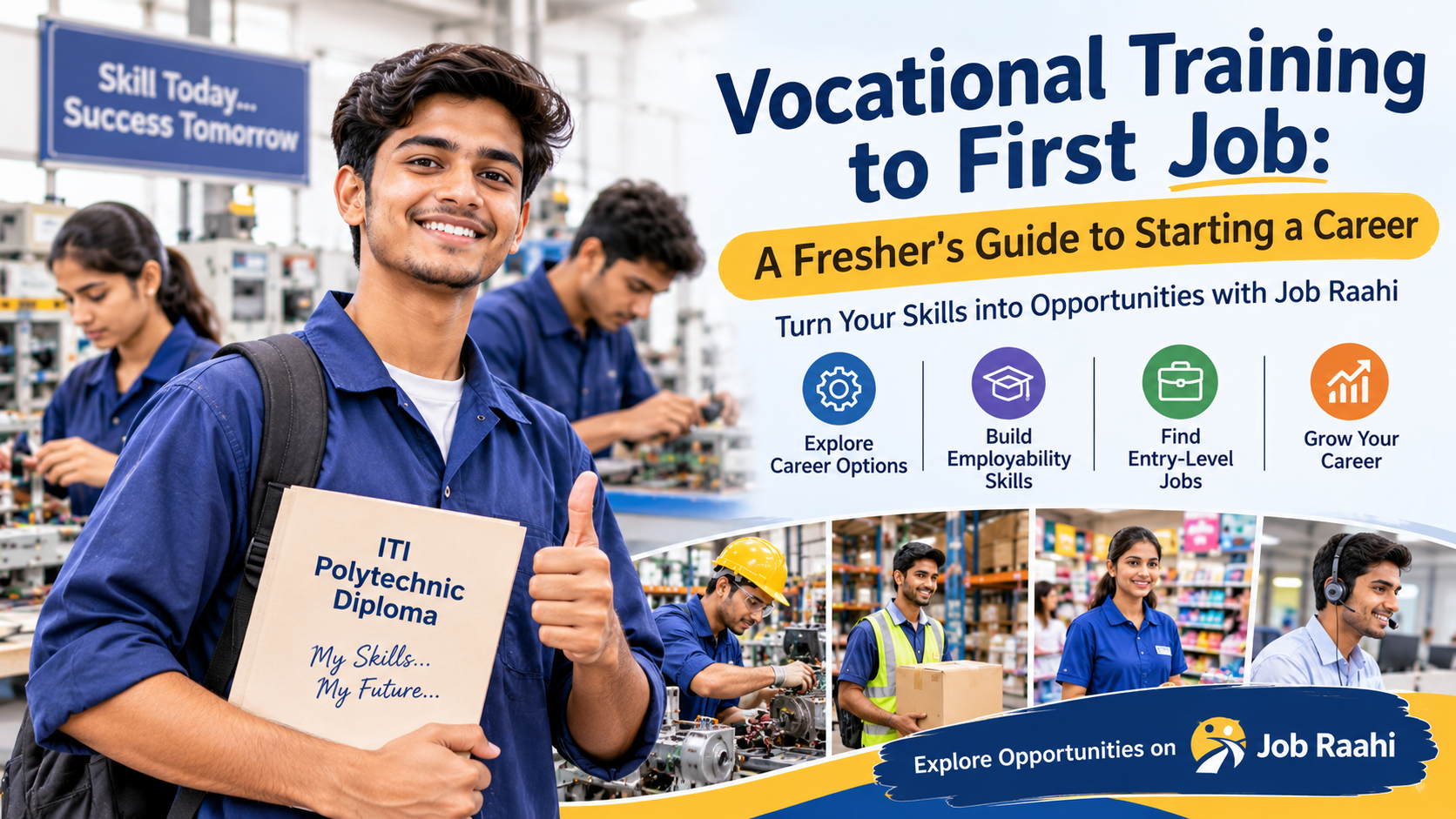
    Vocational Training to first job

    How Apprenticeships Can Help You Gain Industry Experience

    If you have completed your course but are struggling to gain practical industry exposure, consider exploring apprenticeship opportunities.

    An apprenticeship provides structured learning in a workplace, allowing eligible candidates to gain hands-on experience under an employer’s training arrangement.

    For eligible Diploma holders, the National Apprenticeship Training Scheme (NATS) is one route to explore. ITI pass-outs and other eligible candidates can also explore opportunities under the National Apprenticeship Promotion Scheme (NAPS).

    An apprenticeship can help you:

    • Understand actual workplace processes.
    • Apply your classroom knowledge to practical tasks.
    • Learn from experienced professionals.
    • Develop professional discipline and confidence.
    • Build experience that may support future job applications.

    Remember to check the eligibility, trade, duration, stipend and conditions of each opportunity. Apprenticeship training does not automatically guarantee permanent employment.

    Five Skills That Can Make You More Employable

    Your technical qualification gives you a foundation, but developing additional skills can make your transition into employment smoother.

    Here are five areas worth working on:

    1. Technical understanding: Revise the important concepts and practical tasks related to your trade. Be prepared to explain what you know.

    2. Basic digital literacy: Learn to use email, online forms, spreadsheets and other basic digital tools.

    3. Communication: Practise speaking clearly, listening carefully and asking relevant questions. You do not need perfect English for every role; communication requirements depend on the job.

    4. Problem-solving: Develop the habit of understanding a problem, identifying possible causes and seeking guidance when necessary.

    5. Adaptability: Be willing to learn new tools, processes and responsibilities as you enter the workplace.

    You can improve these skills through regular practice, short courses, practical projects and workplace exposure.

    How to Prepare for Your First Job

    You do not need an impressive employment history to apply for your first job. You need a clear profile that tells employers about your education, practical knowledge and interest in the role.

    Follow these steps:

    • Create a simple resume: Mention your qualification, specialisation, institute, year of completion and relevant skills.
    • Include practical projects: Add workshop activities, final-year projects, lab work or hands-on assignments.
    • Keep documents ready: Organise your resume, certificates and other documents requested by the employer.
    • Practise interview questions: Prepare to explain what you studied, what you learned and why you are interested in the position.
    • Read job descriptions carefully: Check the responsibilities, eligibility, location, salary details and working conditions.
    • Apply consistently: Explore relevant openings instead of waiting for one perfect opportunity.

    Most importantly, be honest about your experience. As a fresher, you are not expected to know everything. Show employers that you have a foundation and are willing to learn.

    How Job Raahi Helps Freshers Discover Opportunities

    Getting the right information at the right time can make the job search easier.

    Freshers often miss opportunities because they are unsure where to search, which roles to apply for or how to connect with employers.

    This is where Job Raahi can help.

    Job Raahi is a digital job platform that connects candidates with employment opportunities across different sectors. Candidates can explore openings in areas such as retail, logistics, warehouse operations, sales, delivery, customer support and other frontline roles.

    Whether you have recently completed your vocational course or are looking for an entry-level opportunity, you can create your profile, explore relevant vacancies and apply for suitable openings.

    The goal is simple: help candidates discover opportunities and take practical steps towards employment.

    Your training has given you a starting point. Now take the next step towards your career with Job Raahi.

    Final Thoughts

    Vocational training is not just about earning a certificate. It is about developing abilities that can be used in the workplace.

    Your first job may come with new challenges, unfamiliar responsibilities and plenty of learning opportunities. Do not let limited experience stop you from exploring suitable roles.

    Revise your skills, prepare your resume, stay open to learning and apply for opportunities that match your qualifications.

    You do not have to build your entire career in one day. You just have to take the first step.

    Learn a skill. Find an opportunity. Build your future with confidence.

  • Why Hiring in Tier 2 & Tier 3 Cities Needs a Different Strategy

    Why Hiring in Tier 2 & Tier 3 Cities Needs a Different Strategy


    Why Tier 2 and Tier 3 Hiring Is Different

    For years, India’s recruitment ecosystem has been heavily concentrated around major metropolitan markets.

    Delhi NCR.

    Mumbai.

    Bengaluru.

    Hyderabad.

    Chennai.

    Pune.

    But India’s workforce doesn’t exist only in these cities.

    A significant and increasingly important talent market exists across:

    Tier 2 cities.

    Tier 3 cities.

    Industrial towns.

    District headquarters.

    Smaller cities.

    Hinterlands.

    For employers hiring frontline and operational workforces, these markets can represent a major opportunity.

    But there is one important catch:

    You cannot always use a metro hiring strategy in a non-metro market and expect the same results.

    The candidate behaviour can be different.

    The talent supply can be different.

    The communication channels can be different.

    The importance of location can be different.

    And the way employers need to build trust can be different.

    This is why companies expanding beyond India’s major cities need a different Tier 2 hiring strategy.


    India’s Talent Market Is Moving Beyond the Metros

    India’s economic growth is increasingly distributed across different regions.

    Manufacturing facilities are expanding into new industrial clusters.

    Retail brands are entering smaller cities.

    Telecom networks require field teams across districts.

    Logistics networks are expanding deeper into the country.

    Healthcare services are reaching new markets.

    Financial services are expanding their field workforce.

    GCC and technology ecosystems are also exploring locations beyond traditional metros.

    Every expansion creates a workforce requirement.

    And that creates an important question:

    How do you find and reach the right talent where your business is expanding?

    The answer cannot always be:

    “Post the job nationally.”

    For many frontline roles, recruitment needs to become much more local and market-specific.


    Why Traditional Hiring Strategies Struggle Outside Major Cities

    A company may have an excellent recruitment process.

    It may have a strong employer brand.

    It may use leading job platforms.

    It may have an experienced talent acquisition team.

    Yet hiring can still become difficult when entering a new location.

    Why?

    Because the challenge isn’t always a shortage of candidates.

    It can be a candidate reach problem.

    The right candidates may:

    • Not know about the company
    • Not see the vacancy
    • Prefer local employers
    • Be unaware of opportunities outside their immediate area
    • Have concerns about relocation
    • Have limited access to certain recruitment channels
    • Need more information before considering the opportunity

    For frontline positions, these factors can become even more important.


    7 Powerful Tier 2 Hiring Strategies

    1. Build Local Talent Pools

    The first step is to stop looking at Tier 2 cities simply as another location in a national recruitment campaign.

    Treat them as individual talent markets.

    For example:

    Instead of:

    “We need 500 technicians in North India.”

    break the requirement down into:

    Meerut — 50

    Lucknow — 75

    Dehradun — 40

    Jaipur — 80

    Rudrapur — 35

    Other markets — 220

    Now the recruitment team can start understanding each market separately.

    Who are the candidates?

    What skills are available?

    How far are they willing to travel?

    What salary expectations exist?

    Which roles are easiest to fill?

    Where are the hiring gaps?

    This is the foundation of a local talent pool.


    2. Think Beyond the City

    One of the biggest mistakes employers can make is defining their hiring market only by city boundaries.

    A candidate doesn’t necessarily need to live inside the city where the job is located.

    They may live:

    • In a nearby town
    • In a neighbouring district
    • Along a major transport route
    • In a surrounding industrial cluster
    • In a nearby semi-urban area

    This is particularly relevant for frontline jobs.

    Instead of thinking:

    City = Talent Market

    think:

    Workplace + Commute + Surrounding Communities = Talent Market

    This creates a more realistic hiring radius.


    3. Take Jobs to Candidates

    In metro markets, candidates may actively search for jobs across multiple platforms.

    In smaller markets, employers may need to be more proactive about creating awareness.

    This means recruitment can move from:

    “Post and wait.”

    to:

    “Reach and engage.”

    Employers can use:

    • Job platforms
    • WhatsApp
    • SMS
    • RCS
    • Email
    • Social media
    • Digital campaigns
    • Candidate databases
    • Recruiter outreach

    The objective is simple:

    Don’t wait for every candidate to discover the job. Take the opportunity to the candidate.


    4. Build Location-Specific Hiring Campaigns

    A job campaign for Delhi doesn’t necessarily need to look like a job campaign for a smaller industrial town.

    The recruitment message should answer the questions candidates actually care about.

    For example:

    Hiring in a Tier 2 market

    Machine Operators Required

    📍 Location: Rudrapur
    💰 Salary: ₹18,000–₹24,000
    🏭 Manufacturing Role
    🚌 Transport Available
    📅 Immediate / Short-Notice Joining

    This immediately provides context.

    A candidate can quickly determine:

    Is this job near me?

    Is the salary relevant?

    Can I commute?

    Can I join?

    Clear communication can reduce unnecessary applications while improving relevance.


    5. Create Always-On Talent Pipelines

    One of the biggest mistakes employers make is starting recruitment only when the requirement becomes urgent.

    Suppose a company regularly hires:

    • Technicians
    • Operators
    • Field executives
    • Sales staff
    • Customer service associates

    Why rebuild the candidate pool every time?

    Instead, employers can maintain always-on talent pipelines for important recurring roles.

    For example:

    Technician Talent Pool

    Location: Uttarakhand
    Qualification: ITI / Diploma
    Experience: 0–3 years
    Availability: Open to opportunities

    When a requirement appears, the company already has a relevant starting pool.

    This can be particularly useful for employers with recurring or high-volume hiring requirements.


    6. Make the Job Opportunity Clear

    Candidates in smaller markets are not necessarily less interested in opportunities.

    But the opportunity needs to be easy to understand.

    A strong job communication should clearly explain:

    Role

    Location

    Salary

    Working hours

    Qualification

    Experience

    Benefits

    Transport

    Joining timeline

    Interview process

    Contact / application process

    The more uncertainty a candidate has, the harder it may be to convert interest into an application or interview.


    7. Measure Every Hiring Market Separately

    One national hiring dashboard can hide important differences.

    Consider this:

    LocationApplicationsInterviewsSelectionsJoinings
    City A1,0002209062
    City B8001908571
    City C6001608065
    City D1,4001204025

    If you only look at applications, City D looks like the strongest market.

    But look at joinings.

    City C may actually be performing much better.

    This is why employers should track:

    Reach → Applications → Qualified Candidates → Interviews → Selections → Offers → Joinings

    by location.

    That creates genuine regional hiring intelligence.


    The Role of Technology in Regional Hiring

    Technology can help employers scale regional recruitment without treating every location as a completely manual exercise.

    A modern regional hiring strategy can combine:

    Candidate Databases

    Identify relevant talent pools.

    Location-Based Targeting

    Reach candidates around specific hiring markets.

    Digital Job Marketing

    Promote vacancies beyond passive job listings.

    Multi-Channel Communication

    Use WhatsApp, RCS, SMS and email to reach candidate segments.

    AI-Powered Calling

    Support large-scale candidate engagement.

    Recruitment Analytics

    Compare hiring performance across different markets.

    Technology doesn’t replace local recruitment knowledge.

    It helps employers scale it.


    How Job Raahi Helps Employers Hire Beyond the Metros

    Job Raahi is built around a simple employer problem:

    How do you reach frontline talent where traditional recruitment doesn’t always work efficiently?

    The platform focuses on:

    • Frontline hiring
    • Entry-level hiring
    • Blue-collar hiring
    • Grey-collar hiring
    • Industrial hiring
    • Contractual hiring
    • Bulk workforce hiring

    For employers expanding into Tier 2, Tier 3 and hinterland markets, Job Raahi can support a more localized recruitment approach.

    Hyperlocal Candidate Reach

    Reach candidates around specific hiring locations.

    Candidate Database

    Build and access relevant candidate pools.

    Job Marketing

    Don’t simply publish the vacancy.

    Promote it to relevant candidate segments.

    WhatsApp, RCS, SMS & Email

    Use multiple channels to increase candidate reach.

    Digital Campaigns

    Promote job opportunities around relevant hiring markets.

    AI-Powered Calling

    Support candidate engagement at scale.

    Continuous Pipeline Building

    Develop candidate pools that can support future requirements.


    Industries That Can Benefit From Tier 2 Hiring

    Manufacturing

    Tier 2 and Tier 3 cities are important hiring markets for:

    • Machine operators
    • Production workers
    • Technicians
    • Quality inspectors
    • Maintenance staff

    Telecom

    Regional hiring can support:

    • Field technicians
    • Installation teams
    • Sales employees
    • Service teams

    Retail

    Growing retail footprints create demand for:

    • Store associates
    • Sales executives
    • Customer service staff
    • Supervisors

    Logistics

    Expanding distribution networks require:

    • Warehouse workers
    • Sorters
    • Delivery executives
    • Operations staff

    Infrastructure

    Projects across smaller cities create demand for:

    • Technicians
    • Electricians
    • Site workers
    • Field teams

    BFSI

    Financial services expansion can create demand for:

    • Field officers
    • Sales executives
    • Customer-facing employees

    Healthcare

    Regional healthcare expansion can require:

    • Support staff
    • Field employees
    • Operations staff

    The industries may differ.

    The recruitment challenge is often similar:

    Find relevant candidates in the right location and move them through the hiring funnel efficiently.


    Tier 2 Hiring Is Not Tier 1 Hiring at a Smaller Scale

    This is perhaps the most important point.

    A Tier 2 or Tier 3 market shouldn’t simply be treated as:

    “A smaller version of a metro market.”

    The recruitment strategy should consider:

    Local talent availability

    Commuting patterns

    Candidate awareness

    Local employers

    Salary expectations

    Regional competition

    Communication preferences

    Skill availability

    Hiring radius

    Once employers start looking at these factors, regional recruitment becomes much more strategic.


    The Future of Hiring in India’s Hinterlands

    India’s next wave of workforce growth won’t come exclusively from the largest cities.

    As businesses expand their operations, distribution networks, manufacturing capacity and services across the country, access to talent outside major metros will become increasingly important.

    The employers that build an advantage may be those that start developing talent access before they urgently need it.

    That means:

    Map the market.

    Build local pools.

    Market the jobs.

    Engage candidates.

    Measure conversion.

    Keep the pipeline active.

    This turns regional recruitment from a one-time sourcing exercise into a repeatable hiring capability.


    Frequently Asked Questions

    What is a Tier 2 hiring strategy?

    A Tier 2 hiring strategy is a recruitment approach designed specifically for hiring talent in India’s growing non-metro cities, taking into account local talent availability, geography, candidate behaviour and regional workforce conditions.

    Why is Tier 2 hiring different from metro hiring?

    Candidate availability, commuting patterns, employer competition, salary expectations and awareness of opportunities can differ significantly between markets. Employers may therefore need a more localized recruitment strategy.

    What is Tier 3 hiring?

    Tier 3 hiring refers broadly to recruitment in smaller cities and towns beyond major metropolitan and larger Tier 2 markets. These locations can be particularly relevant for frontline and distributed workforce hiring.

    How can companies hire frontline workers in Tier 2 cities?

    Companies can combine local talent pools, hyperlocal candidate reach, digital job marketing, candidate databases and multi-channel outreach to reach relevant candidates.

    Can Job Raahi help with Tier 2 and Tier 3 hiring?

    Job Raahi is designed to help employers reach frontline, blue-collar, grey-collar, industrial and high-volume talent across diverse Indian hiring markets, including smaller cities and hinterlands.


    Build Your Tier 2 Hiring Strategy With Job Raahi

    India’s talent market is much bigger than its metros.

    The opportunity for employers is not simply to expand the geography of recruitment.

    It is to understand each hiring market differently.

    A successful Tier 2 hiring strategy can combine:

    Local talent pools

    Hyperlocal candidate reach

    Digital job marketing

    Multi-channel outreach

    Candidate engagement

    Continuous talent pipelines

    The future of regional hiring isn’t about waiting for candidates to come to the job.

    It’s about taking the right opportunities to the right talent markets.

    Job Raahi — We Don’t Just List Your Jobs. We Market Them.

    External Resources

  • Blue Collar Job Openings

    Blue Collar Job Openings

    Blue Collar Jobs

    Blue Collar Jobs are in high demand, and various industries are looking for skilled labor to fill the gap. Furthermore, the growth of emerging sectors has led to an increase in Blue Collar Job Openings, providing opportunities for individuals to explore new career paths. Additionally, with the rise of e-commerce and logistics, the need for skilled workers in warehouses and factories has never been more pressing.

    Introduction to Blue Collar Jobs

    Blue Collar Jobs encompass a wide range of occupations, including factory jobs, warehouse jobs, and skilled labor positions. Moreover, these jobs often require specialized training and certifications, such as those obtained through ITI programs or vocational courses. Consequently, individuals with these skills are in high demand, and companies are willing to pay competitive salaries for their expertise.

    Blue Collar Jobs

    Types of Blue Collar Jobs

    Some examples of Blue Collar Jobs include electricians, fitters, welders, and machine operators. Additionally, drivers and logistics personnel are also in high demand, particularly in the e-commerce sector. Furthermore, companies are looking for skilled workers who can operate and maintain complex machinery, making it an exciting time for individuals with technical skills.

    Benefits of Blue Collar Jobs

    Blue Collar Jobs offer numerous benefits, including job security, competitive salaries, and opportunities for advancement. Moreover, many companies provide training and development programs to help workers enhance their skills and move up the career ladder. For instance, Job Raahi Blog provides valuable insights and tips for Blue Collar job seekers, helping them navigate the job market and find the best opportunities.

    Job Security and Stability

    One of the primary benefits of Blue Collar Jobs is job security and stability. Unlike white-collar jobs, which can be affected by economic downturns, Blue Collar Jobs are often less susceptible to layoffs and downsizing. Consequently, individuals with Blue Collar skills can enjoy a sense of security and stability in their careers.

    Emerging Sectors for Blue Collar Workers

    Emerging sectors, such as renewable energy and manufacturing, are creating new opportunities for Blue Collar workers. Moreover, the growth of e-commerce and logistics has led to an increase in demand for skilled workers in warehouses and distribution centers. Additionally, companies are looking for workers with specialized skills, such as robotics and automation, to help them stay competitive in the market.

    Skills in Demand

    Some of the skills in demand for Blue Collar Jobs include:
    * Mechanical skills
    * Electrical skills
    * Plumbing skills
    * Welding skills
    * Operating heavy machinery

    Skills Required for Blue Collar Jobs

    Blue Collar Jobs require a range of skills, from technical skills to soft skills. Furthermore, companies are looking for workers who can work well in teams, communicate effectively, and problem-solve. For example, Job Raahi provides a platform for Blue Collar job seekers to find jobs that match their skills and interests.

    Job Title Skills Required Salary Range
    Electrician Electrical skills, problem-solving 20,000 – 50,000
    Welder Welding skills, mechanical skills 15,000 – 30,000
    Machine Operator Operating heavy machinery, mechanical skills 18,000 – 35,000
    Driver Driving skills, logistics knowledge 12,000 – 25,000

    How to Apply for Blue Collar Jobs

    To apply for Blue Collar Jobs, individuals can search for job openings on platforms like download Job Raahi app or visit the websites of companies in their desired industry. Moreover, they can also reach out to recruitment agencies or attend job fairs to network with potential employers. Additionally, resources like National Career Service and Ministry of Skill Development can provide valuable information and guidance.

    Resume Building

    When applying for Blue Collar Jobs, it’s essential to have a well-crafted resume that highlights relevant skills and experience. Furthermore, individuals can also include certifications, training programs, and any other relevant qualifications to increase their chances of getting hired.

    Conclusion

    In conclusion, Blue Collar Jobs offer a range of opportunities for individuals with specialized skills and training. Moreover, with the growth of emerging sectors, the demand for Blue Collar workers is on the rise. Therefore, we encourage Blue Collar job seekers to explore the latest job listings on Job Raahi and take the first step towards a rewarding career. To get started, download Job Raahi app today.

    Sources and References

    For more information on Blue Collar Jobs and emerging sectors, please visit:
    * National Career Service
    * Ministry of Skill Development