Tag: Local Talent Pool

  • Beyond Job Portals: How Employers Can Reach Candidates in Smaller Cities

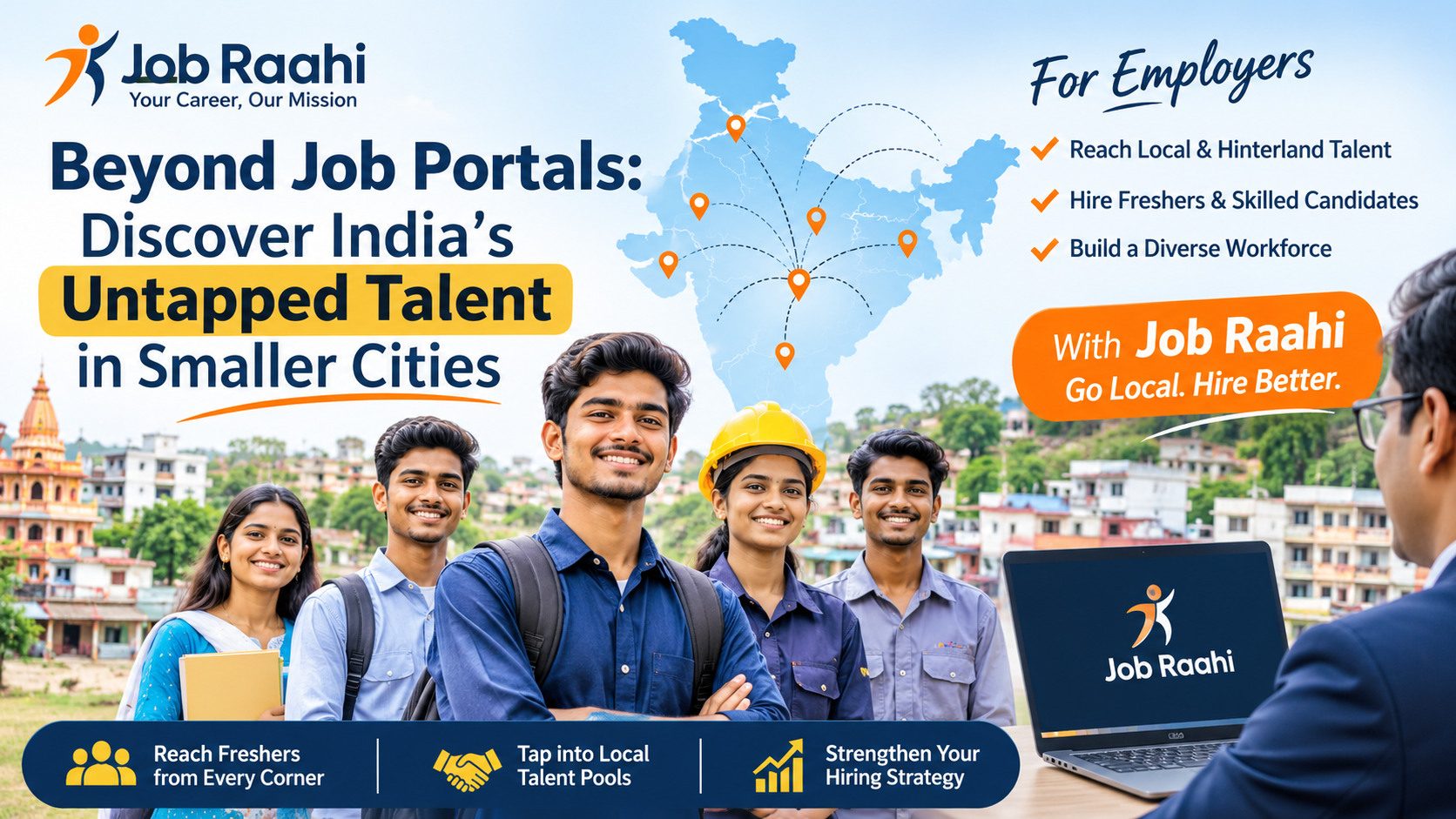
    Beyond Job Portals: How Employers Can Reach Candidates in Smaller Cities

    For many employers in India, recruitment has traditionally focused on major employment hubs such as Delhi NCR, Mumbai, Bengaluru, Pune and Hyderabad. These cities offer access to large candidate markets, established professional networks and multiple recruitment channels.

    However, this approach can leave a significant part of India’s workforce unexplored.

    Across smaller cities, towns and hinterland regions, many candidates are actively looking for employment opportunities. They may have completed their 10th or 12th standard, earned an ITI or diploma qualification, graduated recently or developed practical skills through vocational training. Yet, connecting them with suitable employers is not always easy.

    For companies hiring in large numbers, particularly for frontline, operational and entry-level roles, expanding beyond major cities can open up new sourcing possibilities.

    The question is no longer just where employers can find candidates. It is how they can reach the right candidates wherever they are.

    Why Employers Need to Look Beyond Major Cities

    Hiring from established employment hubs may seem convenient, but depending entirely on a few locations can limit the available talent pool.

    For businesses with multiple warehouses, retail outlets, production facilities, delivery operations or customer support centres, recruitment requirements often extend beyond metropolitan areas.

    Consider a company opening a warehouse in a developing industrial area. Hiring exclusively from a distant metropolitan city may create challenges related to commuting, relocation and candidate availability.

    Reaching people from nearby towns and surrounding districts could provide access to candidates who are already familiar with the local area and interested in employment closer to home.

    Expanding recruitment geographically can help employers:

    • Explore a wider pool of potential candidates.
    • Connect with people who may not actively use mainstream job platforms.
    • Discover freshers and candidates with limited work experience.
    • Reach candidates closer to operational locations.
    • Reduce overdependence on a limited number of sourcing markets.

    The objective is not to stop hiring from major cities. It is to make recruitment more geographically diverse.
    Beyond Job Portals, exploring talent

    The Untapped Potential of Smaller Cities and Hinterlands

    India’s smaller cities and hinterland regions have a diverse workforce with different educational backgrounds, practical skills and career interests.

    Many candidates from these regions have completed vocational courses, ITI programmes, polytechnic diplomas or general graduation. Others have developed practical knowledge through informal work, family businesses or local training initiatives.

    However, access to employment information and direct connections with employers can vary significantly across locations.

    This creates an opportunity for companies to expand their recruitment approach.

    For example:

    • A manufacturing company can explore ITI and diploma candidates from nearby districts.
    • A logistics business can connect with freshers interested in warehouse and inventory operations.
    • A retail organisation can reach candidates looking for sales and store-level opportunities.
    • A customer support company can explore graduates from smaller educational institutions.

    The important point is that a candidate’s location should not automatically become a limitation. Employers should evaluate qualifications, relevant skills, willingness to learn and suitability for the role.

    Why Traditional Recruitment Channels May Not Be Enough

    Traditional recruitment channels continue to play an important role. Job portals, recruitment agencies, employee referrals and campus placements can help companies attract candidates.

    However, relying on only a few channels may restrict the reach of a hiring campaign.

    Some candidates may not know which platforms to use. Others may not have professional networks or experience creating resumes and applying for jobs online.

    Similarly, employers may find it difficult to establish connections with candidates in locations where they have limited recruitment presence.

    This is particularly relevant for frontline and mass hiring, where companies may need to fill multiple similar positions across different locations.

    A more effective approach is to combine existing recruitment channels with additional local and digital sourcing methods.

    Practical Ways to Reach Candidates in Smaller Cities

    Employers do not need to depend on a single recruitment method. A combination of local engagement and digital outreach can help improve candidate reach.

    A. Connect with ITIs, Polytechnics and Colleges

    Educational institutions are useful starting points for reaching freshers and candidates with technical or vocational qualifications.

    Companies can collaborate with local ITIs, diploma colleges, polytechnics and degree colleges to communicate relevant job openings.

    Campus visits, placement discussions, seminars and job-awareness sessions can help employers introduce opportunities directly to students.

    B. Build Local Community Networks

    Local employment networks can help employers reach people who may not regularly search for jobs online.

    Companies can explore connections with community organisations, local employment groups, training centres and other relevant networks.

    Clear communication about job roles, eligibility, location and application processes is important to build trust.

    C. Use Regional Digital Outreach

    Digital recruitment campaigns can help employers communicate openings to candidates in specific cities, districts or regions.

    Using relevant regional languages and simple job descriptions can make vacancies easier to understand.

    Employers should clearly mention the work location, salary range where possible, shift requirements, eligibility and application process.

    D. Explore Local Hiring Partners

    For companies with recurring requirements, local recruitment partners and institutions can support candidate awareness and sourcing.

    The key is to work with reliable partners who understand the local candidate market and can communicate genuine job opportunities.

    E. Use Digital Job Platforms

    Digital platforms can help employers extend their reach beyond their immediate geographical network.

    By posting relevant vacancies on platforms that connect with frontline and entry-level job seekers, companies can explore candidates from different cities and regions without depending entirely on physical recruitment drives.

    The Role of Digital Job Platforms in Expanding Local Hiring

    Digital recruitment has made it easier for employers to communicate vacancies across geographical boundaries.

    A company based in one city can publish a job opportunity and make it discoverable to candidates in other locations, depending on the platform’s reach and the candidate’s access.

    For frontline and entry-level recruitment, this can be particularly useful.

    Consider a logistics company looking for warehouse associates in multiple locations. Instead of relying only on walk-in drives or local referrals, it can use digital job platforms as an additional channel to communicate openings and attract interested candidates.

    Similarly, a retail business can explore candidates from nearby towns for store-level roles, while a manufacturing unit can reach ITI and diploma freshers for suitable operational positions.

    Digital platforms do not replace local recruitment efforts. They complement them by making job information more accessible and creating another connection between employers and candidates.

    How Job Raahi Helps Employers Reach Hinterland Talent

    This is where platforms focused on frontline and mass hiring can play an important role.

    Job Raahi is a digital job platform that connects companies with candidates looking for frontline, entry-level and mass hiring opportunities.

    Its focus on candidates beyond the traditional white-collar job market creates an additional channel for employers looking to expand their sourcing reach.

    Here is how Job Raahi supports this approach:

    Reaching Candidates Beyond Major Employment Hubs

    Job Raahi focuses on connecting employers with candidates from different parts of India, including hinterland and less-explored talent markets.

    This gives companies another avenue to communicate their vacancies beyond the candidate networks they may already be using.

    For employers hiring for operational and frontline positions, reaching candidates from different regions can help broaden their sourcing efforts.

    Access to Freshers and Candidates with Limited Experience

    Not every frontline vacancy requires several years of professional experience.

    Many employers are open to candidates who are entering the workforce, have recently completed their education or have limited work experience.

    Job Raahi provides an additional platform for employers to reach such candidates, including freshers and individuals with around six months to a couple of years of experience, depending on the vacancy requirements.

    Connecting Employers with Job-Ready and Developing Talent

    Job Raahi’s wider ecosystem includes skill centres across India, where candidates can be trained and developed in line with industry needs.

    This creates a connection between skill development and employment opportunities, helping candidates explore relevant openings based on their backgrounds and preparation.

    Supporting Frontline and Mass Hiring Requirements

    Job Raahi focuses on opportunities across areas such as:

    • Logistics and warehousing
    • Retail and sales
    • Delivery operations
    • Hospitality
    • BPO and customer support
    • Field operations
    • Other frontline and operational roles

    For employers, Job Raahi can work as an additional sourcing channel alongside their existing job portals, recruitment partners, referrals and campus networks.

    The idea is simple: companies should not have to limit their search to candidates who are already visible in the most familiar hiring markets.

    By extending their reach through platforms like Job Raahi, employers can explore a wider pool of candidates and communicate opportunities to people who may otherwise have limited access to such openings.

    Why Smaller-City Hiring Can Benefit Freshers

    Expanding recruitment into smaller cities is not only beneficial for employers. It can also create meaningful opportunities for young people entering the workforce.

    Freshers often face a common challenge: they need professional experience to get a job, but they need a job to gain that experience.

    When employers consider candidates from smaller cities for suitable entry-level roles, they create more opportunities for people to begin their careers.

    Some potential benefits include:

    Access to More Opportunities: Candidates can discover vacancies from employers they may not have known about earlier.

    Opportunities Closer to Home: Local or nearby openings may allow candidates to start working without immediately relocating to a major city.

    A Starting Point for Career Growth: Entry-level roles can help freshers develop practical knowledge, workplace discipline and industry exposure.

    Greater Visibility for Vocational Qualifications: ITI, diploma and other vocational candidates can explore roles where their education and practical skills are relevant.

    Digital platforms like Job Raahi can support this process by making frontline and entry-level job opportunities more accessible to candidates across different locations.

    Building a More Inclusive and Wider Hiring Strategy

    Reaching candidates in smaller cities requires more than simply posting vacancies online. Employers need a clear strategy that connects geographical reach with actual hiring requirements.

    A few practical steps can help:

    1. Map hiring locations: Identify where your business needs employees and which nearby towns or districts could be relevant sourcing markets.
    2. Understand candidate requirements: Define the education, experience, skills and other eligibility criteria for each role.
    3. Use multiple sourcing channels: Combine job portals, local institutions, referrals, regional outreach and digital platforms.
    4. Make job information accessible: Use clear language and provide complete information about the position.
    5. Measure sourcing performance: Track applications, interview attendance, selection rates, joining rates and retention by location and source.
    6. Improve based on results: Identify which regions and channels are bringing suitable candidates and refine your approach.

    A wider hiring strategy should also maintain consistent screening standards. Reaching more candidates is valuable only when employers can identify people who are genuinely suitable for the role.

    Conclusion: The Next Talent Opportunity May Be Beyond Your Usual Hiring Market

    India’s talent market extends far beyond its major metropolitan cities. Smaller cities, towns and hinterland regions have candidates who are looking for opportunities to learn, earn and build their careers.

    For employers, exploring these markets can create additional sourcing opportunities, particularly for frontline, operational and entry-level positions.

    The way forward is not to abandon traditional recruitment channels but to strengthen them with local engagement, educational partnerships and digital job platforms.

    Job Raahi aims to contribute to this wider approach by connecting employers with candidates across different regions, including freshers and individuals with limited experience who are looking for relevant frontline opportunities.

    The next suitable candidate for your organisation may not be in the city where you usually recruit. They may be in a smaller town, a nearby district or a hinterland region that your current hiring strategy has not yet reached.

    It is time to look beyond familiar talent markets and make recruitment more accessible, diverse and geographically inclusive.


  • Why Your Location Can Become Your Biggest Career Advantage

    Why Your Location Can Become Your Biggest Career Advantage

    For many young job seekers, getting a good job often seems connected to moving to a big city.

    Delhi, Mumbai, Bengaluru, Pune and Hyderabad are commonly seen as destinations for better career opportunities. As a result, freshers from smaller towns and rural areas sometimes believe that they must leave their hometown to build a successful professional life.

    But is relocating always necessary?

    Not necessarily.

    Opportunities in retail, logistics, manufacturing, hospitality, sales, customer support and other frontline sectors can also exist in nearby towns, industrial areas and developing business locations.

    For someone beginning their career, finding the right job closer to home can offer several practical advantages. It may reduce travel expenses, make daily life easier and provide an opportunity to gain valuable work experience without immediately taking on the costs of relocation.

    Your location does not have to limit your career. In many situations, it can become an advantage.

    1. Does a Successful Career Always Require Moving to a Big City?

    There is no doubt that metropolitan cities offer a wide range of employment opportunities. They have large companies, corporate offices, industrial clusters and established business networks.

    However, employment opportunities are not limited to metropolitan locations.

    Consider the growing business activity in places such as Noida, Greater Noida, Ghaziabad, Gurugram, Lucknow, Jaipur, Indore, Surat and other developing cities.

    These locations have different types of businesses, including:

    • Manufacturing and production units.
    • Warehousing and logistics facilities.
    • Retail stores and supermarkets.
    • Delivery and distribution operations.
    • Hotels and hospitality businesses.
    • Customer support and service centres.
    • Sales and field operations.

    The Government of India’s employment data also highlights differences between rural and urban employment patterns. NITI Aayog’s analysis of PLFS 2023–24 shows that employment opportunities vary significantly by location and industry. This is an important reminder that job seekers should understand the employment landscape around them rather than assume every opportunity is concentrated in major cities. NITI Aayog+1

    The right career decision is not necessarily about finding the biggest city. It is about finding an opportunity that matches your skills, financial situation and long-term goals.

    2. Why Your Location Matters More Than You Think

    Your workplace location affects more than just the distance between your home and office.

    It can influence your monthly expenses, daily routine, family responsibilities and even the amount of time you have available for learning new skills.

    For a fresher earning their first salary, these factors can make a considerable difference.

    For example, two candidates may receive similar salary offers, but one may need to spend significantly more on rent, food and transportation.

    The actual financial benefit of a job should therefore be evaluated after considering the expenses involved in reaching and maintaining that employment.

    3. Five Advantages of Finding a Job Closer to Home

    1. Save Money on Daily Travel

    One of the biggest advantages of local employment is the possibility of reducing commuting expenses.

    Travelling long distances every day can involve:

    • Public transportation fares.
    • Fuel expenses.
    • Auto-rickshaw or cab charges.
    • Additional food expenses.
    • Occasional accommodation costs.

    A workplace closer to home may help you reduce these expenses and retain more of your monthly income.

    For freshers who are just starting to become financially independent, even small monthly savings can be useful.

    2. Spend Less Time Travelling

    Time is another important factor.

    A long commute can make your working day considerably longer, particularly when employees depend on multiple transport connections.

    Working closer to home may provide additional time for:

    • Learning new skills.
    • Preparing for professional certifications.
    • Spending time with family.
    • Resting after work.
    • Pursuing personal development.

    This additional time can contribute to a healthier and more manageable routine.

    3. Stay Connected to Your Family and Community

    Relocating for work can be challenging, particularly for candidates who are entering employment for the first time.

    Moving to another city may involve finding accommodation, managing household expenses, adjusting to a different environment and living away from family.

    A local job can make this transition easier.

    You may be able to start earning while continuing to stay with your family and maintain your existing support network.

    This can be particularly helpful for young candidates who are not yet financially prepared to manage an independent household in another city.

    4. Build Experience Without Immediate Relocation

    One of the biggest challenges for freshers is getting their first opportunity.

    Sometimes candidates reject suitable entry-level jobs because they believe only a large company or metropolitan location can provide valuable experience.

    However, practical experience can be developed in different working environments.

    A local retail job can help you develop customer-handling skills. A warehouse role can introduce you to inventory management and operational processes. A manufacturing position can help you understand production systems and workplace safety.

    These experiences can strengthen your professional profile and help you explore future opportunities.

    The important factor is not simply where you work, but what you learn and how you grow.

    5. Discover Opportunities in Your Own Region

    Many job seekers focus so heavily on metropolitan employment that they overlook businesses operating in their own districts.

    For example, an industrial area may have manufacturing companies, warehouses, distributors and service providers that regularly require entry-level employees.

    Similarly, growing residential and commercial areas may create demand for retail staff, delivery personnel, sales executives, technicians and customer support employees.

    Understanding your local employment landscape can help you identify opportunities that you may otherwise miss.

    Job at your Location

    4. Industries Offering Local Employment Opportunities

    Different regions have different employment patterns. However, several industries commonly create opportunities across cities, towns and developing business areas.

    IndustryPossible entry-level roles
    RetailStore Associate, Cashier, Sales Associate
    LogisticsPicker, Packer, Warehouse Associate
    ManufacturingProduction Helper, Machine Operator Trainee
    HospitalityHousekeeping Staff, Kitchen Assistant, Front Office Associate
    DeliveryDelivery Executive, Distribution Assistant
    Field SalesSales Executive, Field Promoter
    Customer SupportCustomer Support Executive, Process Associate
    Technical ServicesElectrician Trainee, Maintenance Assistant

    For ITI and Polytechnic candidates, local industrial clusters may also offer opportunities related to their technical training.

    The key is to explore employers across different sectors instead of limiting your search to one familiar industry.

    5. How to Find the Right Job in Your Area

    Finding local employment requires more than searching for the name of your city on a job portal.

    You need a systematic approach.

    Step 1: Identify your preferred work radius

    Start by identifying the locations you can comfortably travel to every day.

    Consider your home, nearby commercial areas, industrial zones and accessible transport routes.

    Do not restrict your search to your immediate neighbourhood. A workplace slightly farther away may still be practical if transport connectivity is good.

    Step 2: Explore different industries

    Search for opportunities in retail, logistics, manufacturing, hospitality, sales and customer support.

    You may discover suitable roles in industries you had not previously considered.

    Step 3: Use digital job platforms

    Job portals can help you discover vacancies across multiple locations without physically visiting every employer.

    Use location filters and relevant job titles to narrow your search.

    Platforms such as the Government of India’s National Career Service also provide job-search, matching, career counselling and vocational guidance services.

    Step 4: Check the employer and job details

    Before applying, understand:

    • Job responsibilities.
    • Salary structure.
    • Workplace address.
    • Shift timings.
    • Weekly offs.
    • Required qualifications.
    • Transport or other applicable benefits.

    Always verify the employer and never pay an unauthorised recruitment fee to secure a job.

    Step 5: Compare the actual value of the opportunity

    Do not evaluate a job only by its advertised salary.

    Consider the income you will retain after travel, accommodation and other work-related expenses.

    Also consider the skills you will develop and the future opportunities the experience may create.

    6. Local Job vs. Outstation Job: What Should You Consider?

    A local job is not automatically better than an outstation job. Similarly, a job in a metropolitan city is not automatically a better career opportunity.

    The right decision depends on your individual circumstances.

    Consider this illustrative comparison:

    FactorLocal jobOutstation job
    AccommodationMay stay at homeMay require rent
    TravelPotentially lowerMay involve higher costs
    Family proximityUsually closerMay involve living away
    Career exposureDepends on employer and roleDepends on employer and role
    IndependenceDepends on circumstancesMay offer more independent living
    SavingsDepends on total expensesDepends on salary and living costs

    Before accepting either opportunity, calculate your likely monthly expenses.

    For example, a job offering a higher salary may not necessarily leave you with more savings if rent, food and transportation costs are substantially higher.

    At the same time, relocating may be worthwhile if the new role offers significantly better training, career progression, working conditions or long-term prospects.

    The best decision is the one that balances income, expenses, learning and future growth.

    7. Common Myths About Working in Your Hometown

    Myth 1: Good jobs only exist in metropolitan cities

    Reality: Different industries operate across cities, towns and industrial regions. The availability and quality of opportunities vary, but local employment should not be overlooked.

    Myth 2: Local jobs offer no career growth

    Reality: Career growth depends on the employer, responsibilities, skills, performance and opportunities for advancement. A local role can provide valuable experience.

    Myth 3: Working closer to home means earning less

    Reality: Salary depends on the role, employer, experience and location. Compare the overall compensation and expenses rather than making assumptions.

    Myth 4: You must relocate to become independent

    Reality: Financial independence begins with earning, managing income responsibly and developing skills. Relocation is one possible step, not a compulsory requirement.

    8. Your Location Is Your Starting Point, Not Your Limitation

    Your hometown or current location should not define the limits of your ambitions.

    You can begin your career locally, develop practical experience, improve your skills and gradually explore opportunities in other locations if that supports your goals.

    For some candidates, relocating will be the right decision. For others, starting closer to home may provide a more practical and financially manageable route into employment.

    What matters is making an informed choice.

    Do not overlook an opportunity simply because it is not located in a major city. Equally, do not reject a better opportunity elsewhere only because it requires moving.

    Look at the complete picture and choose the path that supports your future.

    9. Find Opportunities Closer to Home with Job Raahi

    At Job Raahi, the objective is to connect job seekers with employment opportunities across different industries and locations.

    Whether you are a fresher, an ITI student, a Diploma holder or someone looking for a frontline role, exploring opportunities in accessible locations can be a useful starting point.

    From retail and logistics to manufacturing, sales, delivery and customer support, different industries offer different pathways into employment.

    Instead of limiting your search to a handful of well-known companies or metropolitan cities, explore the opportunities available around you.

    Your next career opportunity might be closer than you think.

  • The 50-KM Hiring Problem: Why Your Best Frontline Candidate May Be Closer Than You Think

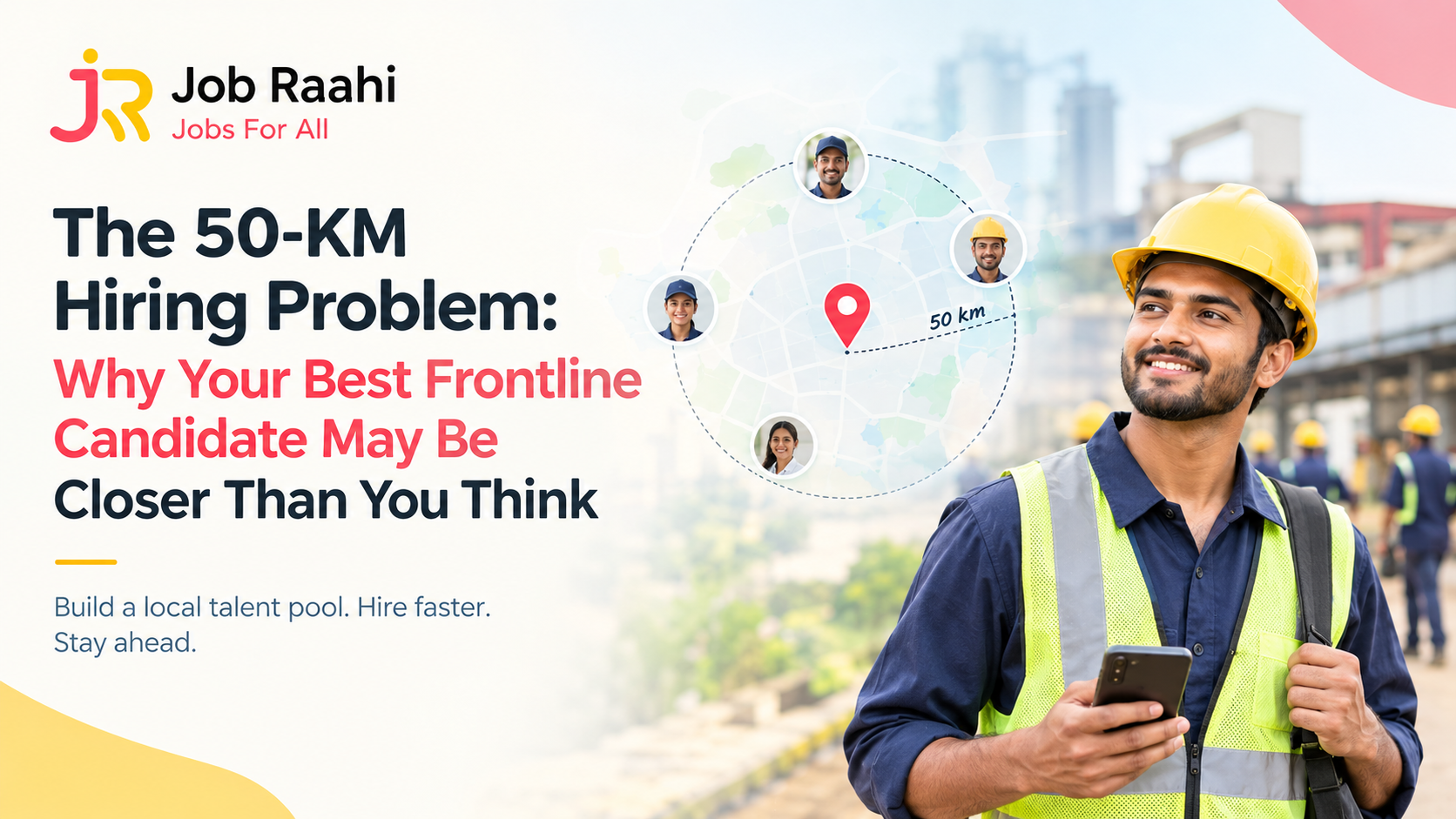
    The 50-KM Hiring Problem: Why Your Best Frontline Candidate May Be Closer Than You Think

    What if the problem with your frontline hiring isn’t a shortage of candidates?

    What if the problem is that you’re looking in the wrong places?

    A manufacturing company may have 100 open positions.

    A telecom company may need technicians across multiple districts.

    A retail chain may be opening stores in smaller cities.

    A logistics company may need warehouse workers around a new hub.

    The conventional response is often:

    Post the jobs. Increase the sourcing. Get more applications.

    But there is another question employers should be asking:

    Where are the candidates who can actually work at this location?

    For many frontline roles, geography isn’t just a recruitment parameter.

    Geography is part of the candidate profile.

    A candidate who lives 8 km from the workplace can sometimes be more relevant than a candidate with identical qualifications who lives 80 km away.

    This is the local talent pool problem.

    And solving it can change the way companies approach frontline hiring.


    What Is a Local Talent Pool?

    A local talent pool is a group of potential candidates who live within a practical geographic area around a job location and match the employer’s requirements.

    Instead of thinking:

    “We need 500 candidates for this role.”

    an employer can think:

    “We need 50 relevant candidates within the hiring radius of this location.”

    Then repeat the process across every location.

    For example:

    Requirement

    500 Field Technicians

    Instead of treating this as one national vacancy:

    500 Candidates → India

    the employer could structure it as:

    50 Candidates → Location A

    75 Candidates → Location B

    40 Candidates → Location C

    60 Candidates → Location D

    and so on.

    This creates a much more granular local hiring strategy.


    Why Distance Matters in Frontline Hiring

    For many corporate roles, relocation is relatively common.

    For frontline roles, it can be a completely different story.

    A candidate may consider:

    • Daily commute
    • Transportation costs
    • Shift timings
    • Family responsibilities
    • Local transportation availability
    • Workplace accessibility
    • Working hours
    • Take-home salary

    This means two candidates with identical qualifications may not have identical hiring relevance.

    Consider:

    Candidate A

    Lives 6 km from the workplace.

    Candidate B

    Lives 65 km from the workplace.

    Both have the same qualification.

    Both have similar experience.

    Both accept the salary.

    But Candidate A may have a significantly easier commute.

    This is why location-based recruitment deserves more attention in frontline hiring.


    The Hidden Cost of Hiring From Too Far Away

    Distance can create friction throughout the recruitment lifecycle.

    During sourcing

    The candidate may apply but later reject the location.

    During interviews

    The candidate may be less willing to travel for an interview.

    During joining

    The candidate may accept another nearby opportunity.

    After joining

    Long commutes can affect employee satisfaction and attendance.

    During replacement hiring

    The employer may have to restart the sourcing process.

    This doesn’t mean local candidates will always have better retention or joining rates.

    But it does mean location deserves to be considered much earlier in the recruitment funnel.


    The 50-KM Hiring Problem

    Let’s imagine a company opens a manufacturing facility.

    The HR team needs:

    100 machine operators.

    The company posts the jobs across a major job portal.

    Applications start coming in from:

    • Delhi
    • Noida
    • Ghaziabad
    • Meerut
    • Jaipur
    • Lucknow
    • Other states

    The application count looks impressive.

    But the plant is located in a specific industrial area.

    The real hiring market may be much smaller:

    People who are qualified + available + willing to commute to the plant.

    This is where the concept of a hiring radius becomes powerful.

    Instead of asking:

    “How many people applied?”

    ask:

    “How many relevant candidates are available within our practical hiring market?”

    That is a much more useful employer question.


    8 Smart Ways to Build a Local Talent Pool

    1. Map the Hiring Radius Before You Start Recruiting

    Before launching a high-volume recruitment campaign, define the geographic market.

    Consider:

    • Workplace location
    • Nearby towns
    • Nearby districts
    • Public transport
    • Employee transportation
    • Typical commuting patterns
    • Shift timings
    • Candidate availability

    A hiring radius doesn’t necessarily have to be a fixed number such as 50 km.

    For one role, 10 km may be appropriate.

    For another, 30 km may be practical.

    For specialized technicians, the radius could be much larger.

    The important thing is to make location part of the recruitment strategy from day one.


    2. Divide Large Requirements Into Local Markets

    Large recruitment requirements can become easier to manage when divided geographically.

    Imagine:

    1,000 frontline vacancies

    across

    20 locations.

    Instead of running one giant campaign, employers can create:

    20 local hiring campaigns.

    Each campaign can have its own:

    • Candidate pool
    • Hiring target
    • Recruitment message
    • Candidate outreach
    • Progress tracking
    • Joining target

    This provides greater visibility into where hiring is actually working.


    3. Segment Candidates Beyond Job Titles

    A candidate database shouldn’t only say:

    “Machine Operator.”

    The employer needs more context.

    A useful frontline candidate profile can include:

    Role

    Location

    Skill

    Experience

    Availability

    Salary expectation

    Preferred work location

    For example:

    ITI Machine Operator | 2 Years Experience | Rudrapur | Available in 15 Days | ₹18–22K

    This is significantly more actionable than:

    Machine Operator | 2 Years

    The more useful the segmentation, the easier it becomes to activate the right candidate pool.


    4. Market Jobs Where Candidates Actually Are

    A job vacancy has little value if the relevant candidates never see it.

    This is especially important in:

    • Tier 2 cities
    • Tier 3 cities
    • Industrial clusters
    • Smaller towns
    • District markets
    • Hinterlands

    Employers should think about candidate distribution, not just job distribution.

    That can include:

    • Job portals
    • WhatsApp
    • RCS
    • SMS
    • Email
    • Digital campaigns
    • Candidate databases
    • AI-powered calling

    The objective is simple:

    Put the opportunity in front of the right candidate segment.


    5. Build Talent Pools Before Vacancies Become Urgent

    This is where recruitment can shift from reactive to proactive.

    Suppose a telecom company knows it will regularly require field technicians across North India.

    It doesn’t need to start from zero every time.

    It can continuously build pools of:

    Technicians

    Installers

    Field Executives

    Sales Employees

    Customer Service Associates

    across relevant locations.

    Then, when a new requirement opens, the employer already has a starting point.

    This is the difference between:

    Sourcing after demand

    and

    Building supply before demand.


    6. Create a Reusable Local Candidate Pipeline

    A candidate who wasn’t selected today doesn’t necessarily become irrelevant forever.

    Maybe:

    • The candidate was unavailable.
    • The salary wasn’t suitable.
    • The role was filled.
    • The location wasn’t suitable.
    • The candidate was not selected for that particular position.

    Six months later, circumstances may change.

    A reusable local talent pool allows employers to maintain access to previously engaged candidates, subject to candidate preferences and applicable data practices.

    This can reduce the need to rebuild the entire pipeline every time a similar vacancy opens.


    7. Use Multiple Candidate-Reach Channels

    Different candidate segments respond differently to different channels.

    One candidate may discover a job through a job portal.

    Another may respond to WhatsApp.

    Another may notice a digital campaign.

    Another may respond to an SMS.

    Another may engage after a phone call.

    This is why multi-channel candidate outreach can be particularly valuable for high-volume frontline hiring.

    Job Raahi can help employers amplify opportunities through channels such as:

    WhatsApp

    RCS Business Messaging

    SMS

    Email

    Digital Campaigns

    AI-Powered Calling

    The objective isn’t simply to communicate more.

    It’s to reach relevant candidates through the channels where they are more likely to engage.


    8. Measure Your Hiring Market by Market

    One of the biggest advantages of a localized recruitment strategy is better visibility.

    Instead of looking at:

    Total Applications: 10,000

    employers can look at:

    LocationApplicationsInterviewsSelectionsJoining
    Location A1,2001807052
    Location B9001405541
    Location C6001104839
    Location D1,5001304021

    Suddenly, the recruitment problem becomes clearer.

    Location D may be generating lots of applications but fewer joiners.

    Location C may be generating fewer applications but better conversion.

    This is local talent intelligence.

    And it can help recruiters decide where to increase sourcing effort.


    How Job Raahi Can Help Employers

    Job Raahi is designed around the challenges of frontline, entry-level, blue-collar, grey-collar, industrial and high-volume hiring.

    The platform can support employers looking to build local talent pools across India’s diverse hiring markets.

    The approach combines:

    Hyperlocal Candidate Reach

    Reach relevant candidates around specific hiring locations.

    Candidate Segmentation

    Organize candidate pools based on role, skill, location and other relevant parameters.

    Job Marketing

    Don’t simply list the vacancy.

    Actively promote it to relevant candidate segments.

    Multi-Channel Outreach

    Use WhatsApp, RCS, SMS, email and other digital channels to amplify opportunities.

    AI-Powered Candidate Engagement

    Support candidate outreach and initial engagement at scale.

    Talent Pipeline Building

    Build candidate pools that can support both current and future requirements.


    The Local Talent Flywheel

    The real opportunity isn’t just building one candidate pool.

    It’s creating a local talent flywheel.

    Here’s how it works:

    Step 1

    Identify the hiring market.

    ↓

    Step 2

    Understand the local candidate profile.

    ↓

    Step 3

    Reach relevant candidates.

    ↓

    Step 4

    Build the candidate pool.

    ↓

    Step 5

    Hire from the pool.

    ↓

    Step 6

    Continue engaging the market.

    ↓

    Step 7

    Reuse and expand the pipeline for future hiring.

    ↓

    Step 8

    Build deeper talent access in that location.

    Over time, the employer becomes better positioned to hire in that market.

    The recruitment process gets smarter with every hiring cycle.


    Industries That Can Benefit From Local Talent Pools

    A local talent strategy can be useful across industries.

    Manufacturing

    • Machine operators
    • Production workers
    • Quality inspectors
    • Maintenance technicians
    • Assembly workers

    Telecom

    • Field technicians
    • Installation teams
    • Field executives
    • Sales representatives

    Retail

    • Store associates
    • Sales employees
    • Customer service associates

    Logistics

    • Warehouse workers
    • Delivery executives
    • Operations employees

    Infrastructure

    • Electricians
    • Technicians
    • Site employees
    • Field workers

    Healthcare

    • Support staff
    • Field workers
    • Operations employees

    Hospitality

    • Housekeeping
    • Service staff
    • Front office
    • Kitchen staff

    BFSI

    • Field executives
    • Sales officers
    • Customer-facing employees

    The roles vary.

    The recruitment principle remains the same:

    Build access to the right talent where the work happens.


    From National Hiring to Local Talent Intelligence

    India has a huge workforce.

    But employers don’t hire India.

    They hire people for:

    A location

    A role

    A shift

    A salary

    A skill requirement

    A joining timeline

    That means the real recruitment market is often much smaller than the national candidate pool.

    The future of frontline recruitment may therefore not be about having access to the largest possible database.

    It may be about having access to the most relevant candidate pool for each requirement.

    That’s a very different proposition.


    Why This Matters for Employers

    Imagine your recruitment team receives:

    5,000 applications.

    It sounds impressive.

    But imagine instead having:

    500 relevant candidates

    who match:

    • Location
    • Role
    • Skills
    • Experience
    • Availability

    The second number may actually be more valuable.

    Because recruitment isn’t a competition to collect applications.

    It’s a process of finding people who can actually join.


    The Job Raahi Approach

    At Job Raahi, we believe frontline hiring needs to move beyond:

    Post → Wait → Screen

    towards:

    Identify → Reach → Engage → Build → Hire → Reuse

    That’s why Job Raahi focuses on building a stronger connection between employers and frontline talent across India’s cities, towns, industrial clusters and hinterlands.

    We Don’t Just List Your Jobs. We Market Them.

    And increasingly, the question we’re helping employers solve is not:

    “Where can I post this job?”

    It’s:

    “Where is my next candidate likely to come from?”


    Frequently Asked Questions

    What is a local talent pool?

    A local talent pool is a group of potential candidates located within a practical geographic area around a job location and relevant to the employer’s hiring requirements.

    Why is a local talent pool important for frontline hiring?

    Many frontline jobs are location-dependent. Building a local candidate pool can help employers reach people who may be better positioned to commute and join the workplace.

    What is hyperlocal recruitment?

    Hyperlocal recruitment focuses on sourcing and engaging candidates within specific cities, towns, districts or geographic markets around a job location.

    How can companies build a local talent pool?

    Companies can map their hiring radius, segment candidates by location and skill, market jobs locally, use multiple outreach channels and continuously maintain candidate pipelines.

    Can local talent pools support bulk hiring?

    Yes. Large requirements can be divided into individual local hiring markets, allowing recruiters to build and activate candidate pools for each location.

    Can Job Raahi help companies build local talent pools?

    Job Raahi is designed to support frontline, blue-collar, grey-collar, industrial and high-volume hiring through job postings, candidate reach, digital job marketing, multi-channel outreach and talent pipeline building.


    Build Your Local Talent Pool With Job Raahi

    Your next great frontline candidate may not be thousands of kilometres away.

    They may be:

    15 km away.

    20 km away.

    In the next town.

    In the next district.

    The challenge is finding them, reaching them and building a relationship with that talent market before the next urgent vacancy arrives.

    That’s where local talent pools become powerful.

    Job Raahi helps employers move towards a more localized, scalable approach to frontline recruitment by combining:

    Hyperlocal candidate reach

    Candidate segmentation

    Digital job marketing

    Multi-channel outreach

    AI-powered engagement

    Talent pipeline building

    Because the future of frontline hiring isn’t necessarily about finding candidates everywhere.

    It’s about finding the right candidates where the work happens.

    Job Raahi — We Don’t Just List Your Jobs. We Market Them.

    External Resources