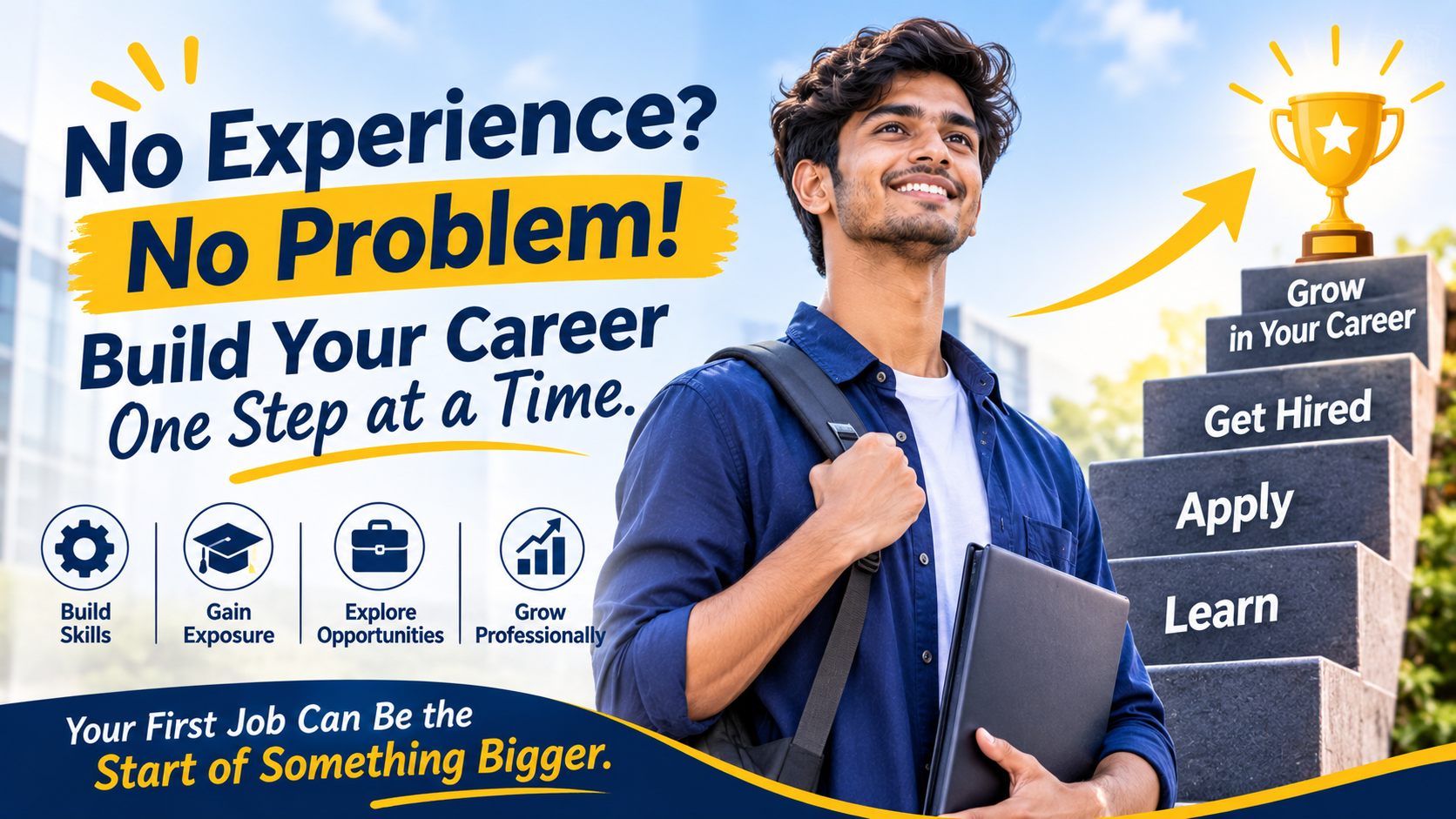
Completing your education is an important milestone. You have spent years studying, learning new concepts and preparing yourself for the professional world. But when it is finally time to find a job, one common challenge appears: employers are looking for experience.
For freshers, this can feel like a difficult situation. You need a job to gain experience, but getting that first job often seems to require experience already.
The good news is that professional experience is not the only thing employers consider. Your skills, practical knowledge, willingness to learn, communication and ability to take responsibility can also make a difference.
Building a career without previous work experience is possible. What matters is how you prepare yourself, identify suitable opportunities and make the most of the opportunities you receive.
Why Starting a Career Without Experience Is Difficult
The transition from education to employment can be challenging because academic learning and workplace responsibilities are not always the same.
You may understand a subject theoretically but have limited exposure to how it is used in a real working environment.
Some common challenges freshers face include:
- Limited practical exposure: You may not have worked with industry tools, equipment or professional processes.
- Strong competition: Many candidates apply for the same entry-level vacancies.
- Unclear career direction: You may not know which job roles match your qualifications and interests.
- Lack of professional networks: You may have limited connections with employers and industry professionals.
- Low confidence: Attending interviews and communicating with recruiters can feel unfamiliar.
These challenges are normal for someone beginning a career. Instead of treating the absence of experience as a permanent disadvantage, consider it an area where you can gradually build confidence and capability.
Understand That Experience Comes in Different Forms
One of the biggest mistakes freshers make is assuming that experience only means having worked in a full-time job.
In reality, there are several ways to demonstrate your abilities before entering formal employment.
Academic Projects: Projects completed during school, college, ITI or diploma courses can demonstrate your ability to understand and apply knowledge.
Internships: Internships provide exposure to professional environments and help candidates understand workplace expectations.
Apprenticeships: Apprenticeship programmes offer opportunities to develop practical skills through structured workplace training.
Vocational Training: Practical training in areas such as electrical work, machine operations, computer applications and manufacturing can help candidates develop job-related abilities.
Volunteer Activities: Participating in organised activities can demonstrate teamwork, responsibility and communication skills.
These experiences may not replace formal employment experience, but they can help employers understand what you are capable of doing.
Identify Your Strengths and Career Interests
Before applying for every available vacancy, spend some time understanding what kind of work suits you.
Your educational background, practical abilities, interests and preferred working environment can help you identify suitable career options.
For example:
| Background or Interest | Possible Career Areas |
|---|---|
| 10th or 12th pass | Retail, delivery, packaging, warehouse support |
| ITI qualification | Electrical, mechanical, maintenance, machine operations |
| Diploma | Production, quality assistance, technical operations |
| Graduate | Sales, customer support, administration, operations |
| Computer knowledge | Data entry, basic IT support, customer service |
These are indicative examples. Actual eligibility depends on the employer and specific vacancy.
You should also consider practical factors such as job location, working hours, salary expectations and willingness to relocate.
Choosing a direction makes your job search more focused and helps you prepare for relevant opportunities.
Develop Skills That Employers Value
You do not need to master everything before getting your first job. However, developing a combination of practical and professional skills can improve your readiness.
Some important skills include:
Communication Skills
Learn to introduce yourself, explain your qualifications, understand instructions and communicate respectfully with others.
Digital Literacy
Basic knowledge of smartphones, computers, email, online applications and commonly used digital tools can be useful across many industries.
Problem-Solving
Develop the ability to understand a problem, think through possible solutions and ask for help when required.
Teamwork
Most workplaces require employees to coordinate with others. Learn to cooperate, share information and respect different responsibilities.
Time Management
Understand how to organise tasks, follow schedules and complete assigned work within deadlines.
Technical Skills
Depending on your career interest, develop relevant practical knowledge such as machine handling, electrical basics, inventory management, computer applications or customer service.
Remember, skills improve through practice. You do not have to wait until you feel completely prepared before exploring entry-level opportunities.
Gain Practical Exposure Before Your First Job
If you have limited professional experience, look for opportunities to learn by doing.
Here are some ways to gain practical exposure:
Join an Internship or Apprenticeship: Look for opportunities that provide structured learning and exposure to actual workplace activities.
Take Short-Term Skill Courses: Choose training that is relevant to your intended career rather than collecting certificates without a clear purpose.
Work on Practical Projects: Apply what you have learned through small projects, assignments or demonstrations.
Visit Industry Events and Job Fairs: These can help you understand employer expectations and interact with recruiters.
Participate in Workshops: Workshops can provide opportunities to learn tools, techniques and practical processes.
For example, an ITI student interested in manufacturing can practise using relevant tools and understand basic safety procedures. A candidate interested in retail can develop customer interaction and billing skills.
The objective is to become familiar with the kind of work you want to pursue.
Create a Resume That Highlights Your Potential
A resume is often the first introduction an employer has to a candidate. Even without professional experience, you can create a resume that communicates your strengths.
Instead of leaving the experience section empty, focus on relevant information such as:
- Educational qualifications.
- Technical and practical skills.
- Academic or vocational projects.
- Internships and apprenticeships, if applicable.
- Certifications and training.
- Languages known.
- Relevant extracurricular activities.
Keep your resume simple, accurate and easy to read.
Avoid adding skills you cannot demonstrate or claiming work experience you do not have.
Your objective is to show employers that although you are new to the professional world, you have a foundation to learn and perform the responsibilities of the role.
Explore Entry-Level Opportunities
Your first job does not necessarily need to be your dream position. It should be an opportunity that helps you begin learning, earning and gaining workplace exposure.
Depending on your qualifications, you can explore roles such as:
- Production Associate
- Warehouse Associate
- Retail Assistant
- Customer Support Executive
- Sales Trainee
- Packaging Associate
- Delivery Executive
- Machine Operator Trainee
- Quality Control Assistant
- Data Entry Associate
When exploring vacancies, read the job description carefully. Understand the responsibilities, eligibility criteria, salary, location and working conditions before applying.
You can discover opportunities through company career pages, job fairs, campus placements, employment services and digital job platforms.
Do not restrict your search to one job title. Explore related roles that match your abilities and offer opportunities to learn.
Prepare for Your First Interview
As a fresher, you may not have previous employment stories to share. However, you can explain your education, practical training, projects and willingness to learn.
Prepare answers to common questions such as:
Tell me about yourself.
Introduce your educational background, relevant skills and career interests in a clear and concise way.
Why should we hire you without experience?
Explain your willingness to learn, your relevant knowledge and the strengths you can bring to the role.
What are your strengths?
Mention genuine strengths such as discipline, teamwork, adaptability, practical knowledge or communication.
Are you comfortable learning new tasks?
Share examples of how you have learned something new during your education or training.
Most importantly, be honest. Employers do not expect every fresher to know everything. They want to understand whether you are prepared to learn and take responsibility.
Turn Your First Job into a Long-Term Career
Getting your first job is an important achievement, but building a career requires continuous effort.
Once you enter the workplace, focus on developing good professional habits.
- Understand your responsibilities and workplace rules.
- Learn from experienced colleagues and supervisors.
- Ask questions when instructions are unclear.
- Complete assigned tasks responsibly.
- Take feedback positively.
- Improve your practical and technical skills.
- Look for opportunities to take on additional responsibilities.
Over time, the knowledge and experience you gain can help you explore new roles and greater responsibilities.
For example, a warehouse associate may develop skills in inventory management and eventually explore team coordination or supervisory opportunities. Similarly, a production associate may gain technical knowledge and move towards specialised operational roles.
Career progression is not automatic, but consistent learning and performance can help create opportunities for growth.
Conclusion: Your Career Begins with the First Step
Having no professional experience does not mean you have nothing to offer.
Your education, practical knowledge, personal strengths and willingness to learn are all valuable starting points. What matters is how you develop these qualities and use them to prepare for employment.
Start by identifying your strengths, learning relevant skills, gaining practical exposure and applying for suitable entry-level opportunities.
Do not wait until you feel completely ready. Every professional has a starting point, and your first opportunity can become the foundation for something bigger.
At Job Raahi, the focus is on connecting companies with candidates exploring frontline and mass hiring opportunities. For freshers and candidates with limited experience, digital job platforms can provide another channel to discover relevant openings and take the first step towards employment.
You do not need years of experience to begin building a career. You need the willingness to learn, the confidence to start and the determination to keep improving.