
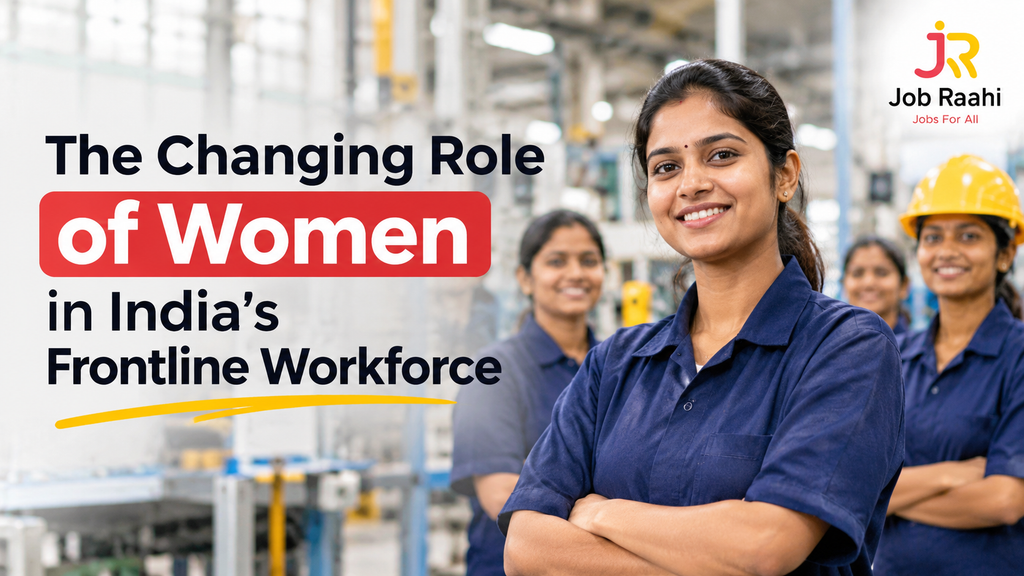
Women have always contributed to India’s economy, but their presence in organised employment and frontline industries is becoming increasingly visible. Across retail stores, manufacturing units, warehouses, logistics operations, hospitality and customer support, women are taking on responsibilities that were traditionally associated with male-dominated workplaces.
This change is not simply about increasing the number of women employees. It is also about creating opportunities for women to earn independently, develop professional skills, gain financial confidence and build long-term careers.
According to the Periodic Labour Force Survey (PLFS) Annual Report 2025, India’s female Labour Force Participation Rate for people aged 15 years and above stood at 40% in 2025. The Worker Population Ratio for women was 38.8%. These figures indicate growing participation, while also highlighting the importance of improving access to secure and sustainable employment.
The next step is to ensure that women can enter different industries, work in supportive environments and progress into positions with greater responsibility.
Growing Opportunities Across Frontline Industries
Frontline employment is no longer limited to a small number of traditional occupations. Businesses across industries need employees for operational, technical, customer-facing and support functions. This creates opportunities for women with different educational backgrounds and interests.
A. Manufacturing and Production
Manufacturing offers opportunities in assembly, packaging, quality inspection, machine operations, production support and process monitoring.
Women are increasingly visible in electronics and mobile phone manufacturing, where attention to detail, technical training and process knowledge are important.
With suitable training and workplace support, women can also explore technical roles and supervisory responsibilities.
B. Retail and Customer Support
These roles allow women to develop communication, organisation, problem-solving and customer-handling skills. Experience in these positions can also create pathways towards team leadership and store management.
C. Logistics and Warehousing
The growth of e-commerce and organised supply chains has increased the need for employees in warehouse operations, inventory tracking, packaging, scanning, order processing and dispatch coordination.
Technology-enabled warehouse systems are also creating opportunities that require digital familiarity and operational accuracy.
Employers should assess candidates based on the actual physical and technical requirements of each role rather than making assumptions about suitability based on gender.
D. Hospitality and Facility Operations
These positions can provide practical experience in service management, teamwork and workplace operations.
E. Field Operations and Service Roles
Women can also explore opportunities in field sales, customer assistance, service coordination, business support and other field-based roles.
Clear job descriptions, suitable travel arrangements and appropriate safety measures are particularly important for these positions.
What Is Still Holding Women Back?
Despite expanding opportunities, entering and remaining in the workforce can be challenging for many women.
Limited mobility: Some women may have fewer opportunities to travel long distances or relocate because of transport availability, family responsibilities or safety concerns.
Unclear working conditions: Information about shifts, weekly offs, salary, job responsibilities and workplace facilities is not always communicated clearly before joining.
Caregiving responsibilities: Household and childcare responsibilities can make it difficult to manage fixed or inflexible working hours.
Workplace bias: Assumptions about physical ability, availability or family commitments can influence hiring decisions and career progression.
Limited growth opportunities: Women may enter an organisation but receive fewer opportunities for technical training, promotions or leadership responsibilities.
The PLFS 2025 report also highlights the importance of caregiving constraints: 44.4% of women outside the labour force cited childcare or personal commitments related to home-making as their main reason for not being in the labour force. This underlines why workplace flexibility and childcare support matter.
Workplace Facilities That Make a Difference
Recruiting women is only the beginning. Employers must create working conditions that make it practical for women to continue their employment.
Important facilities and arrangements include:
- Clean and accessible washrooms: Separate, hygienic and conveniently located facilities help maintain comfort and dignity.
- Safe transportation: Reliable pick-up and drop arrangements are especially important for late or early shifts.
- Appropriate changing and rest areas: These are useful in manufacturing, warehouses and other operational workplaces.
- Childcare support: Accessible crèche facilities can help employees manage work and childcare responsibilities.
- Health and first-aid facilities: Employees should have access to basic medical support and emergency assistance.
- Fair shift arrangements: Working hours should be communicated clearly, with applicable legal requirements followed.
- Supportive supervisors: Managers should be trained to handle concerns respectfully and ensure equal treatment.
Facilities should not be treated as optional benefits or special privileges. They are an important part of building a workplace where employees can perform effectively.
Safety: Building Workplaces Where Women Feel Secure
Workplace safety is one of the most important factors influencing women’s employment decisions.
For women working in factories, warehouses, retail stores and field operations, safety involves more than preventing physical accidents. It also includes protection from harassment, safe transportation, emergency support and respectful treatment.
Employers should focus on:
- Providing adequate lighting in work areas, entrances, exits and common passages.
- Maintaining clear procedures for reporting harassment and misconduct.
- Ensuring that employees know whom to contact during an emergency.
- Providing appropriate safety equipment and role-specific training.
- Establishing reliable transport and security arrangements where required.
- Conducting regular safety checks and addressing employee concerns promptly.
India’s workplace framework includes the Sexual Harassment of Women at Workplace (Prevention, Prohibition and Redressal) Act, 2013, commonly known as the POSH Act. Employers must understand and comply with the applicable requirements.
The Occupational Safety, Health and Working Conditions (Central) Rules, 2026 also prescribe safeguards for women working night shifts or outside the specified daytime hours in establishments covered by those rules. These include written consent, safe transport, well-lit access to facilities, emergency contact information and compliance with applicable workplace harassment provisions.
A safe workplace is not created by policies alone. Employees must be able to see that those policies are implemented in everyday operations.
Career Development: Moving Beyond Entry-Level Roles
For example, a woman who starts as a production associate may develop the skills required for quality inspection, machine operations or team supervision.
Similarly, an employee working as a retail associate may progress towards inventory coordination, store operations or department management.
Employers can support this growth through:
- Practical, role-specific training.
- Digital and technical skill development.
- Opportunities to learn new responsibilities.
- Transparent promotion criteria.
- Mentorship and supervisor support.
- Equal access to leadership and skill-development programmes.
Career progression becomes more achievable when employees are evaluated on their performance, skills and potential rather than gender-based assumptions.
What Employers Can Do to Encourage Women’s Participation
Businesses that want to build a more inclusive frontline workforce need to examine the entire employee journey—from recruitment to career development.
Some practical steps include:
Write inclusive job descriptions: Focus on actual responsibilities and required skills. Avoid unnecessary gender-based assumptions.
Communicate job conditions clearly: Explain salary, shift timings, location, transport, physical requirements and workplace facilities before hiring.
Make recruitment accessible: Reach candidates through local communities, educational institutions, digital platforms and skill-development networks.
Train supervisors: Encourage respectful communication, fair task allocation and equal treatment.
Measure workplace experience: Review hiring, joining, retention, training and promotion data to identify gaps.
Create growth opportunities: Ensure women have access to technical training, higher responsibilities and supervisory positions.
An inclusive workforce is not built by recruitment numbers alone. It requires consistent support throughout employment.
How Digital Job Platforms Can Improve Access
Finding suitable employment can be difficult when job information is scattered across different sources. Digital job platforms can make it easier for women to discover opportunities across industries, locations and experience levels.
For employers, digital platforms can provide an additional channel to reach candidates from different backgrounds and expand their frontline talent pool.
The larger goal is to make job information easier to access and help more candidates explore opportunities based on their skills and interests.
Conclusion
The changing role of women in India’s frontline workforce reflects an important shift in the country’s employment landscape. Women are increasingly exploring opportunities across manufacturing, logistics, retail, hospitality, customer support and other operational functions.
However, meaningful participation requires more than job availability. Safe transportation, suitable facilities, respectful workplaces, fair recruitment practices and opportunities for career development are equally important.
When businesses invest in these areas, they do more than create employment opportunities. They build stronger teams, improve workplace inclusion and allow more women to participate in India’s economic growth.
The future of India’s frontline workforce should not be defined by traditional assumptions about who can perform a particular job. It should be shaped by skills, opportunity, equal treatment and the freedom to grow.