Your first job doesn’t have to be your final career. For many freshers, getting the first opportunity is the hardest part. You may not have experience. You may not have a strong resume and you may find that many office jobs ask for skills that you haven’t had the chance to develop yet.
That’s where blue collar, grey collar and frontline jobs can provide a starting point. A first job can give you something that a fresher often needs most: A Real work experience.
A blue-collar job is often associated with hands-on work and rightly so. But working in a factory, warehouse, logistics operation, delivery network, technical service or other frontline environment can also expose you to how businesses actually operate.
You may learn:
How teams work together
How customers are handled
How orders are processed
How inventory moves
How workplace targets work
How supervisors manage teams
How to follow standard processes
How to use workplace technology
How to solve day-to-day problems
These experiences can become useful as your responsibilities grow.
Skills Can Change Your Career Direction
Say someone starts working as a warehouse associate.
At first, their responsibilities may be focused on receiving, picking, packing or dispatching goods. Over time, they may become familiar with:
With the right experience and additional skills, that person may eventually explore roles involving more coordination, administration or operations management.
The same principle can apply across other industries. A delivery professional may develop an interest in logistics. A machine operator may develop technical expertise. A field sales executive may move towards sales coordination or business development. A technician may take on supervisory responsibilities.
There is no single career path, and progression is not automatic. It depends on the worker’s skills, experience, qualifications and available opportunities.
And the distinction between hands-on work and technology is becoming less clear.
Modern frontline and blue-collar workers may use scanners, digital platforms, machinery, tracking systems and other technologies as part of their everyday work. Research and industry reporting have also highlighted increasing technology and AI-related upskilling among blue collar workers.
So, starting in a frontline job doesn’t mean you have stopped learning.
It can be the beginning of learning.
A Possible Career Journey
There is no guaranteed formula, but career progression can sometimes look like this:
Fresher → Entry-Level Job → Skill Development → Experienced Worker → Senior Role → Supervisory/Coordination Role
Field Sales Executive → Senior Sales Executive → Business Development → Sales Operations
Or:
Machine Operator → Senior Operator → Production Supervisor
The exact path depends on the industry and the individual.
Start Where You Can, Keep Building from there. If you’re a fresher struggling to get your first office job, don’t automatically consider every blue collar or frontline opportunity as a dead end.
Look at what the job can teach you.
Ask yourself:
What skills will I gain?
Will I get practical industry experience?
Can I learn something new while working?
Can I take on more responsibility over time?
Those questions can help you think about your career beyond your first job title.
Find Blue Collar and Grey Collar Opportunities with Job Raahi
Job Raahi is a digital job portal specializing in blue collar, grey collar and frontline jobs.
The platform is built to help job seekers discover relevant employment opportunities and help employers connect with skilled and frontline talent.
For freshers, skilled workers and people looking for their next opportunity, the goal is simple:
Find a job. Build skills. Gain experience. Keep moving forward.
Your first job doesn’t have to define your entire career. It can simply be where your career begins.
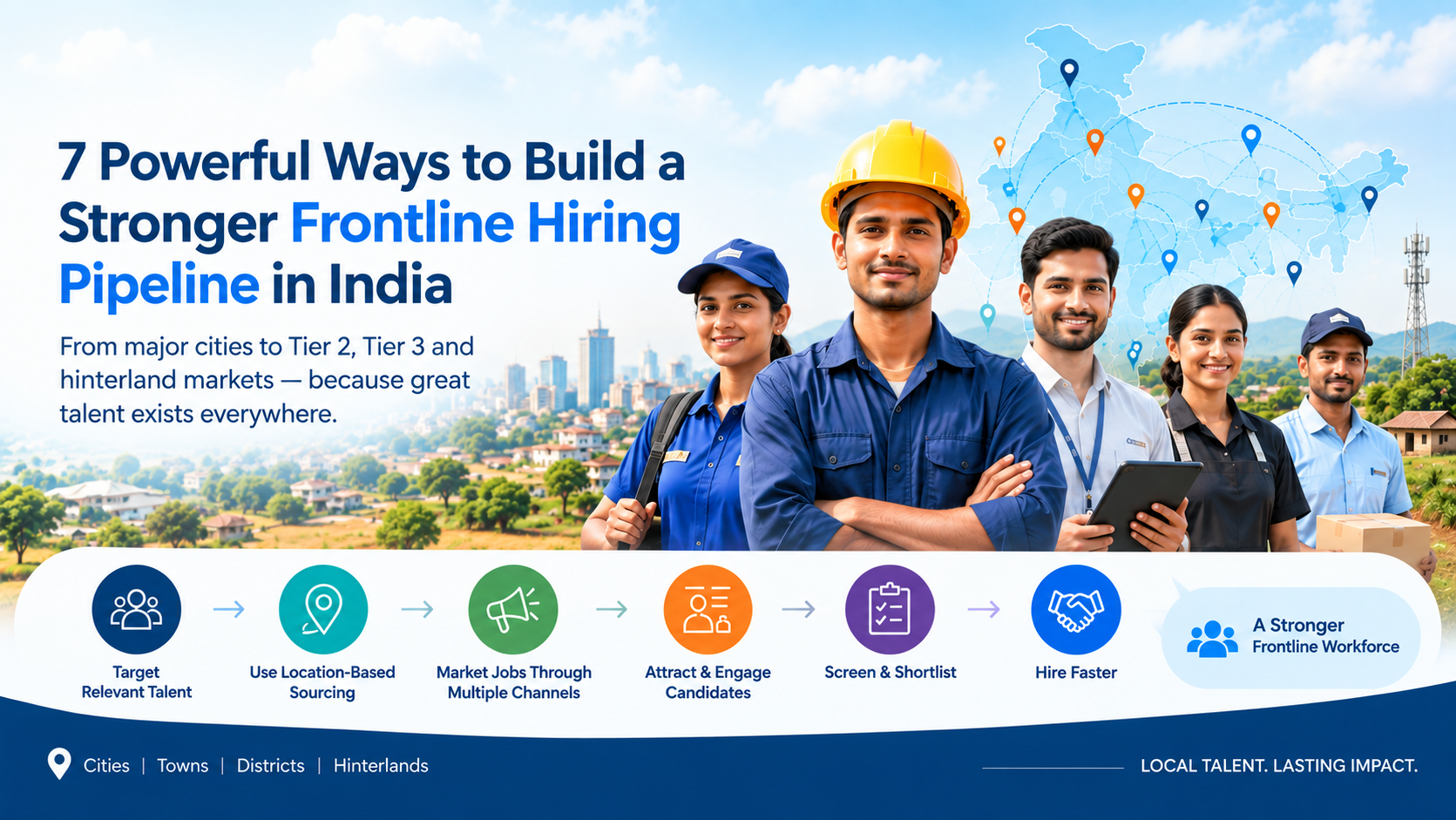
For years, hiring frontline employees followed a familiar process.
A vacancy opened.
The recruiter created a job description.
The job was posted on a portal.
Applications came in.
Candidates were screened.
And once the position was filled, the process was considered complete.
But for companies hiring frontline employees at scale, this model is becoming increasingly difficult to sustain.
When a business needs technicians, operators, field executives, sales representatives, customer service associates, warehouse employees, or other frontline workers across multiple locations, hiring cannot always begin from zero every time a vacancy opens.
The future of frontline hiring is moving towards something more continuous:
Building a Talent Pipeline Instead of Filling a Vacancy
A job vacancy is temporary.
A talent pipeline is ongoing.
This is an important distinction for companies with recurring or high-volume hiring requirements.
Instead of asking:
“Where can we find candidates for this vacancy?”
companies can start asking:
“Where are the candidates we may need for this role, location and skill set?”
This shift can fundamentally change how frontline recruitment is managed.
For many frontline jobs, location is not a secondary detail.
It can be one of the most important recruitment filters.
A candidate may be perfectly qualified for a role but may not want to relocate 300 kilometres away.
Another candidate with similar qualifications may already live 15 kilometres from the workplace.
For frontline recruitment, the second candidate can represent a much more relevant talent opportunity.
This is why location-based talent pools can become an important part of workforce planning.
Instead of asking only:
“Who can do this job?”
employers also need to ask:
“Who can do this job here?”
The Opportunity Beyond Major Cities
India’s frontline workforce is not concentrated only in major metropolitan cities.
Talent exists across:
Tier 2 cities
Tier 3 cities
Industrial towns
District headquarters
Semi-urban markets
Small towns
Hinterland locations
For employers, these markets represent a significant opportunity.
However, reaching candidates outside traditional employment hubs requires a different recruitment approach.
A vacancy posted in a large city may naturally attract applicants who are already familiar with that employment market.
A vacancy in a smaller town or district may require active candidate outreach.
This is where digital recruitment platforms can play a larger role.
From Job Posting to Job Marketing
A traditional job portal largely relies on candidate discovery.
The candidate searches.
The candidate finds the vacancy.
The candidate applies.
But what happens when the right candidate isn’t actively searching?
The job can remain invisible to them.
This is why Job Raahi’s approach goes beyond simply publishing jobs.
We Don’t Just List Your Jobs. We Market Them.
Depending on the requirement, job opportunities can be amplified through:
WhatsApp
RCS Business Messaging
SMS
Email campaigns
AI-powered calling
Candidate database outreach
Geographic targeting
Candidate-segment campaigns
The objective is to actively take relevant opportunities to relevant candidates.
For high-volume frontline hiring, this distinction can be significant.
Building a Pipeline Before the Hiring Requirement Becomes Urgent
The most useful candidate pipeline is one that exists before the vacancy becomes urgent.
Suppose an organization frequently hires machine operators in a particular industrial cluster.
Instead of beginning sourcing only after a vacancy opens, the organization can continuously build awareness and candidate pools around those roles.
Similarly, a telecom organization can maintain candidate pools for technicians and field employees across specific markets.
A retail company can build local pools of sales and store employees.
A logistics company can build location-based pools for warehouse and delivery roles.
The industry changes.
The underlying recruitment model remains similar.
One Pipeline Can Serve Multiple Hiring Cycles
Another advantage of building a structured talent pipeline is that candidate relevance does not necessarily disappear when one vacancy closes.
Consider a candidate who applies for a technician role but isn’t selected because the position has already been filled.
That candidate may still be relevant for:
Another location
A future vacancy
A similar role
A different business unit
A subsequent hiring cycle
With an organized talent pipeline, candidates can potentially remain discoverable for future opportunities, subject to their preferences and availability.
This turns recruitment from a one-time transaction into an ongoing relationship.
What This Means for Recruiters
A pipeline-first recruitment model does not eliminate recruiters.
It changes where recruiters spend their time.
Instead of constantly searching for candidates from scratch, recruitment teams can spend more time on:
Candidate engagement
Screening
Assessment
Interview coordination
Offer management
Joining conversion
Workforce planning
The technology handles more of the repetitive discovery and outreach process.
The recruiter remains central to the decision-making and candidate experience.
What This Means for Employers
For employers, the goal is not simply to have a larger database.
A large database is useful only when the relevant candidates can be identified and reached.
A useful frontline talent pipeline should answer questions such as:
Where are our candidates?
What roles are they relevant for?
What skills do they have?
Which locations can they work in?
Are they actively looking?
How quickly can they join?
The more structured the pipeline, the easier it becomes to activate it when demand appears.
Job Raahi’s Role in the Frontline Hiring Ecosystem
Job Raahi is building around this broader opportunity.
The platform focuses on frontline, entry-level, blue-collar, grey-collar, industrial and high-volume hiring.
The objective is to help employers move from:
Posting jobs
to:
Building access to relevant candidate pools.
And from:
Searching only when a vacancy opens
to:
Creating continuous candidate pipelines.
This approach becomes especially valuable when hiring is distributed across multiple locations.
The Future of Frontline Recruitment in India
The next evolution of frontline recruitment may not be about having another place to post a vacancy.
It may be about creating a more connected hiring ecosystem.
One where:
Employers know where their talent pools are.
Candidates know where relevant opportunities are.
Recruiters can activate pipelines when requirements arise.
Technology can take jobs to candidates instead of waiting for candidates to find jobs.
And importantly:
Hiring can become continuous rather than reactive.
India has a massive frontline workforce.
The challenge is connecting that workforce with the right opportunities efficiently.
The opportunity for recruitment technology is to make that connection easier, faster, and more localized.
From Vacancy Filling to Workforce Readiness
The fundamental shift is simple.
A vacancy is a requirement.
A candidate pipeline is an asset.
For companies with recurring frontline hiring requirements, building that asset can make recruitment more proactive and scalable.
At Job Raahi, we believe the future of frontline hiring lies in making candidate access continuous — across industries, locations, cities, towns and India’s hinterlands.
Because the best time to build your frontline talent pipeline isn’t when the vacancy becomes urgent.
It’s before you need it.
Frequently Asked Questions
What is a frontline talent pipeline?
A frontline talent pipeline is an ongoing pool of potential candidates organized around roles, skills, locations and availability for current and future hiring requirements.
Why is a talent pipeline important for frontline hiring?
Frontline hiring is often recurring, location-specific and high volume. A talent pipeline can help employers avoid starting the sourcing process from scratch for every new vacancy.
How is a talent pipeline different from a job posting?
A job posting communicates a specific vacancy. A talent pipeline provides ongoing access to potential candidates who may be relevant for current or future vacancies.
What industries can benefit from frontline talent pipelines?
Manufacturing, telecom, logistics, retail, infrastructure, healthcare, hospitality, BFSI and other industries with recurring frontline workforce requirements can benefit from structured candidate pipelines.
How can Job Raahi help employers build frontline talent pipelines?
Job Raahi combines job posting with candidate outreach and digital recruitment channels such as WhatsApp, RCS, SMS, email, AI-powered calling and geographic candidate targeting.
Can frontline talent pipelines be built for smaller cities and towns?
Yes. Location-specific candidate sourcing can help employers build talent pools across Tier 2 and Tier 3 cities, industrial towns, districts and hinterland markets.
Build Your Frontline Hiring Pipeline With Job Raahi
If your organization regularly hires frontline employees across multiple locations, Job Raahi can help you explore a more proactive approach to candidate sourcing.
Don’t wait for the next vacancy to start searching. Build the pipeline before you need it.
Job Raahi — We Don’t Just List Your Jobs. We Market Them.
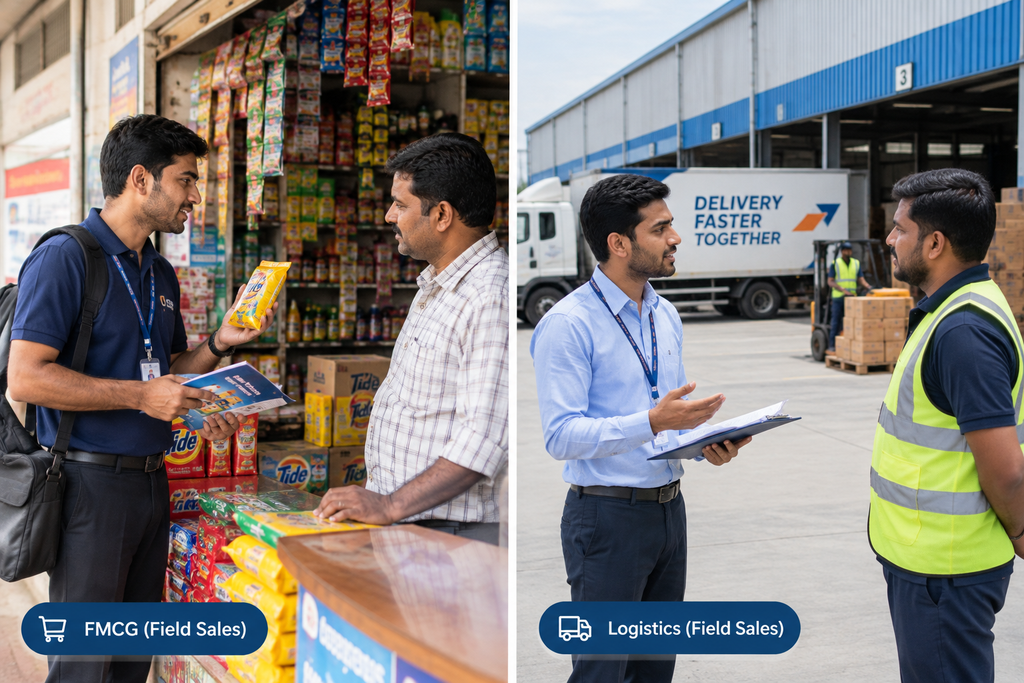
When people hear the word sales, they often imagine someone going door to door or sitting in an office and making phone calls. But the large part of Sales happens outside the office.
How Frontline Sales can be build real career skills?
A field sales executive might spend the day visiting customers, understanding their requirements, explaining a product, following up with the prospects and building relationship. That makes a field sales one of the many important frontline jobs in India. And while the field sales can be challenging, it can also teach skills that stay useful throughout a person’s career.
Frontline workforce includes people who directly interacts with customers, operate business processes or deliver products and services. This can include:
Field Sales executives
Delivery Executives
Retail Employees
Warehouse Workers
Technicians
Drivers
Manufacturing Workers
Field Sales Professionals.
Recent workforce research describes frontline employees as the people working across areas such as retail, factories, warehouses and customer service — roles that keep day-to-day operations moving.
What Does a Field Sales Executive Actually Do?
A sales professional job is not simply about selling something. A typical field sales executive may have to:
Find and contact potential customers
Visit customers
Understand their requirements
Explain products or services
Handle questions and objections
Negotiate with customers
Follow up regularly
Maintain customer information
Coordinate with internal teams
Work towards sales targets
Every customer interaction is different. That means a sales executive gets practical experience that cannot always be learned from a classroom.
The Skills You Build in Sales
One of the biggest advantages of a frontline sales job is the range of skills you develop.
Communication
You learn how to explain an idea clearly to different types of customers.
Customer Handling
Not every customer will be interested. Learning how to listen, respond to objections and maintain a professional conversation is an important skill.
Negotiation
Customers may question pricing, features or value. Handling these conversations teaches you how to negotiate and communicate value.
Time Management
A customer facing executive may have several meetings or visits in one day. Planning the day properly becomes an important part of the job.
Problem Solving
Customers don’t always give you a straightforward requirement. You often have to understand the actual problem and find a suitable solution.
Field Sales Can Be a Starting Point, Not the Final Destination
A person’s first job does not necessarily determine their entire career. Someone who starts as a field sales executive can gradually develop experience in areas such as:
Field Sales → Senior Sales Executive → Business Development → Key Account Management
The actual career path depends on the person’s experience, performance, education, skills and the opportunities available to them.
The important point is that frontline work can help build transferable skills.
Why Digital Job Discovery Matters
Finding suitable frontline jobs can sometimes be difficult. Many workers traditionally depend on personal contacts, local references or word-of-mouth to discover opportunities.
Digital job platforms are creating another way for workers to discover jobs and present their skills to potential employers.
Find Frontline and Field Sales Opportunities with Job Raahi
Job Raahi is a digital job portal specializing in blue collar, grey collar and frontline employment.
The platform connects job seekers with employment opportunities across different frontline and skilled-work categories. For someone looking for a field sales job, sales executive job, logistics job, delivery job, manufacturing job or other frontline opportunity, having access to relevant vacancies can make the job search more organized.
Your First Job Can Teach You More Than You Expect
A frontline job can teach you how to communicate with people, handle pressure, solve problems and take responsibility. These skills can remain useful even when your career direction changes later.
So, if you’re starting your career and considering a field sales job, don’t look at it only as a job title.
Look at the skills you can build along the way. Every customer conversation, every visit and every problem you solve can become part of your professional experience.
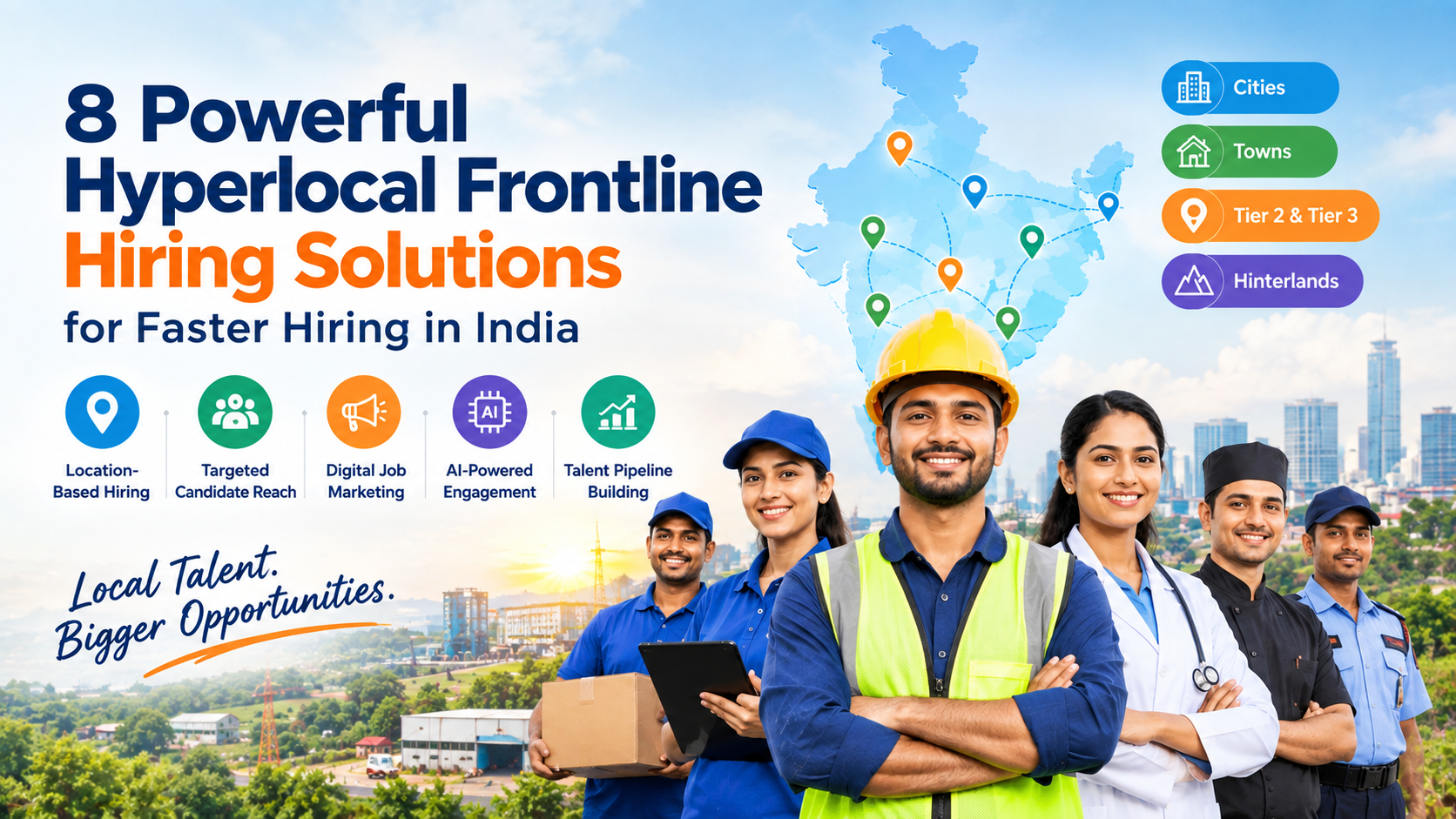
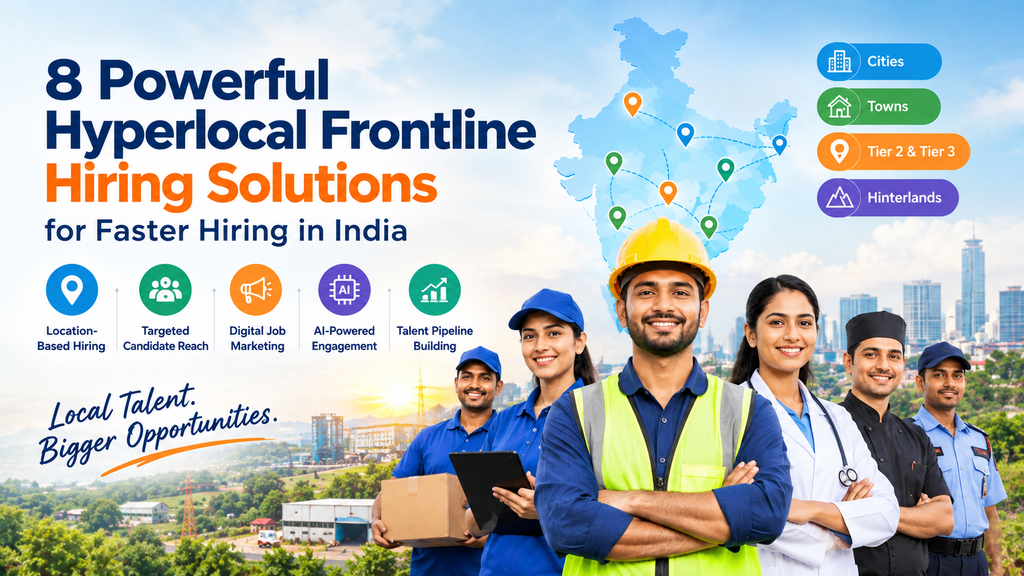
Hyperlocal frontline hiring is becoming increasingly important for companies that need to hire frontline employees across India’s cities, towns, industrial clusters, Tier 2 cities, Tier 3 cities and hinterland markets.
For employers, the challenge is no longer simply finding candidates.
The real challenge is finding the right frontline candidates in the right location at the right time and at the required scale.
A telecom company may need field technicians across multiple districts. A manufacturing company may need machine operators near an industrial cluster. A retail company may need customer service associates across several towns. A financial services company may need field executives in smaller cities.
These are not simply job-posting requirements.
They are hyperlocal frontline hiring requirements.
And solving them requires a recruitment approach that combines local candidate discovery, candidate segmentation, digital job marketing, multi-channel outreach and continuous frontline talent pipeline building.
That is where Job Raahi comes in.
What Is Hyperlocal Frontline Hiring?
Hyperlocal frontline hiring is the process of finding, reaching and engaging frontline candidates within specific geographic markets where the jobs are actually located.
Instead of treating India as one large candidate pool, hyperlocal recruitment looks at individual:
Cities
Towns
Districts
Pin codes
Industrial clusters
Commuting zones
Tier 2 cities
Tier 3 cities
Semi-urban markets
Hinterland locations
This approach is particularly relevant for frontline hiring in India because many frontline roles are closely connected to geography.
A candidate may have the right qualification and experience but may not want to relocate.
Another candidate with similar qualifications may already live close to the workplace.
For frontline recruitment, that proximity can be extremely valuable.
The basic principle of hyperlocal frontline hiring is therefore:
Right Role + Right Location + Right Candidate = Stronger Hiring Pipeline
Why India Needs Better Hyperlocal Hiring Solutions
India’s workforce is spread across a highly diverse geographic and economic landscape.
Employment opportunities are not concentrated only in India’s largest metropolitan cities.
Candidates live and work across:
Tier 1 cities
Tier 2 cities
Tier 3 cities
Industrial towns
District headquarters
Small towns
Semi-urban markets
Rural areas
Hinterlands
This creates a significant opportunity for employers.
However, it also creates a recruitment challenge.
A company hiring in Delhi does not necessarily face the same talent-access challenge as a company hiring in a smaller industrial town.
Similarly, hiring 500 frontline employees across 50 locations is fundamentally different from hiring 500 employees in one city.
This is why hyperlocal recruitment needs to become part of the frontline hiring strategy.
The Government of India’s Periodic Labour Force Survey (PLFS) provides extensive labour-market information covering rural and urban India and is an important source for understanding India’s employment landscape.
Reach candidates around the locations where jobs exist.
Candidate Segmentation
Organize candidates according to role, skill, location and availability.
Multi-Channel Outreach
Use WhatsApp, RCS, SMS, email campaigns and other digital outreach channels.
Digital Job Marketing
Actively promote job opportunities instead of relying entirely on passive discovery.
AI-Powered Engagement
Support candidate communication and initial engagement at scale.
Frontline Talent Pipeline Building
Create candidate pools that can support recurring hiring requirements.
High-Volume Recruitment
Support employers managing multiple frontline vacancies across different markets.
Continuous Hiring
Move from one-time vacancy filling towards an ongoing talent acquisition engine.
Frequently Asked Questions About Hyperlocal Frontline Hiring
What is hyperlocal frontline hiring?
Hyperlocal frontline hiring is the process of finding and engaging frontline candidates within specific geographic markets where the jobs are located.
Why is hyperlocal hiring important for frontline jobs?
Many frontline jobs are location-dependent. Accessing candidates who live near the workplace can create a more relevant local candidate pool.
What is the difference between hyperlocal hiring and traditional recruitment?
Traditional recruitment may treat a large geographic area as one candidate market. Hyperlocal hiring breaks recruitment into specific cities, towns, districts, industrial clusters or other local markets.
Can Job Raahi support bulk frontline hiring?
Yes. Job Raahi is designed around frontline, entry-level, blue-collar, grey-collar, industrial and high-volume hiring requirements.
Which industries can use hyperlocal frontline hiring?
Telecom, manufacturing, retail, logistics, infrastructure, healthcare, hospitality, BFSI and other industries with distributed frontline workforces can use hyperlocal recruitment strategies.
How does Job Raahi reach frontline candidates?
Job Raahi can use job postings, WhatsApp, RCS Business Messaging, SMS, email campaigns, digital outreach, candidate databases and AI-powered calling to amplify job opportunities.
Can hyperlocal hiring work in Tier 2 and Tier 3 cities?
Yes. Hyperlocal recruitment is particularly relevant for employers looking to build candidate pipelines beyond India’s major metropolitan employment hubs.
What is a frontline talent pipeline?
A frontline talent pipeline is an organized pool of potential candidates segmented by factors such as location, role, skills, experience and availability for current and future hiring requirements.
Build Your Hyperlocal Frontline Hiring Pipeline With Job Raahi
Your next frontline hiring requirement shouldn’t have to start from zero.
Whether you need:
Technicians in a district
Machine operators in an industrial cluster
Sales employees across multiple cities
Customer service associates in Tier 2 markets
Field executives across North India
or frontline employees across hundreds of locations, the recruitment challenge is often the same:
Find the right candidate.
In the right location.
At the right time.
At the required scale.
Job Raahi brings together hyperlocal candidate reach, digital job marketing, candidate segmentation, multi-channel outreach, AI-powered engagement and continuous frontline talent pipeline building to help employers create a more scalable frontline recruitment process.
Don’t just post your frontline jobs.
Build the pipeline behind them.
Job Raahi — We Don’t Just List Your Jobs. We Market Them.
Further Reading
For additional context on India’s labour market, employment and workforce development:
Blue Collar Jobs are the backbone of any economy, providing essential services and products to the masses. Furthermore, the demand for skilled blue-collar workers is on the rise, making it an exciting time for job seekers in this sector. Additionally, with the advent of online job search platforms, finding Blue Collar Jobs has become easier than ever.
Moreover, online job search platforms have made it possible for job seekers to explore various Blue Collar Jobs from the comfort of their own homes. Consequently, this has increased the chances of finding the right job, as job seekers can now browse through numerous job openings and apply to the ones that suit their skills and interests. For instance, the Job Raahi Blog provides valuable insights and tips on how to create a effective resume and cover letter.
Creating a Profile and Applying for Blue Collar Jobs
Additionally, creating a profile on online job search platforms is a straightforward process, requiring basic information such as name, contact details, and work experience. Therefore, job seekers can easily create a profile and start applying for Blue Collar Jobs that match their skills and qualifications. However, it is essential to ensure that the profile is complete and up-to-date, as this will increase the chances of getting noticed by potential employers.
Tips for Creating a Effective Profile
Furthermore, here are some tips for creating a effective profile:
* Use a clear and concise headline that highlights your skills and experience
* Use keywords related to your job search to increase visibility
* Include a professional profile picture and cover photo
* Make sure your contact information is accurate and up-to-date
Blue Collar Job Openings and Career Opportunities
Moreover, Blue Collar Jobs offer a wide range of career opportunities, from factory workers and warehouse workers to drivers, electricians, fitters, welders, and machine operators. Consequently, job seekers can explore various job openings and find the one that suits their skills and interests. For example, the Job Raahi platform provides a wide range of Blue Collar Jobs in various industries, including manufacturing, logistics, and construction.
Types of Blue Collar Jobs
Additionally, here are some types of Blue Collar Jobs:
* Factory workers
* Warehouse workers
* Drivers
* Electricians
* Fitters
* Welders
* Machine operators
Blue Collar Recruitment and Hiring Process
Blue Collar Jobs recruitment and hiring process typically involves a series of steps, including screening, interviewing, and training. Furthermore, the hiring process may vary depending on the company and the type of job. However, with the help of online job search platforms, job seekers can now easily find and apply for Blue Collar Jobs, and also get tips and advice on how to prepare for the hiring process. For instance, the download Job Raahi app provides a range of resources and tools to help job seekers prepare for the hiring process.
Preparing for the Hiring Process
Consequently, here are some tips for preparing for the hiring process:
* Research the company and the job requirements
* Practice your interview skills and prepare answers to common interview questions
* Make sure your resume and cover letter are up-to-date and tailored to the job
* Be prepared to ask questions during the interview
Job Title
Industry
Location
Salary
Factory Worker
Manufacturing
Mumbai
15000
Warehouse Worker
Logistics
Delhi
12000
Driver
Transportation
Bangalore
18000
Electrician
Construction
Chennai
20000
Conclusion
In conclusion, finding Blue Collar Jobs has become easier than ever, thanks to online job search platforms. Moreover, with the right skills and qualifications, job seekers can explore various career opportunities and find their dream job. Therefore, we encourage all job seekers to download Job Raahi app and start their job search journey today.
Blue Collar Skills are essential for individuals seeking to excel in their careers, particularly in the Indian job market. Furthermore, acquiring the right Blue Collar Skills can significantly enhance one’s prospects of landing a well-paying job. Additionally, it is crucial for blue collar job seekers to stay updated with the latest industry trends and requirements.
For instance, skills such as electrical work, plumbing, and carpentry are in high demand, and having these skills can open up numerous job opportunities. Moreover, the Indian government has launched various initiatives to promote Blue Collar Skills, including the National Career Service and the Ministry of Skill Development. Consequently, it is essential for blue collar job seekers to take advantage of these initiatives and acquire the necessary skills.
Key Areas of Focus
However, it is crucial to identify the key areas of focus when it comes to acquiring Blue Collar Skills. For example, some of the key areas include:
Technical skills
Soft skills
Problem-solving skills
Communication skills
Blue Collar Skills and Career Prospects
Therefore, acquiring Blue Collar Skills can significantly enhance one’s career prospects. Additionally, having the right skills can lead to better job opportunities, higher salaries, and greater job satisfaction. Furthermore, blue collar job seekers can visit the Job Raahi Blog to stay updated with the latest industry trends and requirements.
Benefits of Blue Collar Skills
Moreover, there are numerous benefits of acquiring Blue Collar Skills, including:
Improved job prospects
Higher salaries
Greater job satisfaction
Opportunities for career advancement
Types of Blue Collar Jobs
However, there are various types of blue collar jobs available, including:
Job Title
Job Description
Required Skills
Electrician
Installing and maintaining electrical systems
Electrical work, problem-solving skills
Welder
Joining metal parts together using heat and pressure
Welding skills, safety protocols
Machine Operator
Operating and maintaining machinery and equipment
Technical skills, problem-solving skills
Driver
Transporting goods and people from one place to another
Driving skills, navigation skills
Industry Requirements
Consequently, it is essential to understand the industry requirements and acquire the necessary Blue Collar Skills. For instance, the manufacturing industry requires skills such as machine operation, welding, and quality control. Moreover, the logistics industry requires skills such as driving, navigation, and warehouse management.
Benefits of Acquiring Blue Collar Skills
Additionally, acquiring Blue Collar Skills can lead to numerous benefits, including:
Improved job security
Opportunities for career advancement
Higher salaries
Greater job satisfaction
Furthermore, blue collar job seekers can visit the Job Raahi website to search for job opportunities and acquire the necessary skills.
Blue Collar Skills and Industry Requirements with Blue Collar Skills
However, it is crucial to understand the industry requirements and acquire the necessary Blue Collar Skills. For example, the construction industry requires skills such as carpentry, masonry, and electrical work. Moreover, the automotive industry requires skills such as vehicle repair, maintenance, and welding. Consequently, blue collar job seekers can download Job Raahi app to stay updated with the latest industry trends and requirements.
Conclusion
In conclusion, acquiring Blue Collar Skills is essential for blue collar job seekers to enhance their career prospects. Therefore, it is crucial to identify the key areas of focus and acquire the necessary skills. Moreover, blue collar job seekers can visit the Job Raahi Blog to stay updated with the latest industry trends and requirements. Consequently, we encourage all blue collar job seekers to download Job Raahi app and acquire the necessary Blue Collar Skills to succeed in their careers.
Blue Collar Workers are the backbone of India’s economy, and their career prospects are diverse and exciting. Furthermore, the Indian job market is witnessing a significant surge in demand for skilled and unskilled workers. Consequently, Blue Collar Workers have numerous opportunities to explore various sectors and industries. Additionally, with the right training and skills, they can secure better-paying jobs and improve their standard of living.
Moreover, the Indian government has launched several initiatives to promote vocational training and skill development among Blue Collar Workers. For instance, the Ministry of Skill Development offers various programs to enhance the skills of Blue Collar Workers. Therefore, it is essential for Blue Collar Workers to stay updated about the latest trends and opportunities in the job market.
Blue Collar Workers Career Prospects
However, Blue Collar Workers often face challenges in finding the right job opportunities. Consequently, they must be proactive in seeking out career prospects and exploring various sectors. Additionally, they can visit the Job Raahi Blog to stay informed about the latest job market trends and career advice. Some of the key sectors for Blue Collar Workers include:
Manufacturing and production
Construction and infrastructure
Logistics and transportation
Healthcare and hospitality
IT and technology
Benefits of Blue Collar Workers Career
Moreover, a career as a Blue Collar Worker offers numerous benefits, including job security, opportunities for advancement, and a sense of fulfillment. Furthermore, Blue Collar Workers can work in a variety of settings, from factories and warehouses to hospitals and hotels. Additionally, they can specialize in specific trades, such as electrical work, plumbing, or carpentry.
Sectors and Industries for Blue Collar Workers
However, the job market for Blue Collar Workers is constantly evolving, and new sectors and industries are emerging. Consequently, Blue Collar Workers must be adaptable and willing to learn new skills. For instance, the renewable energy sector is creating new job opportunities for Blue Collar Workers, including solar panel installation and wind turbine maintenance. Moreover, the National Career Service provides resources and support for Blue Collar Workers to explore these new opportunities.
Types of Blue Collar Jobs
Additionally, there are many types of Blue Collar jobs available, including:
Factory workers
Warehouse workers
Drivers
Electricians
Fitters
Welders
Machine operators
Skills and Training for Blue Collar Workers
Furthermore, Blue Collar Workers require specialized skills and training to succeed in their careers. Consequently, they must invest in vocational training and certification programs. For example, the Job Raahi platform offers resources and support for Blue Collar Workers to acquire new skills and improve their employability. Moreover, the following table highlights some of the key skills and training required for Blue Collar Workers:
Skill
Training
Certification
Electrical work
Vocational training
ITI certification
Plumbing
Apprenticeship
Diploma certification
Carpentry
On-the-job training
Certificate of completion
Machine operation
Factory training
License to operate
Importance of Vocational Training
However, vocational training is essential for Blue Collar Workers to acquire the skills and knowledge required for their jobs. Consequently, they must prioritize vocational training and certification programs. Additionally, vocational training can help Blue Collar Workers to advance in their careers and increase their earning potential.
Blue Collar Workers Job Opportunities
Moreover, Blue Collar Workers can find job opportunities through various channels, including online job portals, recruitment agencies, and company websites. Furthermore, they can download Job Raahi app to search for jobs and receive job alerts. Additionally, the following are some tips for Blue Collar Workers to find job opportunities:
Update their resumes and profiles
Network with employers and recruiters
Practice their interview skills
Stay positive and motivated
Be open to new opportunities and challenges
Conclusion
In conclusion, Blue Collar Workers have numerous career prospects and opportunities in India. Furthermore, with the right skills and training, they can succeed in their careers and improve their standard of living. Therefore, Blue Collar Workers must stay informed about the latest job market trends and career advice. Additionally, they can visit the Job Raahi Blog to learn more about Blue Collar Workers career prospects and opportunities. Consequently, Blue Collar Workers can download Job Raahi app to search for jobs and receive job alerts.
Sources and References
The following are some sources and references used in this article:
Blue Collar Jobs are in high demand, and various industries are looking for skilled labor to fill the gap. Furthermore, the growth of emerging sectors has led to an increase in Blue Collar Job Openings, providing opportunities for individuals to explore new career paths. Additionally, with the rise of e-commerce and logistics, the need for skilled workers in warehouses and factories has never been more pressing.
Blue Collar Jobs encompass a wide range of occupations, including factory jobs, warehouse jobs, and skilled labor positions. Moreover, these jobs often require specialized training and certifications, such as those obtained through ITI programs or vocational courses. Consequently, individuals with these skills are in high demand, and companies are willing to pay competitive salaries for their expertise.
Types of Blue Collar Jobs
Some examples of Blue Collar Jobs include electricians, fitters, welders, and machine operators. Additionally, drivers and logistics personnel are also in high demand, particularly in the e-commerce sector. Furthermore, companies are looking for skilled workers who can operate and maintain complex machinery, making it an exciting time for individuals with technical skills.
Benefits of Blue Collar Jobs
Blue Collar Jobs offer numerous benefits, including job security, competitive salaries, and opportunities for advancement. Moreover, many companies provide training and development programs to help workers enhance their skills and move up the career ladder. For instance, Job Raahi Blog provides valuable insights and tips for Blue Collar job seekers, helping them navigate the job market and find the best opportunities.
Job Security and Stability
One of the primary benefits of Blue Collar Jobs is job security and stability. Unlike white-collar jobs, which can be affected by economic downturns, Blue Collar Jobs are often less susceptible to layoffs and downsizing. Consequently, individuals with Blue Collar skills can enjoy a sense of security and stability in their careers.
Emerging Sectors for Blue Collar Workers
Emerging sectors, such as renewable energy and manufacturing, are creating new opportunities for Blue Collar workers. Moreover, the growth of e-commerce and logistics has led to an increase in demand for skilled workers in warehouses and distribution centers. Additionally, companies are looking for workers with specialized skills, such as robotics and automation, to help them stay competitive in the market.
Skills in Demand
Some of the skills in demand for Blue Collar Jobs include:
* Mechanical skills
* Electrical skills
* Plumbing skills
* Welding skills
* Operating heavy machinery
Skills Required for Blue Collar Jobs
Blue Collar Jobs require a range of skills, from technical skills to soft skills. Furthermore, companies are looking for workers who can work well in teams, communicate effectively, and problem-solve. For example, Job Raahi provides a platform for Blue Collar job seekers to find jobs that match their skills and interests.
Job Title
Skills Required
Salary Range
Electrician
Electrical skills, problem-solving
20,000 – 50,000
Welder
Welding skills, mechanical skills
15,000 – 30,000
Machine Operator
Operating heavy machinery, mechanical skills
18,000 – 35,000
Driver
Driving skills, logistics knowledge
12,000 – 25,000
How to Apply for Blue Collar Jobs
To apply for Blue Collar Jobs, individuals can search for job openings on platforms like download Job Raahi app or visit the websites of companies in their desired industry. Moreover, they can also reach out to recruitment agencies or attend job fairs to network with potential employers. Additionally, resources like National Career Service and Ministry of Skill Development can provide valuable information and guidance.
Resume Building
When applying for Blue Collar Jobs, it’s essential to have a well-crafted resume that highlights relevant skills and experience. Furthermore, individuals can also include certifications, training programs, and any other relevant qualifications to increase their chances of getting hired.
Conclusion
In conclusion, Blue Collar Jobs offer a range of opportunities for individuals with specialized skills and training. Moreover, with the growth of emerging sectors, the demand for Blue Collar workers is on the rise. Therefore, we encourage Blue Collar job seekers to explore the latest job listings on Job Raahi and take the first step towards a rewarding career. To get started, download Job Raahi app today.
Blue Collar Interview is an essential step for ITI students, diploma holders, and freshers to get hired in their desired field. Furthermore, it is crucial to prepare for common interview questions to increase the chances of getting selected. Additionally, a well-prepared resume and cover letter can make a significant difference in the Blue Collar Interview process.
For instance, a Blue Collar Interview can be intimidating, especially for freshers. However, with proper preparation and practice, it can become a cakewalk. Consequently, it is essential to research the company and the position you are applying for. Moreover, practicing common interview questions can help you to build confidence. Therefore, it is crucial to prepare a list of questions that are commonly asked in a Blue Collar Interview.
Blue Collar Interview Questions and Answers
Moreover, a Blue Collar Interview requires a different set of skills and knowledge. Furthermore, it is essential to be honest and transparent during the interview process. Additionally, a positive attitude and a willingness to learn can make a significant difference.
For example, some common Blue Collar Interview questions include:
What are your strengths and weaknesses?
Why do you want to work for our company?
What are your long-term career goals?
How would you handle a difficult situation at work?
Why do you think you are the best fit for this position?
Types of Blue Collar Interview Questions
However, there are different types of Blue Collar Interview questions that can be asked. For instance, behavioral questions, technical questions, and situational questions are common. Moreover, it is essential to prepare for each type of question to increase the chances of getting selected. Consequently, researching the company and the position can help you to prepare for the interview.
Tips for Blue Collar Interview Preparation
Additionally, preparing for a Blue Collar Interview requires a lot of effort and dedication. Furthermore, it is essential to practice common interview questions and to research the company. Moreover, a well-prepared resume and cover letter can make a significant difference. Therefore, it is crucial to tailor your resume and cover letter to the position you are applying for. You can find more tips and tricks on Job Raahi Blog to help you prepare for your Blue Collar Interview.
Importance of Blue Collar Interview Preparation
However, preparing for a Blue Collar Interview is not just about practicing common interview questions. For instance, it is essential to research the company and the position you are applying for. Moreover, a positive attitude and a willingness to learn can make a significant difference. Consequently, it is crucial to be honest and transparent during the interview process. You can also visit Job Raahi to find more resources on Blue Collar Interview preparation.
Common Blue Collar Interview Questions
Furthermore, common Blue Collar Interview questions can vary depending on the position and the company. However, some common questions include:
What are your strengths and weaknesses?
Why do you want to work for our company?
What are your long-term career goals?
How would you handle a difficult situation at work?
Why do you think you are the best fit for this position?
You can also download Job Raahi app to get more information on Blue Collar Interview questions and answers.
Blue Collar Interview Questions and Answers for Freshers
However, freshers may face different challenges during a Blue Collar Interview. For instance, they may not have the required experience or skills. Moreover, they may not know how to answer common interview questions. Consequently, it is essential to prepare for the interview and to practice common interview questions. You can visit the National Career Service website to get more information on Blue Collar Interview questions and answers for freshers.
Blue Collar Career and Salary
Moreover, a Blue Collar career can be rewarding and challenging. Furthermore, the salary for Blue Collar jobs can vary depending on the position and the company. Additionally, the salary can also depend on the location and the industry. Therefore, it is essential to research the company and the position to get an idea of the salary range. You can visit the Ministry of Skill Development website to get more information on Blue Collar careers and salaries.
Position
Salary Range
Location
Industry
Electrician
20000-50000
Delhi
Construction
Fitter
15000-30000
Mumbai
Manufacturing
Welder
10000-25000
Chennai
Automotive
Machine Operator
12000-28000
Bangalore
IT
Conclusion
In conclusion, a Blue Collar Interview requires preparation and practice. Furthermore, it is essential to research the company and the position to get an idea of the salary range and the required skills. Additionally, a positive attitude and a willingness to learn can make a significant difference. Therefore, it is crucial to prepare for common Blue Collar Interview questions and to practice answering them. You can download Job Raahi app to get more information on Blue Collar Interview questions and answers and to prepare for your interview.
Vocational training is a highly effective way for individuals to acquire the skills and knowledge necessary to succeed in blue collar careers. Furthermore, it provides a platform for ITI students and diploma holders to enhance their skills and job prospects. Additionally, vocational training offers numerous benefits, including career enhancement and skill development, which are essential for blue collar job seekers.
Vocational training is a type of education that focuses on providing individuals with the skills and knowledge necessary to succeed in a specific trade or occupation. Moreover, it is an essential component of career development, as it enables individuals to acquire the skills and expertise required to excel in their chosen field. For instance, Job Raahi Blog provides valuable insights and information on vocational training and its benefits.
Benefits of Vocational Training for Blue Collar Careers
The benefits of vocational training for blue collar careers are numerous, including increased job prospects, higher salaries, and career advancement opportunities. Additionally, vocational training provides individuals with the skills and knowledge necessary to adapt to changing industry trends and technologies. Consequently, it is an essential investment for individuals seeking to succeed in blue collar careers.
Key Benefits of Vocational Training
Some of the key benefits of vocational training include:
* Improved job prospects
* Increased salaries
* Career advancement opportunities
* Enhanced skills and knowledge
* Adaptability to changing industry trends and technologies
Vocational Training Programs for ITI Students and Diploma Holders
There are numerous vocational training programs available for ITI students and diploma holders, including apprenticeships, on-the-job training, and certification programs. Furthermore, these programs provide individuals with the skills and knowledge necessary to succeed in their chosen field. For example, Job Raahi offers a range of vocational training programs and job opportunities for blue collar job seekers.
Vocational Training Programs for Blue Collar Careers
Some of the vocational training programs for blue collar careers include:
* Apprenticeships
* On-the-job training
* Certification programs
* Short-term courses
* Distance learning programs
Program
Duration
Eligibility
Benefits
Apprenticeships
1-2 years
ITI students and diploma holders
Practical experience and job prospects
On-the-job training
6-12 months
Freshers and experienced individuals
Hands-on experience and skill development
Certification programs
3-6 months
ITI students and diploma holders
Certification and career advancement opportunities
Short-term courses
1-3 months
Freshers and experienced individuals
Enhanced skills and knowledge
Career Enhancement and Skill Development through Vocational Training
Vocational training is an effective way for individuals to enhance their skills and knowledge, leading to career advancement opportunities and higher salaries. Moreover, it provides individuals with the skills and expertise necessary to adapt to changing industry trends and technologies. Therefore, it is an essential investment for individuals seeking to succeed in blue collar careers. However, it is also important to note that vocational training is not limited to blue collar careers, as it can also be beneficial for individuals seeking to transition to other fields.
Career Enhancement Opportunities
Some of the career enhancement opportunities available through vocational training include:
* Career advancement opportunities
* Higher salaries
* Enhanced skills and knowledge
* Adaptability to changing industry trends and technologies
* Increased job prospects
Job Prospects and Opportunities for Blue Collar Job Seekers
The job prospects and opportunities for blue collar job seekers are numerous, with many industries experiencing a high demand for skilled workers. Furthermore, vocational training provides individuals with the skills and knowledge necessary to succeed in these industries. For instance, the National Career Service and Ministry of Skill Development offer various resources and training programs for blue collar job seekers. Additionally, individuals can download Job Raahi app to access job opportunities and vocational training programs.
Conclusion
In conclusion, vocational training is a highly effective way for individuals to acquire the skills and knowledge necessary to succeed in blue collar careers. Therefore, it is essential for ITI students, diploma holders, and blue collar job seekers to invest in vocational training to enhance their skills and job prospects. Consequently, we recommend that individuals explore the various vocational training programs available and take the first step towards a successful career in blue collar industries. Moreover, individuals can visit the Job Raahi Blog to learn more about vocational training and its benefits.