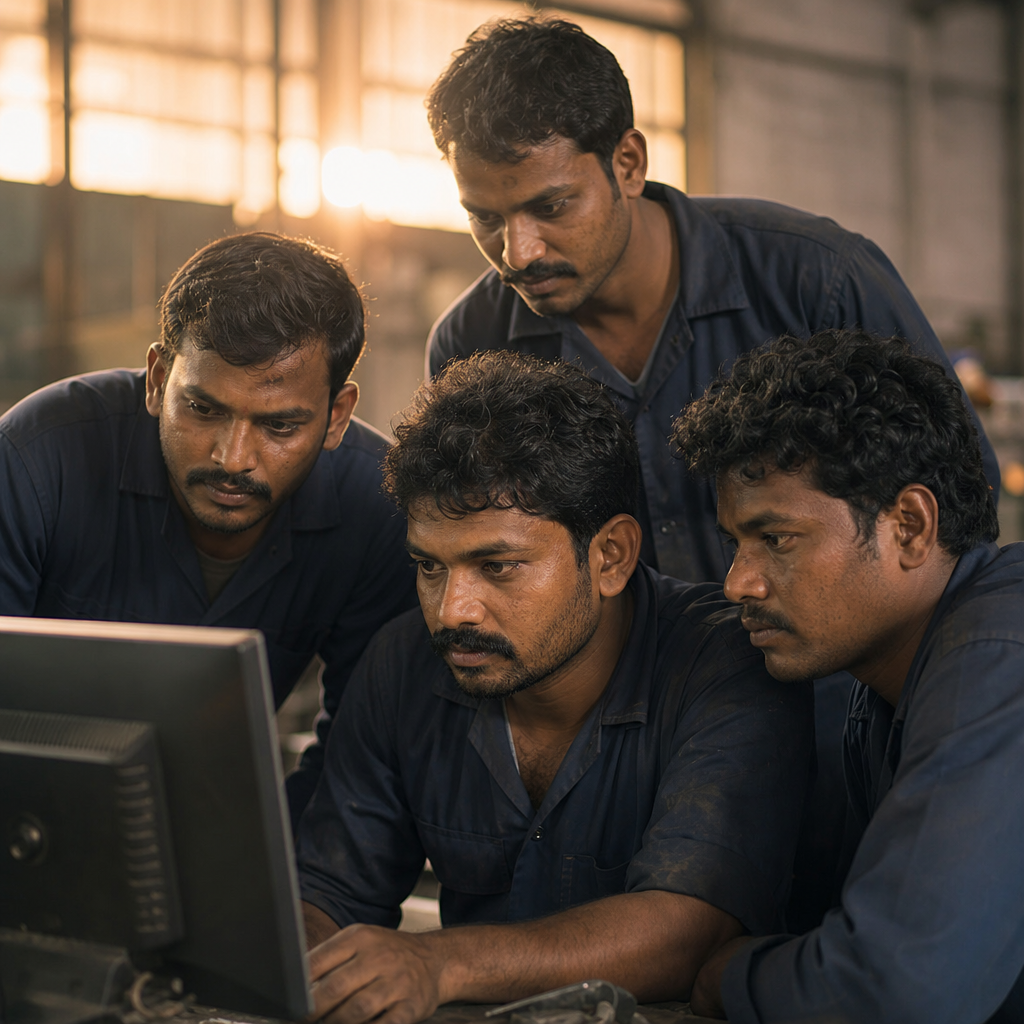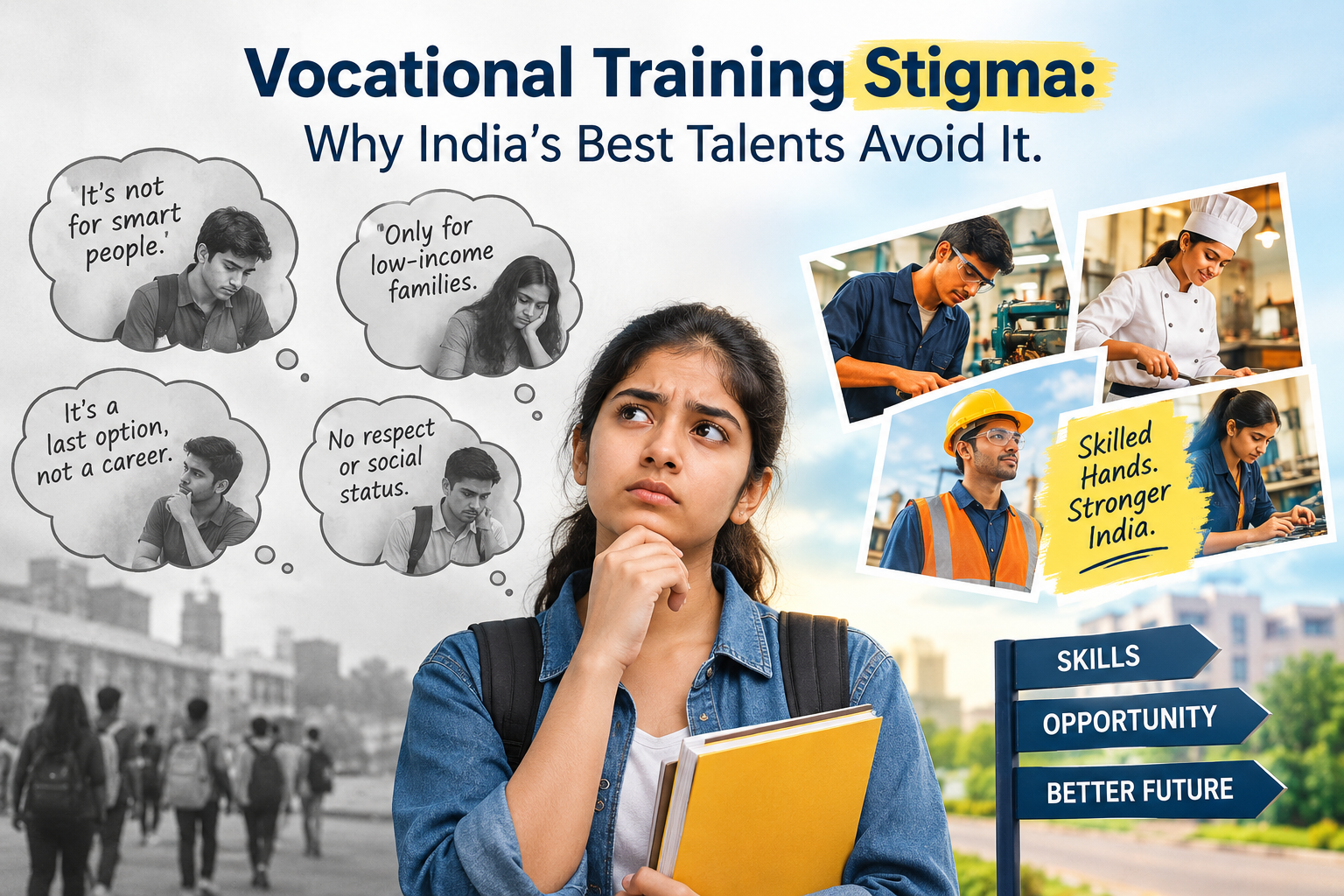
Imagine two students finishing school.
One enrols in a traditional degree programme because it is considered the safest route to a respectable career. The other chooses vocational training to learn a practical skill, work with equipment and prepare for a specific occupation.
Both are capable. Both want a successful future. Yet the second student may have to answer an uncomfortable question from relatives, neighbours or even friends: “You could have studied further. Why did you choose this?”
This simple question reflects a much larger problem in India’s education and employment landscape.
Vocational training is often presented as an alternative for students who cannot pursue conventional academic education. Instead of being recognised as a deliberate career choice, it can be treated as a second option.
The real issue is not that India lacks talented young people. It is that we do not always encourage talent to develop through different pathways.
1. The Career Choice We Still Look Down On
For many Indian families, education is closely connected with security, social mobility and respect. A degree is often seen as proof that a student has progressed, while practical training may be viewed as a less ambitious choice.
These perceptions influence decisions long before a student enters the job market.
A student who enjoys repairing electrical equipment, understanding machines, working with technology or solving practical problems may still be encouraged to pursue a conventional degree simply because it appears more prestigious.
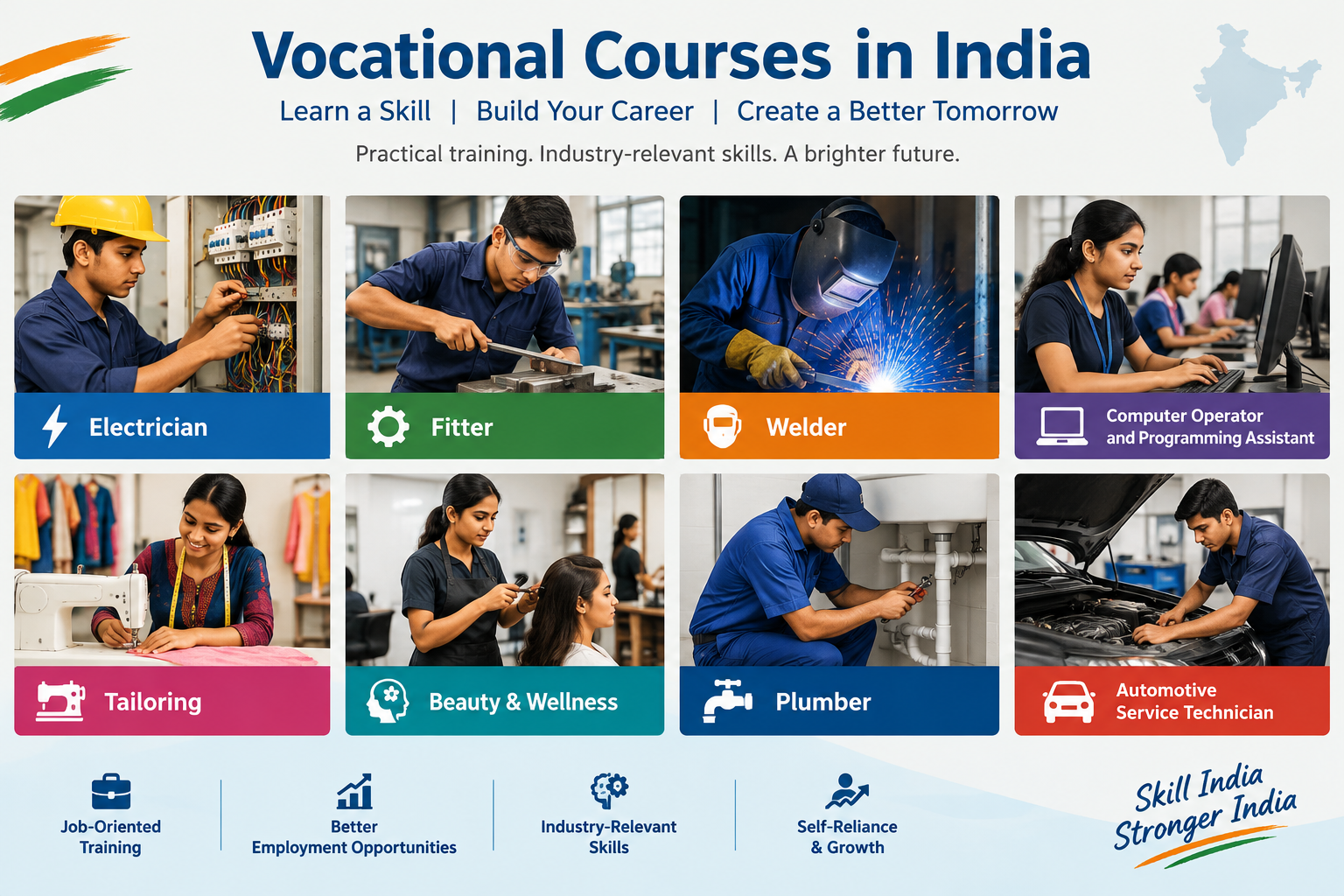
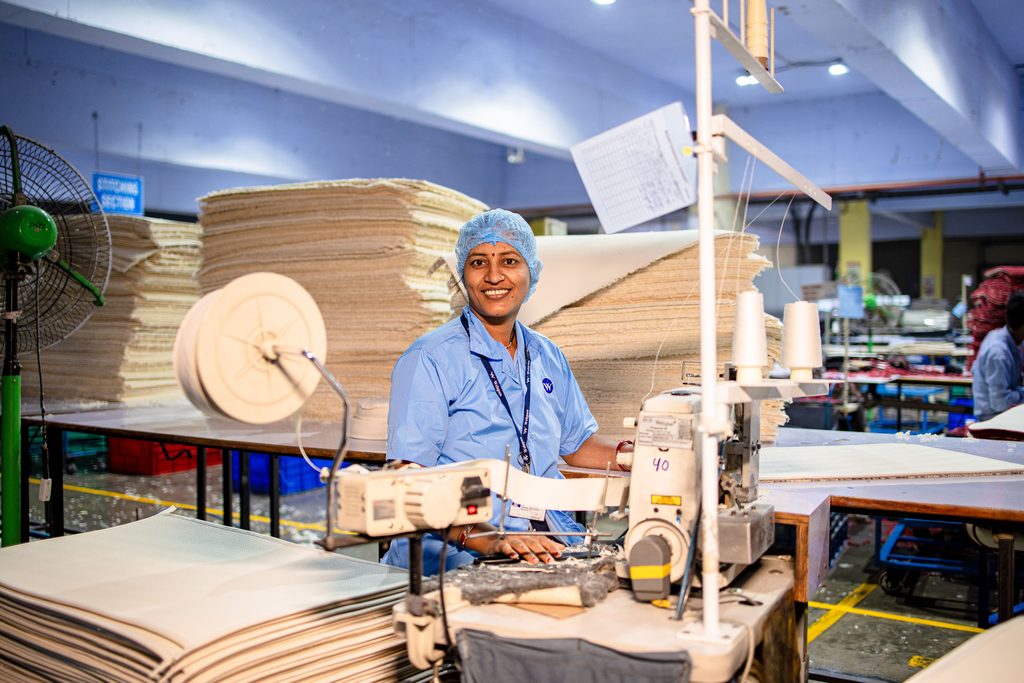
Vocational education covers much more than traditional trades. Depending on the course and training provider, it can prepare learners for careers in manufacturing, automotive services, electrical work, healthcare support, logistics, hospitality, retail, electronics and other fields.
The problem is not that academic education lacks value. Degrees are essential for many professions, and some career paths require specific academic qualifications.
The problem begins when one pathway is treated as inherently superior, regardless of a student’s interests, abilities or career goals.
When social approval becomes more important than career fit, capable students may overlook opportunities that suit them well.
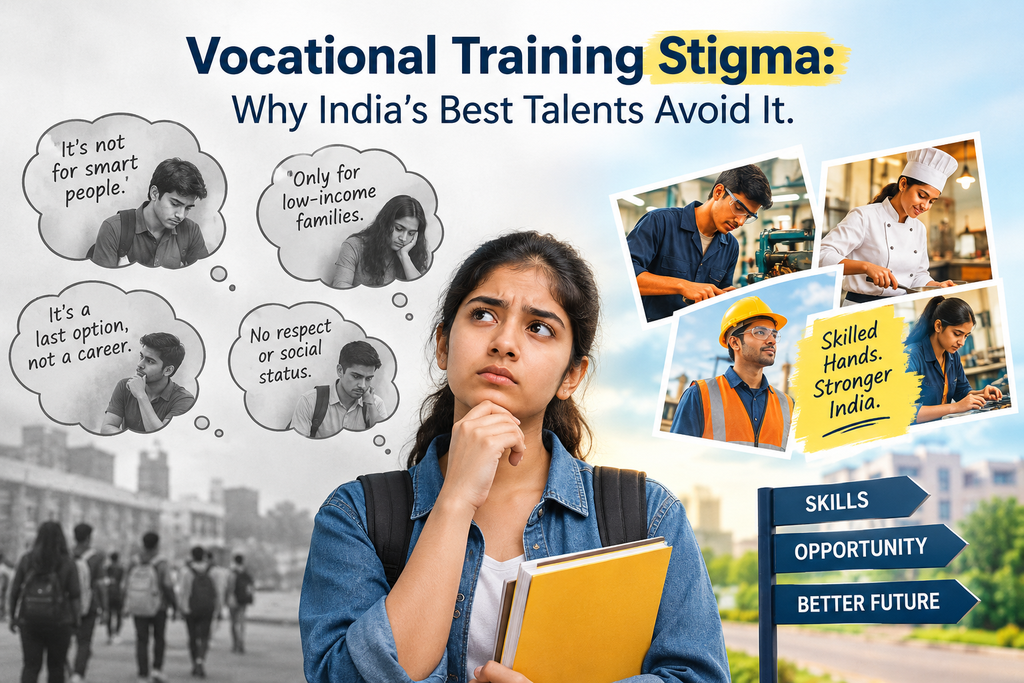
2. Why Talented Students Turn Away from Vocational Training
The stigma around vocational education is reinforced by several factors.
2.1 The prestige attached to degrees
Students often hear about successful engineers, doctors, managers and civil servants. Skilled technicians, machine operators, maintenance specialists and other vocationally trained professionals may receive less attention in everyday conversations about success.
This creates a narrow picture of what an ambitious career should look like.
2.2 The fear of being judged
Young people do not make career decisions in isolation. Parents, peers, teachers and relatives influence what they consider acceptable.
If vocational training is repeatedly described as a fallback, a student may avoid it even when the programme matches their interests and strengths.
2.3 Uncertainty about employment outcomes
Students and families want to know what happens after a course. Will the qualification be recognised? Are employers hiring for the relevant skills? What are the likely starting responsibilities? Can the person progress with further training and experience?
When these questions remain unanswered, a familiar degree may feel safer than an unfamiliar vocational pathway.
2.4 Limited exposure to real careers
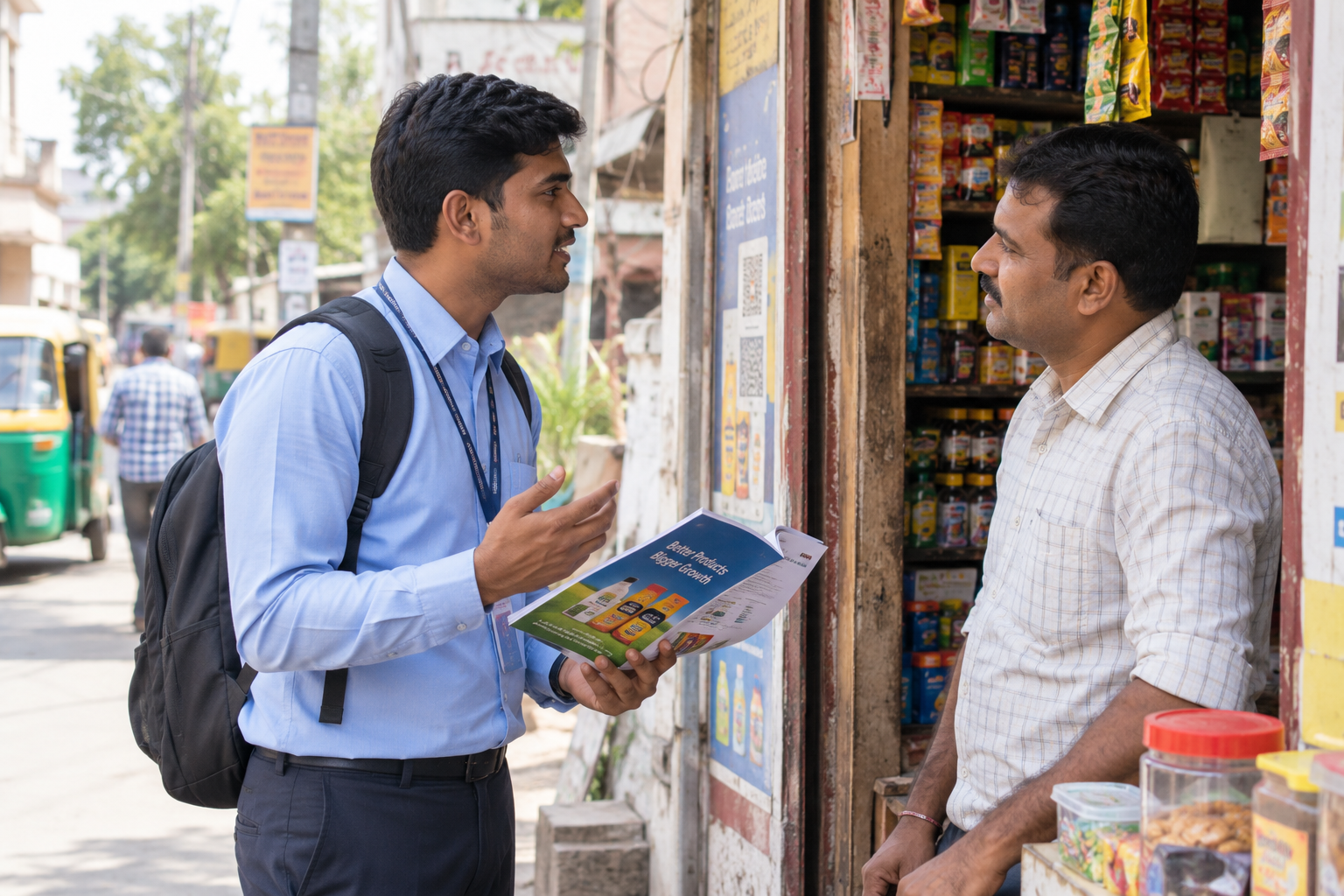
Students cannot make informed choices about occupations they have never seen. Without career counselling, workplace visits, practical demonstrations or conversations with skilled professionals, vocational careers can remain abstract.
NITI Aayog’s analysis of India’s school education system identifies negative perceptions, limited career guidance and a lack of visible role models as barriers to wider acceptance of vocational education.
The lesson is clear: telling students that vocational training matters is not enough. They need credible information and a realistic picture of where it can lead.
3. The Problem Is Bigger Than Social Stigma
Changing public opinion is important, but stigma is not the only challenge.
A student who chooses vocational training should be able to expect a meaningful learning experience. That means relevant equipment, capable instructors, practical exposure, recognised credentials where applicable and a connection between the course and real employment opportunities.
If training is outdated or poorly connected to industry needs, graduates may struggle to find suitable work. Their experiences can reinforce the very doubts that discourage future students.
Affordability and access also matter. Course fees, travel costs, family responsibilities and the time required to train can influence whether a student can participate.
There is also a need for clearer information about career progression. Learners should understand whether they can pursue apprenticeships, additional certifications, specialised roles or further education after completing a programme.
Vocational training should not be promoted with unrealistic promises of guaranteed jobs or high salaries. Its value depends on the quality and relevance of the training, the learner’s effort, local employment conditions and the opportunities available.
Respect for vocational education must be backed by outcomes.
4. What India Loses When Practical Talent Is Overlooked
When students are discouraged from skill-based careers, the consequences extend beyond individual career choices.
A young person who has a natural aptitude for technical or practical work may spend years pursuing a path that does not match their interests. Meanwhile, businesses may find it difficult to recruit people with the practical abilities their operations require.
This is not a simple one-to-one mismatch: not every vocational course leads to a suitable job, and not every employer needs vocational qualifications. But it highlights why career guidance and industry-relevant training matter.
Employers need people who can perform tasks safely, operate equipment, solve problems, work with customers and learn workplace processes. Some roles require extensive academic preparation; others depend heavily on practical competencies that can be developed through suitable training and experience.
A stronger vocational ecosystem can help learners explore these different possibilities and help employers communicate what they actually need.
For young people, that means more informed choices. For businesses, it means a chance to build a workforce based on relevant capabilities rather than relying exclusively on conventional educational labels.
5. How We Can Make Skill-Based Careers Aspirational
Changing perceptions requires action from schools, families, training institutions, employers and the wider community.
Start career guidance earlier. Students should learn about different occupations before they make major education decisions. Career guidance should explain job responsibilities, entry requirements, training routes and realistic progression options.
Make practical learning visible. Workshops, workplace visits, demonstrations and conversations with experienced professionals can help students understand what different jobs involve.
Show credible success stories. Share examples of skilled professionals who have developed their careers through training, apprenticeships and experience. Explain their journeys honestly, including the time and effort involved.
Improve the connection between training and employment. Training providers should consult employers about the skills required for relevant roles, update learning where necessary and help students understand the transition from training to work.
Explain career pathways clearly. Learners should be able to find reliable information about course recognition, further study, apprenticeships and job opportunities. They should not have to depend entirely on word of mouth.
Most importantly, vocational education should be presented as a valid choice—not as a rescue option for students who have supposedly failed elsewhere.
6. The Role of Employers in Changing Perceptions
Employers have an important part to play because their hiring practices influence how young people view different qualifications.
When a role genuinely requires practical skills, employers can explain those requirements clearly instead of using a degree as a default filter.
They can consider relevant vocational qualifications, practical assessments, apprenticeships and evidence of ability where appropriate. They can also provide structured onboarding and training for entry-level roles that do not require previous experience.
This does not mean every candidate should be treated as equally qualified for every position. It means the selection process should assess the capabilities that actually matter for the job.
Employers can strengthen the value of vocational education by collaborating with training institutions, offering workplace exposure, defining clear entry requirements and communicating realistic opportunities for development.
They should also be transparent about job responsibilities, compensation and employment conditions. A positive image of skill-based careers must be supported by fair and credible work opportunities.
For businesses hiring frontline teams, this approach can broaden the range of candidates they consider. For job seekers, it can create more ways to demonstrate their abilities.
7. A Different Way to Think About Career Success
A successful career does not have to follow one fixed sequence.
For one person, it may involve university, postgraduate study and a specialised profession. For another, it may begin with an ITI qualification, practical training or an apprenticeship and develop through experience and additional skills.
Neither path should be judged by its label alone.
Students should ask themselves: What am I good at? What kind of work interests me? What qualifications does the role require? What training is available? What are the realistic opportunities for employment and progression?
Families and educators can help by discussing these questions without treating one choice as automatically more respectable than another.
The objective is not to persuade every student to choose vocational education. It is to make sure students who are well suited to it do not reject it simply because they fear social judgement.
8. Building a Future Where Skills Matter
India’s young people need more than a single definition of success. They need reliable career information, relevant training, opportunities to demonstrate their abilities and employers who understand the value of practical competence.
Vocational education will not become aspirational through slogans alone. Its reputation will improve when students see credible pathways, families can make informed decisions and employers recognise relevant skills in their recruitment practices.
The shift begins when we stop asking whether vocational training is good enough for talented students and start asking whether the training is good enough for the careers they want to pursue.
Talent can take many forms. Our education and employment systems should make room for all of them.
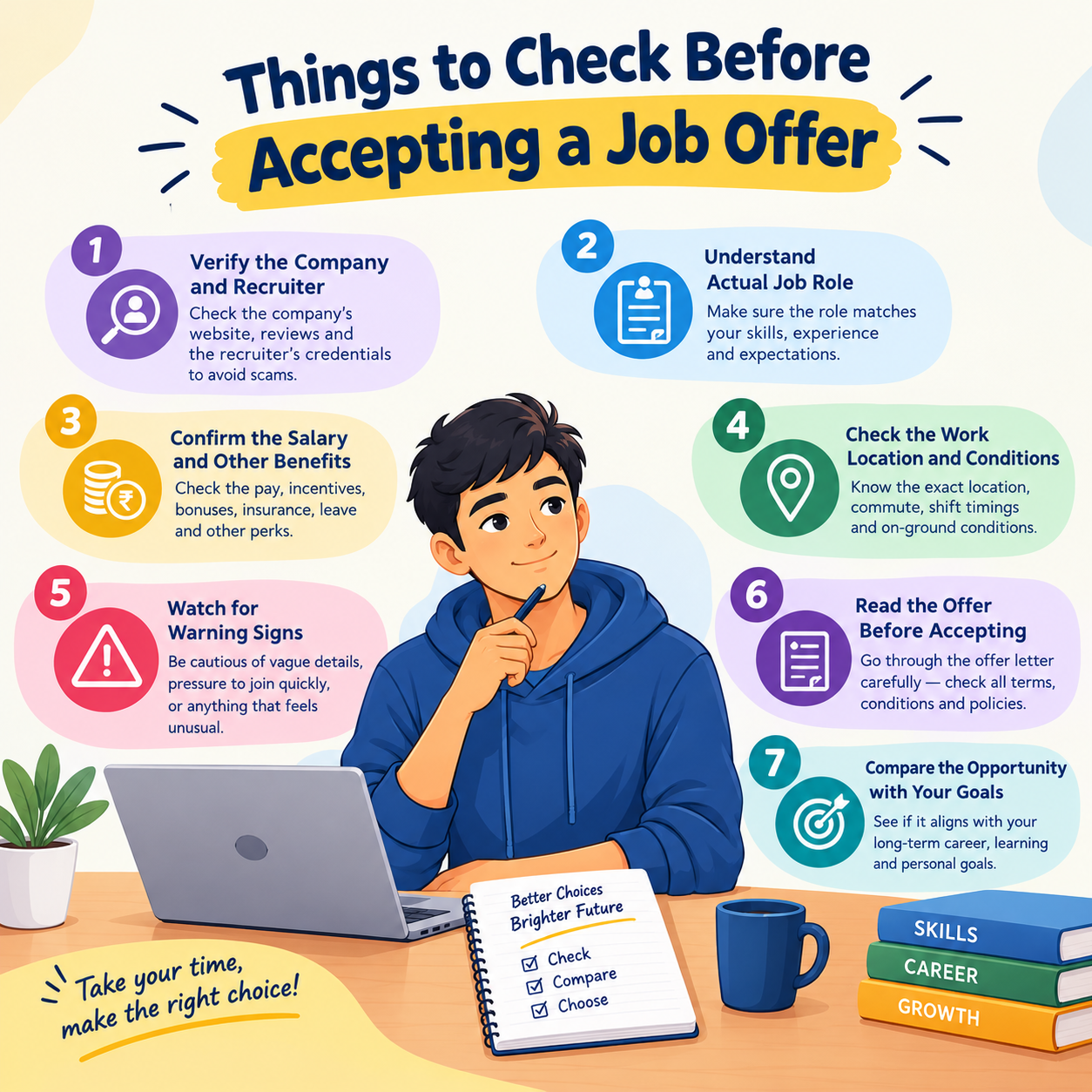
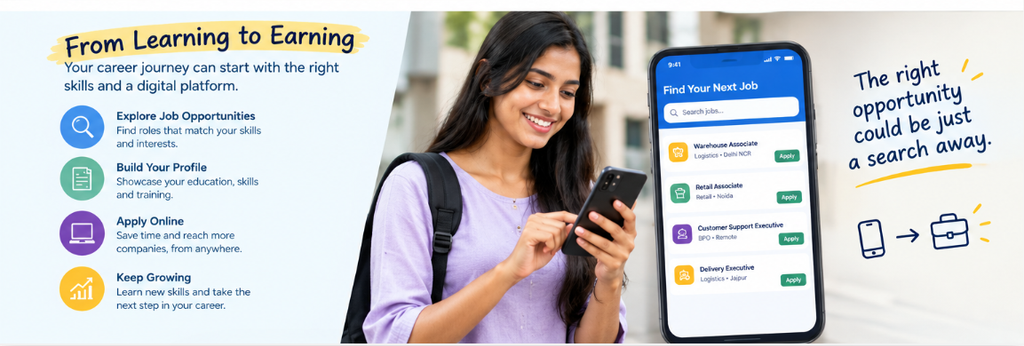
9. Explore Your Next Opportunity with Job Raahi
Whether you have completed school, an ITI course, a diploma or are looking for your first job, your next step should reflect your skills, interests and goals.
Job Raahi helps job seekers explore opportunities across frontline and entry-level roles. Discover vacancies that match your qualifications and experience, and take the next step towards putting your skills to work.
A career can begin in different ways. What matters is finding a suitable opportunity to learn, contribute and grow.