The future of work is changing, and one of the biggest forces behind this change is the shift towards a greener economy.
Across India, businesses are exploring renewable energy, electric vehicles, energy-efficient buildings, waste recycling and sustainable manufacturing. These changes are not only about protecting the environment. They are also creating new kinds of work and changing the skills employers need.
Think about a solar installation company. It needs more than engineers to design systems. It also needs technicians to install panels, electricians to connect equipment, workers to inspect installations and service teams to maintain systems.
The same is true for electric vehicles, recycling facilities and energy-efficient industries.
This creates an important opportunity for India’s workforce: workers who build relevant technical and practical skills today can prepare themselves for the jobs emerging tomorrow.
1. Why Green Skills Are Becoming Important in India
India’s green transition is moving beyond long-term environmental goals and becoming a workforce and business priority.
A June 2026 study by the Council on Energy, Environment and Water (CEEW) and NRDC reported that selected clean-energy sectors added approximately 6.5 lakh workers between FY2023 and FY2026. It also estimated that India’s clean-energy targets and green hydrogen ambitions could support more than 44 lakh full-time-equivalent jobs by 2030. These are estimates, not guaranteed job openings, but they demonstrate the scale of potential workforce demand.
The study also highlights that around 60% of jobs in clean-energy project deployment require highly skilled or semi-skilled workers. This makes practical training and technical upskilling especially important.
In August 2026, NITI Aayog’s report on reimagining India’s skilling system also identified areas such as rooftop solar and electric mobility as sectors requiring focused workforce development.
The message is clear: India’s green transition will need people who can work with new technologies, equipment and processes.
2. What Is the Green Economy?
The green economy refers to economic activities that aim to reduce environmental impact while supporting sustainable growth.
It includes industries that produce cleaner energy, use resources more efficiently, reduce waste and develop environmentally responsible products and services.
Some important areas include:
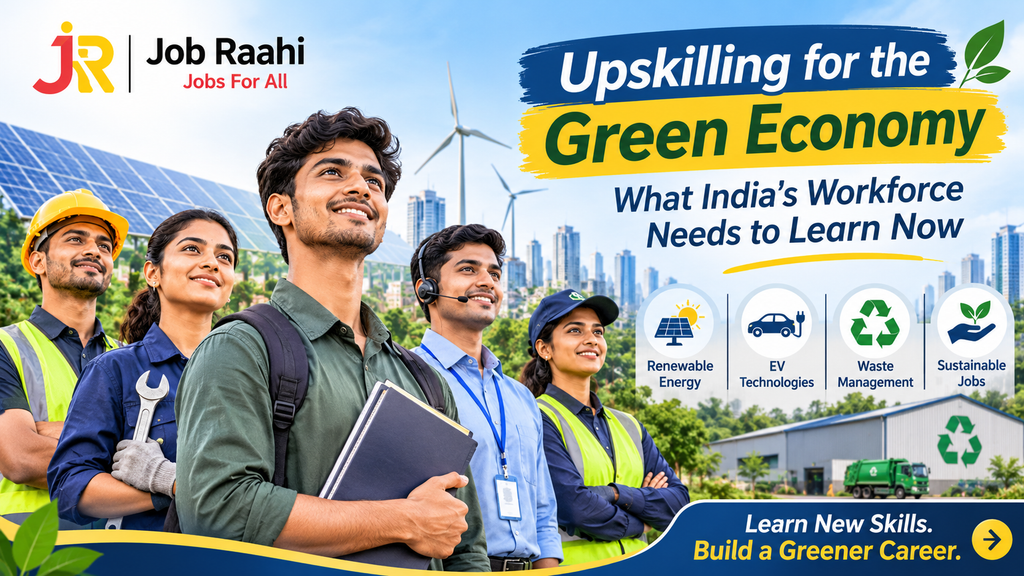
- Renewable energy: Solar, wind and other clean-energy systems.
- Electric mobility: Electric vehicles, charging infrastructure, battery systems and servicing.
- Waste management: Recycling, waste segregation, material recovery and processing.
- Sustainable manufacturing: Reducing energy consumption, material waste and pollution in production.
- Green construction: Energy-efficient buildings, water conservation and sustainable materials.
- Environmental services: Water treatment, pollution monitoring and resource management.
Each area requires a different combination of technical, digital and workplace skills.
3. Which Industries Are Creating Green Job Opportunities?
A. Solar and Renewable Energy
Solar energy is creating opportunities in installation, electrical work, equipment maintenance and field operations.
Potential roles include:
- Solar panel installation technician
- Solar maintenance assistant
- Electrical technician
- Site survey assistant
- Renewable energy field executive
Workers need basic electrical knowledge, safety awareness, equipment handling and the ability to follow installation procedures.
B. Electric Vehicles and Battery Technology
As electric mobility expands, the need for trained people who can maintain and service EVs will also grow.
Potential roles include:
- EV service technician
- Battery maintenance assistant
- Charging station installation technician
- EV workshop assistant
- Quality inspection associate
Knowledge of electrical systems, batteries, diagnostic tools and safety procedures can be valuable.
C. Waste Management and Recycling
Recycling and resource recovery require workers who understand material identification, segregation, processing and safe handling.
Potential roles include:
- Recycling plant operator
- Waste segregation supervisor
- Material recovery associate
- Waste collection operations executive
- Quality control assistant
D. Sustainable Manufacturing and Green Construction
Factories and construction businesses are increasingly looking at energy efficiency, resource conservation and improved production practices.
Potential roles include:
- Production technician
- Energy monitoring assistant
- Equipment maintenance technician
- Quality control associate
- Green building site assistant
These roles often build on existing manufacturing, electrical, mechanical and construction experience.
4. Seven Skills India’s Workforce Needs to Learn
Here are seven areas worth focusing on.
1. Basic Electrical and Technical Knowledge
Understanding electrical components, wiring, circuits, tools and equipment is useful in solar installation, EV servicing and industrial maintenance.
ITI students from electrician, electronics and related trades can build on their existing knowledge.
2. Renewable Energy Fundamentals
Workers interested in solar and wind energy should understand how these systems operate, their major components and basic maintenance requirements.
Learning about solar panels, inverters, batteries and energy generation can provide a useful starting point.
3. EV and Battery Technology
Electric vehicles use different systems from conventional vehicles. Workers should begin learning about battery packs, charging systems, electrical safety and basic vehicle diagnostics.
Automobile and mechanical trade learners can explore additional EV-focused training.
4. Digital and Data Skills
Green industries increasingly use digital tools to monitor performance, track energy consumption, record maintenance and manage operations.
Basic computer skills, spreadsheets, mobile applications, digital reporting and equipment-monitoring software can help workers perform their jobs more effectively.
5. Safety and Equipment Handling
Working with electrical systems, batteries, machinery and industrial equipment requires proper safety practices.
Workers should understand personal protective equipment, safe tool usage, hazard identification, emergency procedures and workplace instructions.
Safety training should always be specific to the equipment and job role.
6. Waste Management and Resource Efficiency
Understanding waste segregation, recycling processes, material recovery and responsible resource use can open pathways into waste management and sustainable manufacturing.
These skills are also useful in warehouses, factories, commercial facilities and service operations.
7. Problem-Solving and Communication
Technical knowledge is important, but workers also need to identify problems, report faults, follow instructions and coordinate with supervisors and customers.
For field technicians, communication and problem-solving are essential parts of the job.
5. Who Should Start Upskilling?
The green economy is not limited to one educational background. Different groups can prepare through different learning pathways.
ITI and Polytechnic students: Electrician, fitter, electronics, mechanical and automobile students can explore solar, EV maintenance, electrical safety and equipment servicing.
Freshers and Class 10/12 pass candidates: Entry-level training in waste management, recycling operations, field support and technical assistance can help them explore suitable opportunities.
Existing frontline and industrial workers: Electricians, mechanics, machine operators, facility staff and maintenance workers may be able to upgrade their existing skills for emerging green roles.
Women entering technical careers: Accessible training, practical exposure, safe workplaces and employer support can help more women participate in technical green jobs.
Upskilling does not always mean changing careers completely. Sometimes, adding one relevant skill to an existing trade can create a new career pathway.
6. How Can Workers Prepare for Green Economy Jobs?
A practical starting point is more valuable than simply collecting certificates.
Here is a simple action plan:
- Identify an area of interest: Explore solar energy, EVs, recycling, sustainable manufacturing or green construction.
- Check the skills required: Study actual job descriptions and identify the technical knowledge employers expect.
- Choose relevant training: Look for recognised courses, vocational programmes and practical workshops.
- Get hands-on experience: Practise using tools, equipment and safety procedures under qualified supervision.
- Build digital confidence: Learn basic computer operations, digital reporting and job-related applications.
- Create a skills-based resume: Mention practical training, projects, equipment knowledge and relevant certifications.
- Keep learning: Green technologies evolve, so workers should update their knowledge as tools and industry requirements change.
Useful starting points include Skill India Digital Hub, the Skill Council for Green Jobs and the National Career Service. Candidates should check current course availability, eligibility, certification and placement claims directly with the relevant provider.
7. What Employers and Training Institutes Need to Do
Preparing India’s workforce for green jobs cannot be the responsibility of candidates alone.
Employers should identify the skills required for upcoming projects, offer practical training, provide supervised workplace exposure and create progression opportunities for entry-level workers.
ITI and vocational institutes should regularly update course content, introduce relevant equipment and provide industry-linked training. Students should understand not only how a technology works, but also how it is installed, maintained and used in real workplaces.
Training partners and policymakers should connect training programmes with actual labour-market demand. A certificate is useful, but it should lead to demonstrable skills and a realistic employment pathway.
There is also a need to make technical training more accessible to women and workers in smaller cities, where many emerging green projects and supply chains may create local opportunities.
8. The Future of Work Is Becoming Greener
India’s green transition will require investment, technology and supportive policies. But it will also depend on the people who install solar systems, maintain electric vehicles, operate recycling facilities, manage energy-efficient production and keep new infrastructure running.
For India’s workforce, this is an opportunity to look beyond traditional career paths and prepare for emerging industries.
A fresher does not need to know everything about the green economy today. An ITI student does not need to master every new technology at once. The important step is to identify a relevant career direction and start learning the skills that employers will need.
The future will not belong only to people with new degrees. It will also belong to workers who are willing to upgrade their skills, adapt to technology and learn continuously.
Learn new skills. Stay adaptable. Prepare for the opportunities ahead